
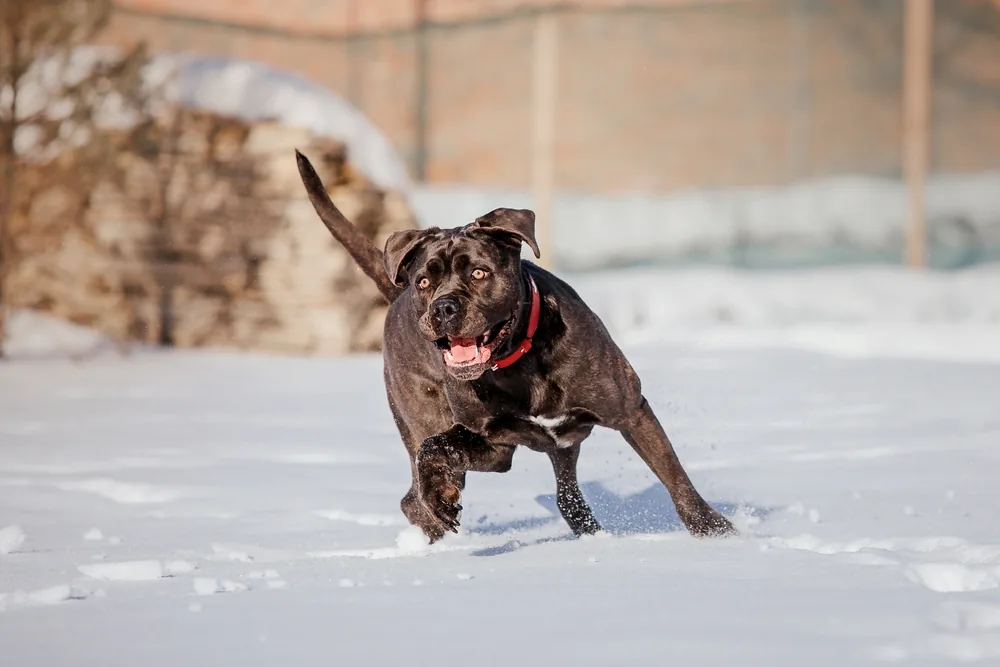
Short answer: the Cane Corso is a large Italian guardian breed. Males stand 64–68 cm and weigh 45–50 kg under the breed standard. Most are devoted, calm family dogs, but they are naturally wary of strangers and protective of their people. That makes them a good fit for experienced owners who will train and socialise them from day one, and a poor fit for most first-time owners.
The Cane Corso has become one of the most searched-for breeds in Australia, and its looks are a big part of the appeal. This guide covers where the breed comes from, what living with one is really like, how it compares with a Rottweiler and a Bullmastiff, and what Australian law says about it.
What is a Cane Corso?
The Cane Corso (say "KAH-nay KOR-so") comes from Italy. The breed standard traces it to the old Roman molossian dogs, and it was later kept mainly in Apulia and the regions of southern Italy around it. The standard says the name comes from the Latin cohors, meaning a protector or guardian of the farmyard.
The dogs guarded farms, families and livestock, and were also used to drive cattle and hunt big game. Numbers fell as farm life changed, until Italian enthusiasts began rebuilding the breed in the 1970s. Italy recognised it in 1987.
It's still young as a recognised breed in Australia. The Australian National Kennel Council (now Dogs Australia) formally recognised it in 2003, and it sits in Group 6 (Utility).
How big does a Cane Corso get?
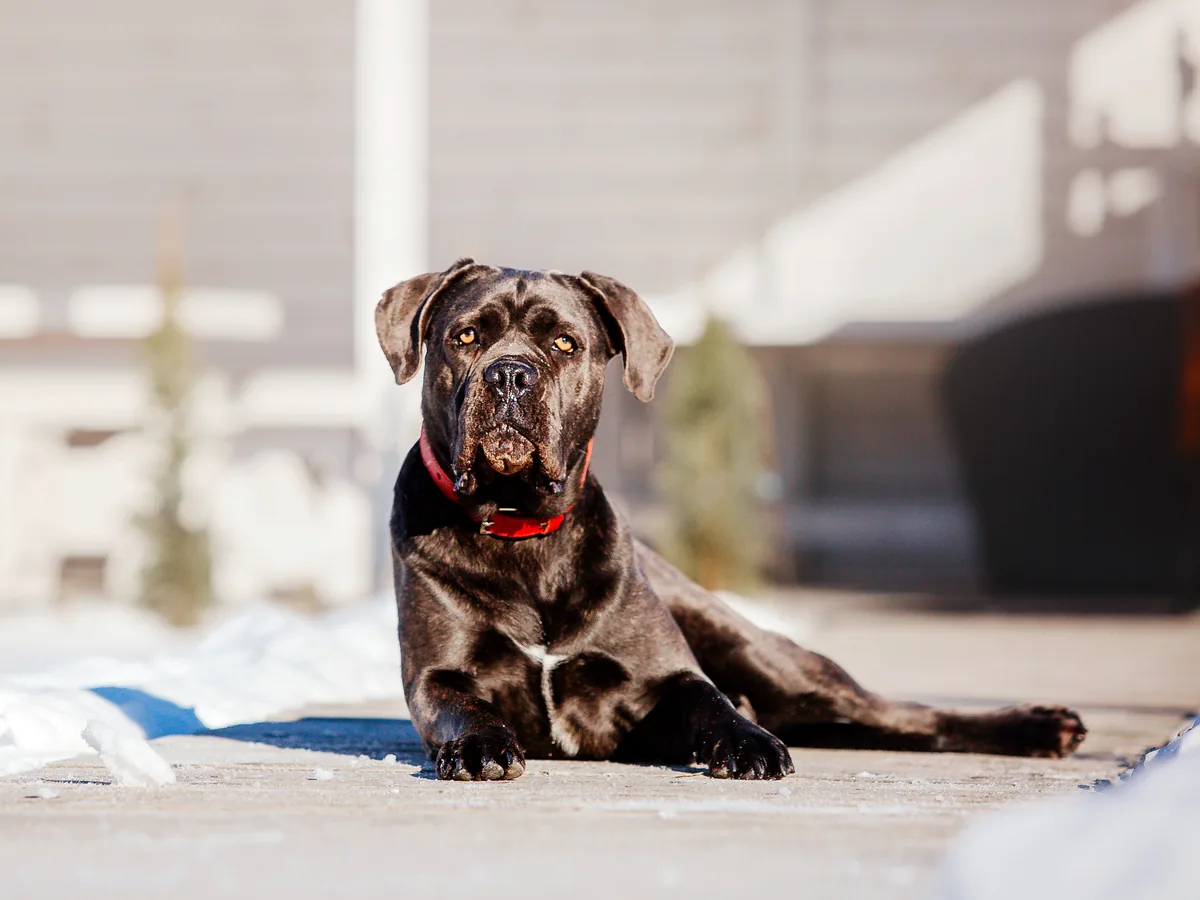
The breed standard, used by both the FCI and Dogs Australia, sets these sizes:
- Males: 64–68 cm at the shoulder, 45–50 kg.
- Females: 60–64 cm at the shoulder, 40–45 kg.
The standard allows 2 cm either side of those heights, and individual dogs can come in heavier. Either way, a grown Cane Corso is very strong. Plan for a dog that can pull you over if it isn't lead-trained, and a car, crate and bed big enough to fit it.
Temperament: what are Cane Corsos like?
The breed standard describes the Cane Corso as a guardian of property, family and livestock, and as "extremely agile and responsive". Vet-written guides describe a dog that is affectionate and devoted at home and sensitive to its owner's mood.
The other side of that is guarding instinct. Dogs NSW notes that the breed is wary of strangers, bonds early with its family and is particularly protective of children. It also says many Cane Corsos are wary of new things, animals and people, so introductions need care. A well-raised Corso tends to watch quietly, not bark at everything. A poorly socialised one can become overprotective and reactive.
With other dogs, one vet guide warns that Corsos can become reactive or dominant, especially towards dogs of the same sex, and recommends supervised play with calm, well-socialised dogs. Hill's lists the breed as better suited to families with older children than to homes with young kids.
Training and socialisation
A Cane Corso is smart and learns quickly, but it can be headstrong. As a guardian breed, it was bred to watch and decide for itself, so training has to start early and stay consistent for life.
- Start socialisation straight away. Calmly introduce your puppy to people of all ages, other dogs, traffic, visitors at the door and new places while it's young, then keep going for life.
- Use reward-based training. Vet guides recommend praise and food rewards in short, focused sessions. Harsh methods tend to backfire with a dog this strong and sensitive.
- Teach calm greetings and loose-lead walking early, while your puppy is still small enough to manage.
- Book a puppy school and a trainer with experience in guardian breeds. That's worth it for any owner, and essential for a first big dog.
The goal is a dog that's relaxed around normal life, so its guarding instinct only shows up when it should. Don't encourage protective behaviour in a young dog.
Cane Corso vs Rottweiler vs Bullmastiff
| Trait | Cane Corso | Rottweiler | Bullmastiff |
|---|---|---|---|
| Height (male) | 64–68 cm | 61–68 cm | 64–69 cm |
| Weight (male) | 45–50 kg | About 50 kg | 50–59 kg |
| Weight (female) | 40–45 kg | About 42 kg | 41–50 kg |
| Exercise (Dogs NSW) | About 40 minutes a day, plus training | About 40 minutes a day | About 40 minutes a day; very little in the first year |
| With strangers | Wary | Reserved | Alert and watchful |
| Biggest ownership challenge | Lifelong socialisation of a protective, athletic dog | Early training and firm, consistent handling | Sheer weight, and little exercise allowed while young |
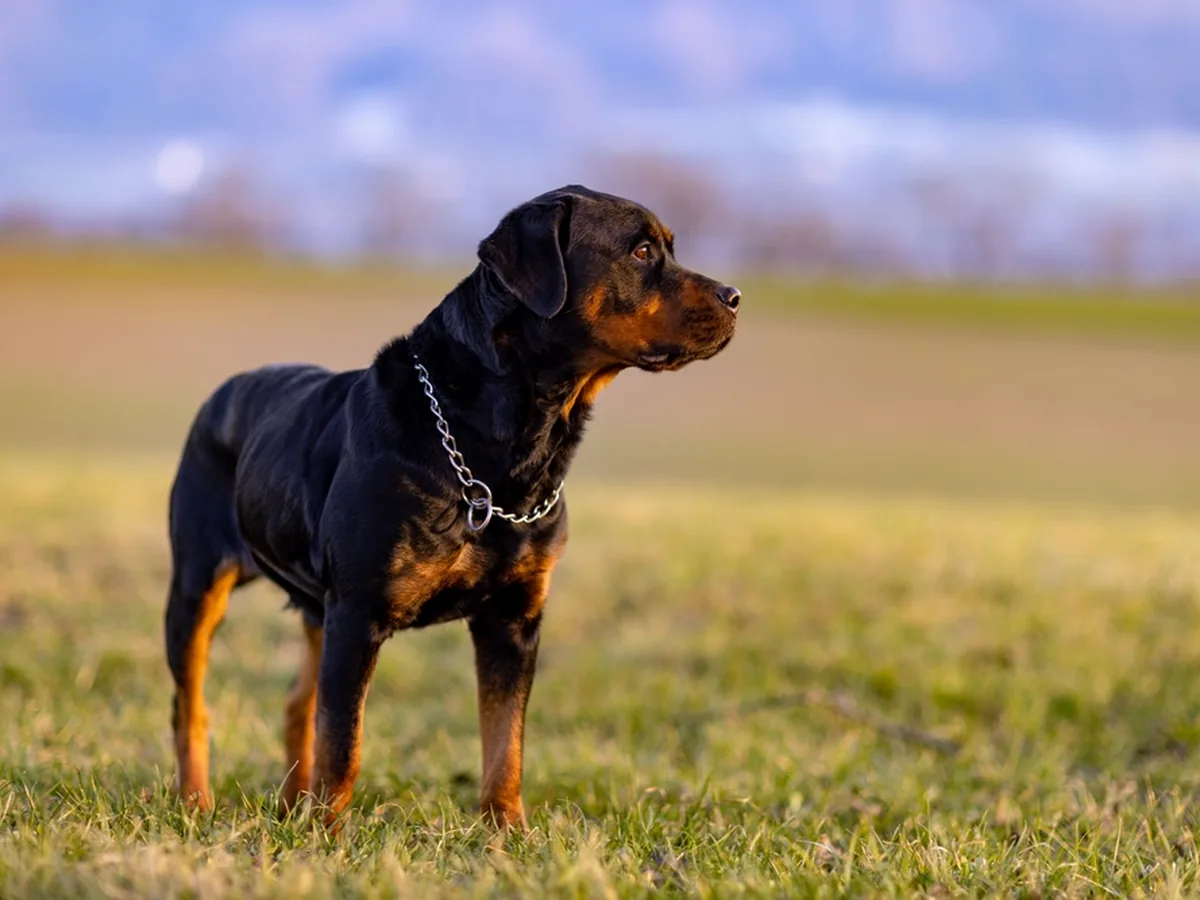
Figures are the male and female ranges in the breed standards published by Dogs NSW. Of the three, the Bullmastiff is the heaviest, the Cane Corso is described as the most agile, and the Rottweiler is described as obedient and eager to work. You can put them side by side in our breed comparison tool.
How much exercise does a Cane Corso need?
Sources differ here. Dogs NSW suggests about 40 minutes of exercise a day plus daily training, and a home with at least an average-sized backyard. Hill's says at least an hour a day. Treat 40–60 minutes as the minimum, split between walks and games that work the brain, such as scent work, tricks and obedience.
Go easy while your dog is growing. Hill's advises avoiding repetitive, high-impact exercise until about 18 months to protect developing joints, so skip long runs and lots of jumping. In an Australian summer, walk early or late and watch for overheating, as you would with any big, dark-coated dog.
Lifespan and health
Expect a shorter life than a smaller dog. One Australian vet guide gives 9–12 years and Hill's gives 9–10, so 9 to 12 years is a fair range.
Problems seen in the breed include:
- Hip and elbow dysplasia, joint problems that are more common in the breed. Ask the breeder for hip and elbow scores for both parents.
- Bloat (gastric dilatation-volvulus), a life-threatening emergency in deep-chested dogs. Learn the signs, such as a swollen belly, retching without bringing anything up and restlessness, and get to a vet immediately if you see them.
- Eyelid problems such as entropion, where the eyelid rolls inward and irritates the eye.
- Heart disease, including dilated cardiomyopathy.
- Demodectic mange and obesity, which also puts more strain on the joints.
The coat is short and easy. A weekly brush with a rubber mitt, more during the yearly shed, is usually enough.
Is the Cane Corso banned in Australia?
No. The Cane Corso is not one of the five breeds Australia bans from import. Those are the American Pit Bull Terrier, Dogo Argentino, Fila Brasileiro, Japanese Tosa and Perro de Presa Canario. The Cane Corso can be imported, registered and shown here.
Every state and territory can still declare an individual dog dangerous because of its behaviour, whatever its breed, and that brings strict rules on fencing, muzzles and leads. A large, protective dog that rushes a fence or a visitor can end up declared, so training and secure containment matter more for this breed than most. Check your council's rules before you bring one home. Our guide to banned dog breeds in Australia has the rules for each state, and our article on the "most dangerous" dog breeds explains why bite statistics by breed are less reliable than they look.
Ear cropping and tail docking
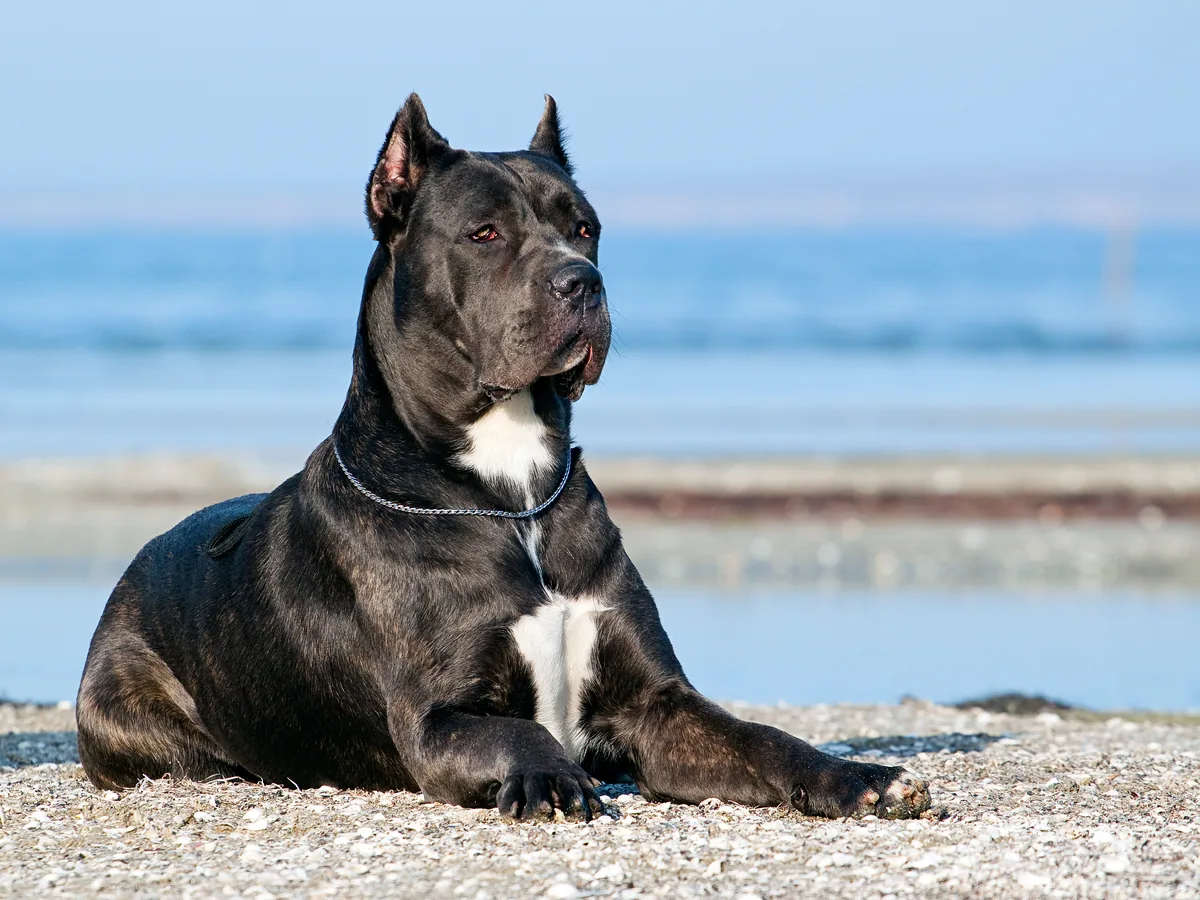
Many Cane Corso photos online show cropped ears and docked tails, mostly from overseas. In Australia, ear cropping and cosmetic tail docking are illegal in every state and territory. The RSPCA says ear cropping is only allowed for medical reasons, and only by a vet. The Australian Veterinary Association calls these procedures "unacceptable under any circumstances" when done for looks.
The breed standard itself now describes the ears as uncropped and the tail as natural. If a breeder or seller in Australia offers puppies with cropped ears or docked tails, walk away.

Where to get a Cane Corso in Australia
Popularity brings backyard breeders, so take your time. Dogs Australia's "Find a breeder" service lists registered purebred breeders, and your state body (such as Dogs NSW or Dogs Victoria) can point you to breed clubs. A good breeder will:
- show you hip and elbow scores and any other health results for both parents,
- let you meet the mother, and ideally the father, and see how they behave with visitors,
- ask you plenty of questions about your home and experience, and may have a waiting list,
- never sell puppies with cropped ears or docked tails.
Ethical breeders charge more because health testing and early socialisation cost money. Adult Corsos and crosses also turn up in rescues, and an adult lets you see the dog's size and temperament before you commit.
Is a Cane Corso right for you?
A Cane Corso can suit you if:
- you've owned a large or strong-willed dog before,
- you have a securely fenced yard and time for at least 40–60 minutes of exercise and training most days,
- you'll commit to puppy school and lifelong socialisation,
- your household is adults or older children, and visitors can be managed calmly.
It's a poor fit for most apartments, for homes with toddlers or a steady stream of visitors, and for anyone who wants a dog that's friendly with everyone it meets. If this would be your first dog, start with our first-time owner guide. If you like the guardian look in a different package, compare the Rottweiler, Bullmastiff and Neapolitan Mastiff, or read our guides to the Bull Arab and the XL Bully.
Not sure which dog fits your home? Take the free dog match quiz and compare breeds against your space, routine and experience. You can also read the Cane Corso breed profile.
Sources and further reading
- Dogs Australia: Cane Corso breed standard (Group 6, Utility)
- Dogs NSW: Cane Corso
- Dogs NSW: Rottweiler
- Dogs NSW: Bullmastiff
- Vets Love Pets: Cane Corso breed guide
- Hill's Pet Nutrition: Cane Corso (written by a vet)
- RSPCA Knowledgebase: Is ear cropping of dogs legal in Australia?
- Australian Veterinary Association: Cosmetic surgery to alter the natural appearance of animals
All photos: Shutterstock.
This article is general information, not legal or veterinary advice. Dog laws differ between states and councils and can change. Checked November 2026; confirm the rules with your council before buying or adopting.