
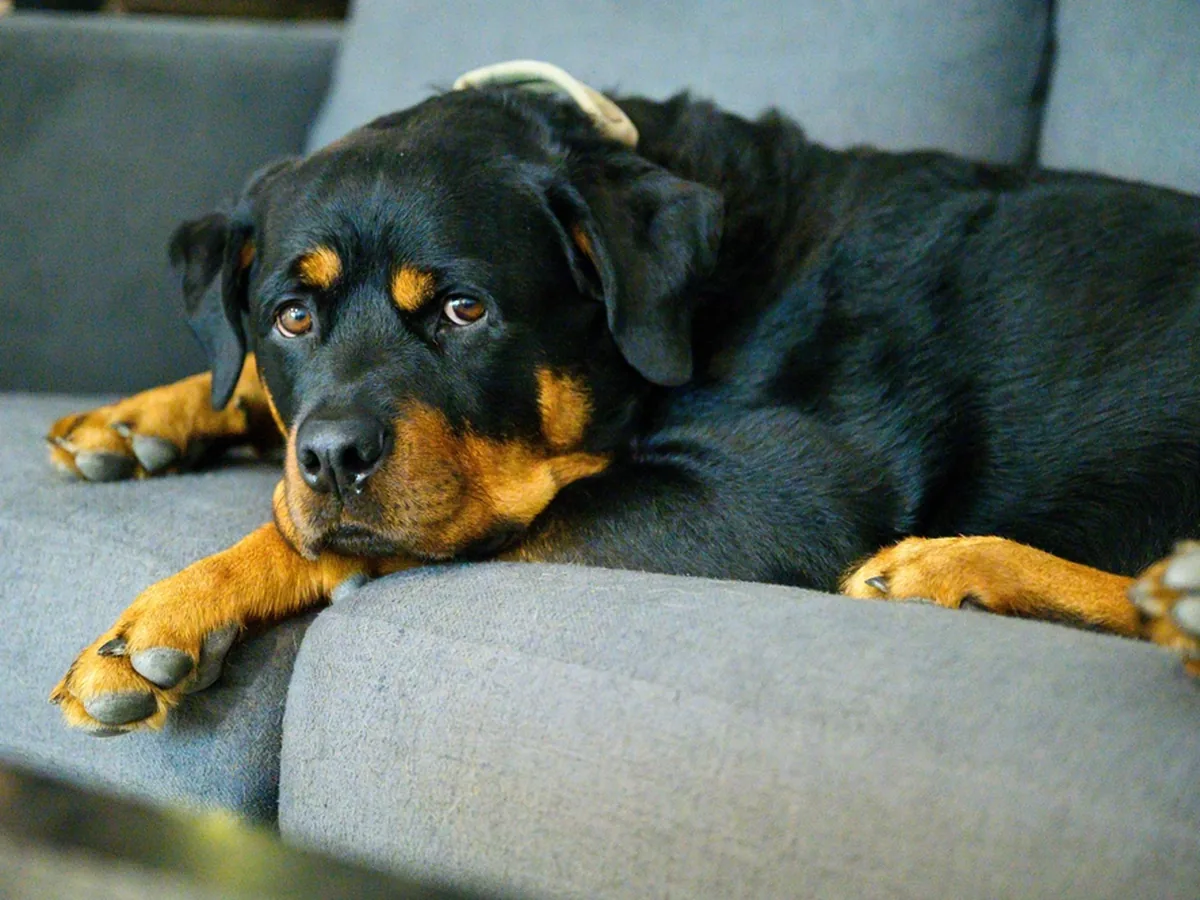
The Rottweiler wasn’t designed as a pet first. It was a working solution. Descended from Roman cattle dogs that crossed the Alps with legions, it later became the Rottweil Metzgerhund in Germany, driving livestock and protecting money on the road to market. That combination of muscle, intelligence, and responsibility hasn’t gone anywhere.
This is a substantial dog in every sense. Physically powerful, mentally steady, and not inclined to waste energy on nonsense. With their people, Rottweilers are deeply loyal and often more affectionate than their reputation suggests. They’re “leaners” — literally pressing their full weight into you as a sign of attachment.
With strangers, the tone shifts. They assess. That natural reserve is exactly what you want in a guardian, but it comes with a condition: it must be shaped early. Proper socialisation turns that instinct into calm, controlled awareness. Skip it, and you’re dealing with a large, powerful animal making its own calls.
Training is not optional. This is where people get it wrong. Rottweilers are intelligent and willing, but not passive. They respond to confident, consistent handling and clear expectations. Without that, you don’t get a “naughty dog,” you get an unmanaged one. At 35–60 kg with a bite force around 328 PSI, it’s less a fun fact and more a reminder of why structure matters.
Done properly, they are outstanding family dogs. Steady, protective without being unstable, and often excellent with children in their own household. But size is size, and supervision is common sense.
They’re not for first-time owners looking to learn on the job. They suit people who understand what they’re taking on and are prepared to invest in training.
The payoff is significant. A well-raised Rottweiler is one of the most dependable, capable companions you can have. Just don’t mistake calm for softness. This is a serious dog that expects you to be just as serious in return.