
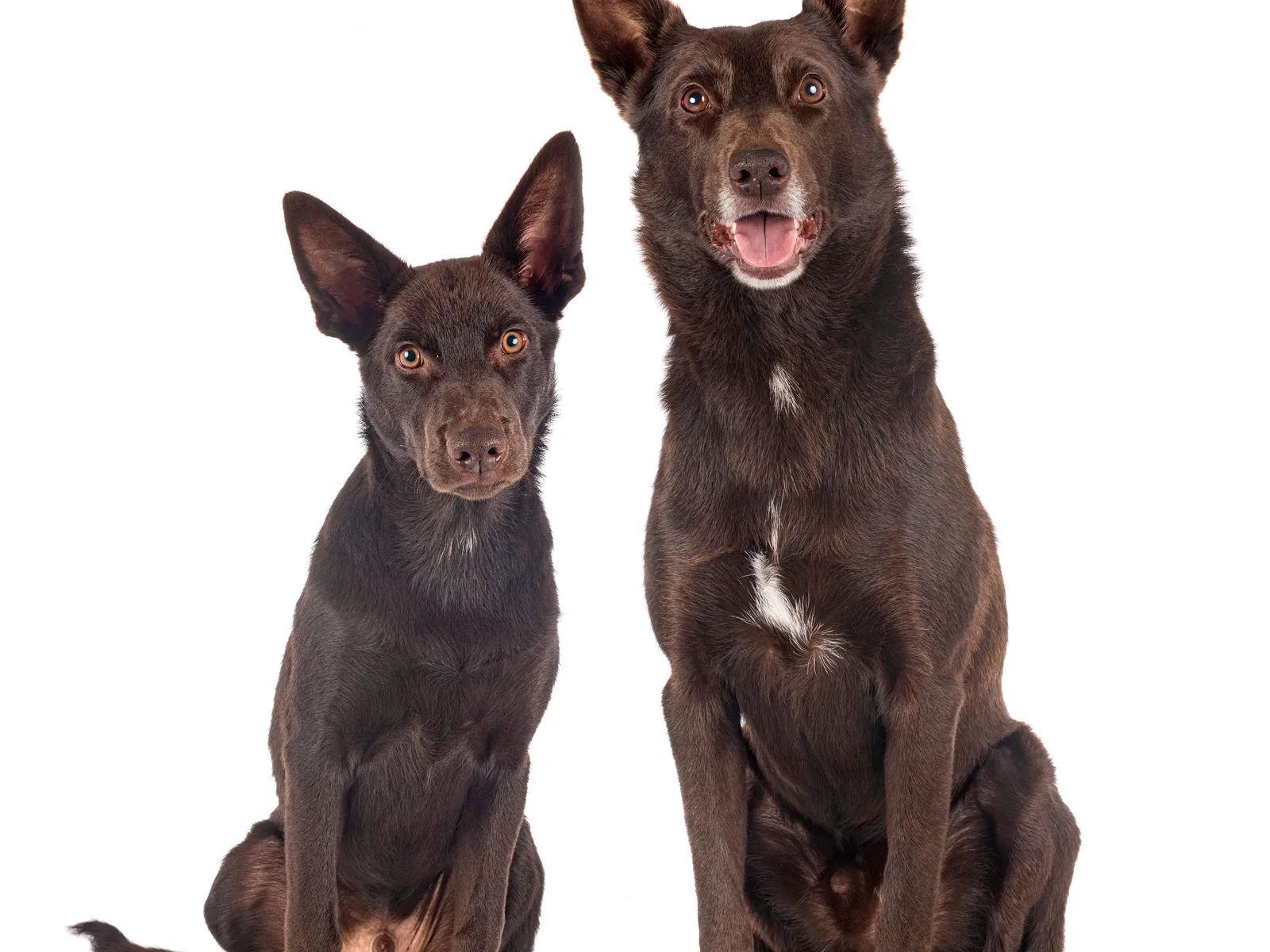
Short answer: the Australian Kelpie is a medium-sized sheepdog bred in Australia from the 1870s onwards. It is alert, quick, intelligent and tireless. A Kelpie can be a brilliant companion for an active owner who trains it and gives it a job. Without that, it's one of the hardest breeds to live with in a suburban backyard.
Kelpies are everywhere in Australia: on farms, in pounds, in dog sports and on the back of utes. Most people know them as "a good working dog", but there are really two kinds of Kelpie, and the difference matters a lot if you want a family pet. This guide covers both, along with size, temperament, exercise, health and who the breed really suits.
Where the Kelpie came from
The breed traces back to Warrock Station on the Glenelg River near Casterton in western Victoria. Its owner, George Robertson, kept black and tan working collies brought out from Scotland. In the early 1870s a young stockman, Jack Gleeson, got a black and tan female pup from one of those litters and named her Kelpie, after a water spirit in Scottish folklore. Sources give her birth as 1871 or around 1872.
Gleeson later took Kelpie to New South Wales, near what is now Ardlethan, and bred her to a black dog called Moss. A pup from a later litter, King's Kelpie, did so well at an early sheepdog trial at Forbes that the name stuck to the whole line. Casterton and Ardlethan both claim to be the Kelpie's home, and Casterton still holds the Australian Kelpie Muster each June long weekend, with a working dog auction on the Sunday.
You'll often hear that Kelpies are part dingo. A 2019 University of Sydney study was widely reported as finding no dingo ancestry. Its lead author later said the study looked only at genes linked to ear shape and coat colour, so the question isn't fully settled.
Working Kelpie vs show Kelpie
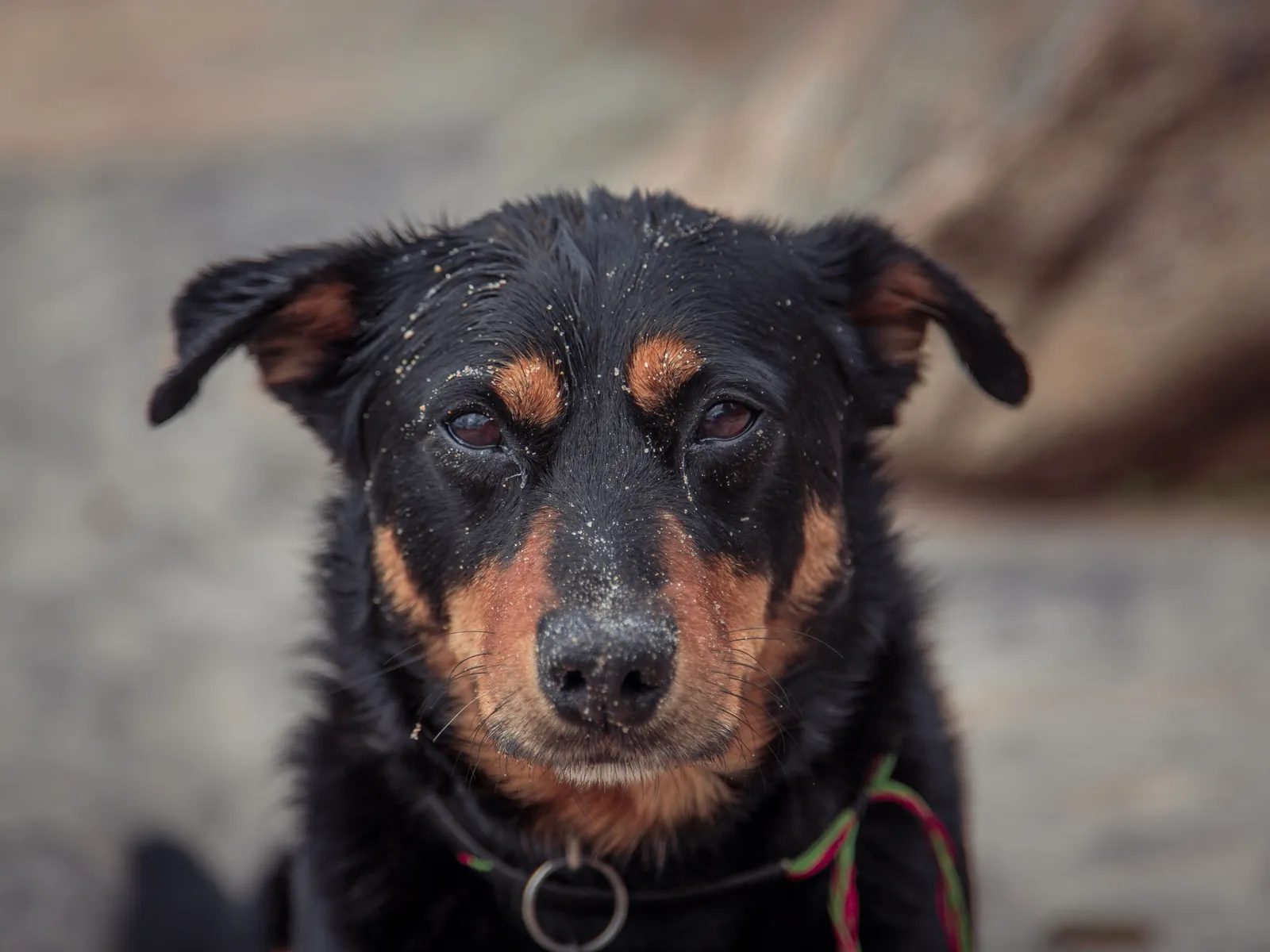
This is the most important thing to understand before you choose one. The Kelpie split into two lines that are registered separately:
- Working Kelpies are bred for stock work. They are registered with the Working Kelpie Council of Australia, and some with the Australian Sheep Dog Workers Association. Breeders select for working ability, not looks, so colour, coat and size vary. The Council's own material says colour has "little or no relation" to how well a dog works.
- Show Kelpies (sometimes called bench Kelpies) are registered with Dogs Australia and bred to a written breed standard. They have pricked ears, a double coat and a narrower set of colours.
Both are Kelpies, and both are energetic. But a dog from hard-working stock lines has been selected for generations to keep going all day, make its own decisions at a distance and react instantly to movement. That's ideal on a sheep property and a lot to manage in a townhouse. If you want a pet, ask the breeder or rescue directly which kind of dog you're looking at and what its parents do.
Size and appearance
The Dogs Australia standard sets height at the withers at 46–51 cm for males and 43–48 cm for females. It doesn't give a weight. Hill's Pet gives about 15–20 kg for males and 11–16 kg for females. Working Kelpies vary more, and some are taller or heavier than the show standard.
The standard describes "a lithe, active dog of great quality, showing hard muscular condition". Show colours are black, black and tan, red, red and tan, fawn, chocolate and smoke blue. Working Kelpies come in almost any of these and more, including cream, and their coats can be short, smooth or slightly rougher.
Temperament: what a Kelpie is like to live with
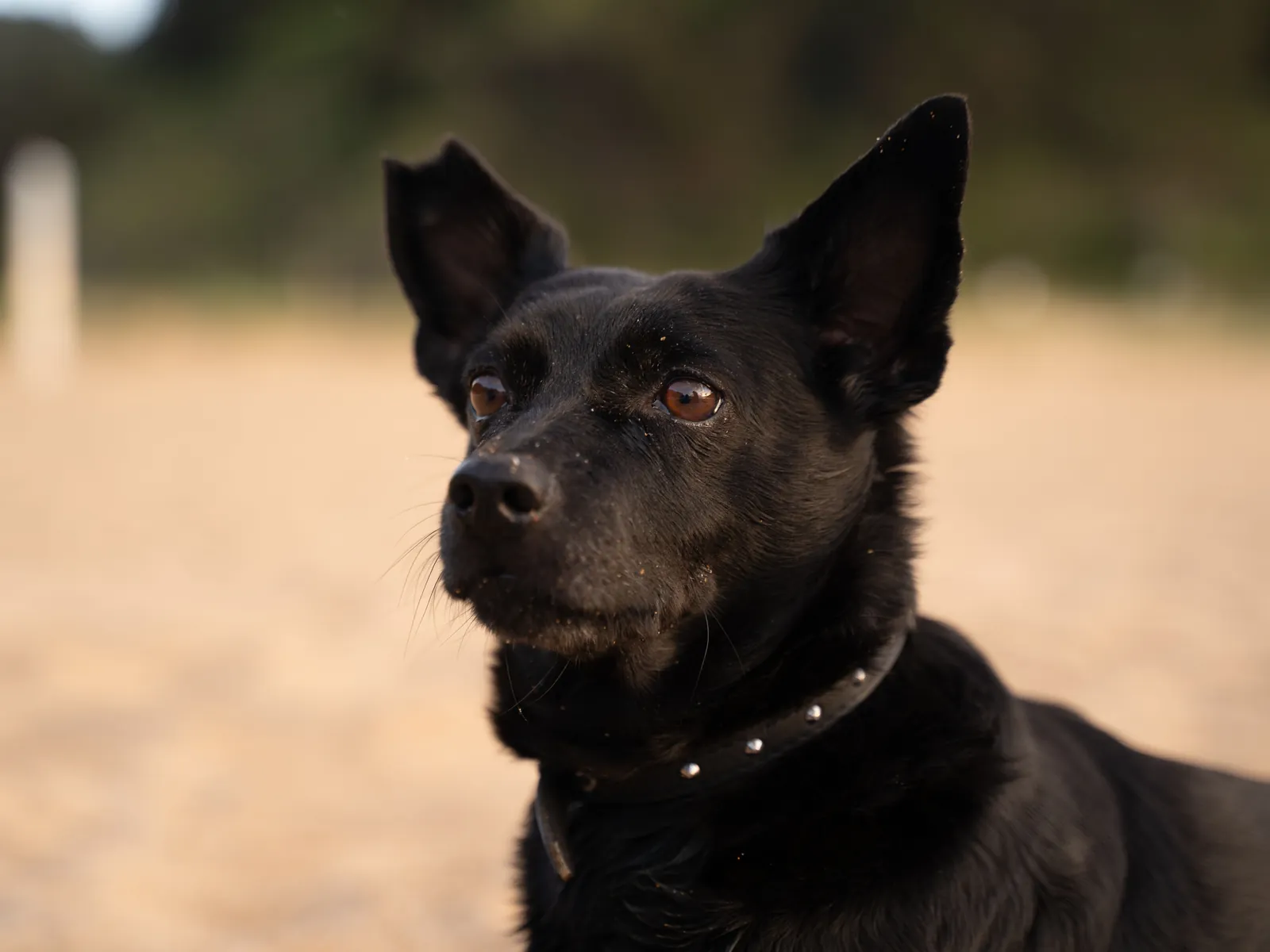
The breed standard calls the Kelpie "extremely alert, eager and highly intelligent, with a mild, tractable disposition". In daily life that usually means a dog that:
- Learns fast, including things you didn't mean to teach.
- Notices everything that moves: birds, bikes, cats, children running.
- Works things out for itself, such as gates, fences and the bin lid.
- Bonds closely with its people and wants to be doing something with them.
Kelpies are generally friendly with their own family and can be reserved with strangers. Herding instinct can show up as staring at, circling or nipping at the heels of children, other pets or anything that runs. That isn't aggression, but it needs managing early, and young children shouldn't be left to play chasing games with a Kelpie unsupervised.
Exercise and mental work
A walk around the block is not enough. Hill's Pet recommends more than an hour a day and describes Kelpies as suited to large yards or one to two hours of daily exercise. Working lines often need more.
Just as important is giving the brain something to do. A tired Kelpie is one that has run and thought. Good options:
- Short reward-based training sessions every day.
- Sniffing walks and food-search games.
- Dog sports: agility, herding trials, flyball, canicross or scent work.
- Real stock work, if you have access to it.
Also teach your Kelpie to switch off. Endless ball throwing can wind up a herding dog rather than settle it. A calm settle on a mat is a skill worth training from day one.
Can a Kelpie live in the suburbs or an apartment?
A Kelpie can do well in the suburbs with an owner who builds the day around the dog. It needs exercise every day, training, and company for much of the day. A big backyard on its own isn't enough. A bored Kelpie left alone tends to dig, bark, chase the fence line or go over the fence. Kelpies are strong jumpers (the Kelpie Muster even runs a high-jump event), so plan on secure fencing well above waist height.
Apartments are a poor fit for most Kelpies. If you're in a unit, our best dogs for apartments guide is a better starting point.
Kelpies and Australian heat
The Kelpie was developed for Australian conditions and has a short coat, so it often copes with heat better than heavier-coated breeds. But no dog is heatproof, and a Kelpie's drive is part of the danger: many will keep working or chasing a ball well past the point where they should stop. In summer, exercise early or late, carry water, give shade and make your dog take breaks. Our guide to dogs for hot climates has more on this.
Training a Kelpie
Kelpies are clever and keen, but they were bred to work at a distance from the handler and solve problems on their own. That can come across as stubbornness. Short, varied, reward-based sessions work best. Harsh handling tends to backfire with a sensitive, quick dog.
Focus early on a solid recall, impulse control around movement (cars, bikes, cats), calm greetings and settling at home. Puppy classes and, later, a dog sport club give you structure and other people who understand driven dogs.
Health and lifespan
Kelpies are generally considered a hardy breed. Conditions listed for the breed include:
- Cerebellar abiotrophy (CA): an inherited disease of the brain that causes poor balance and coordination, with no cure. Signs usually appear in puppyhood or the first months of life. DNA tests exist, but the Working Kelpie Council warns they don't catch every affected dog.
- Hip and elbow dysplasia, so ask for hip and elbow scores on both parents.
- Luxating patella (a kneecap that slips out of place).
- Progressive retinal atrophy, an inherited eye condition that causes gradual vision loss.
- Cryptorchidism (undescended testicles) in males.
Lifespan estimates vary by source. Hill's Pet gives 11–16 years, and a 2024 UK study estimated about 12 years. A good breeder will show you health test results for both parents, including CA DNA results.
Kelpie vs Border Collie
These two are the same size and both need a lot of exercise and training. The short version: the Border Collie was bred to work closely with a handler and tends to look to you for direction, while the Kelpie was bred to work more independently at a distance. Neither is an easy dog. Our full Kelpie vs Border Collie comparison goes through training, family life and coat care side by side.
Kelpie vs Koolie vs Australian Cattle Dog
All three are Australian working dogs, but they were bred for different jobs.
| Trait | Kelpie | Koolie | Australian Cattle Dog |
|---|---|---|---|
| Height | 43–51 cm (show standard) | 43–65 cm (club guide) | 43–51 cm (show standard) |
| Main job | Sheep, in paddocks and yards | Sheep and cattle, all-round | Driving cattle |
| Typical colours | Black, red, tan, fawn, chocolate, blue | Often merle; also solid | Blue or red speckle |
| Dogs Australia standard | Yes (show line) | No | Yes |
| Biggest ownership challenge | Stamina and escaping when bored | Drive, plus merle health checks | Heel-nipping and wariness of strangers |
See our Koolie guide and the Australian Cattle Dog profile for more.
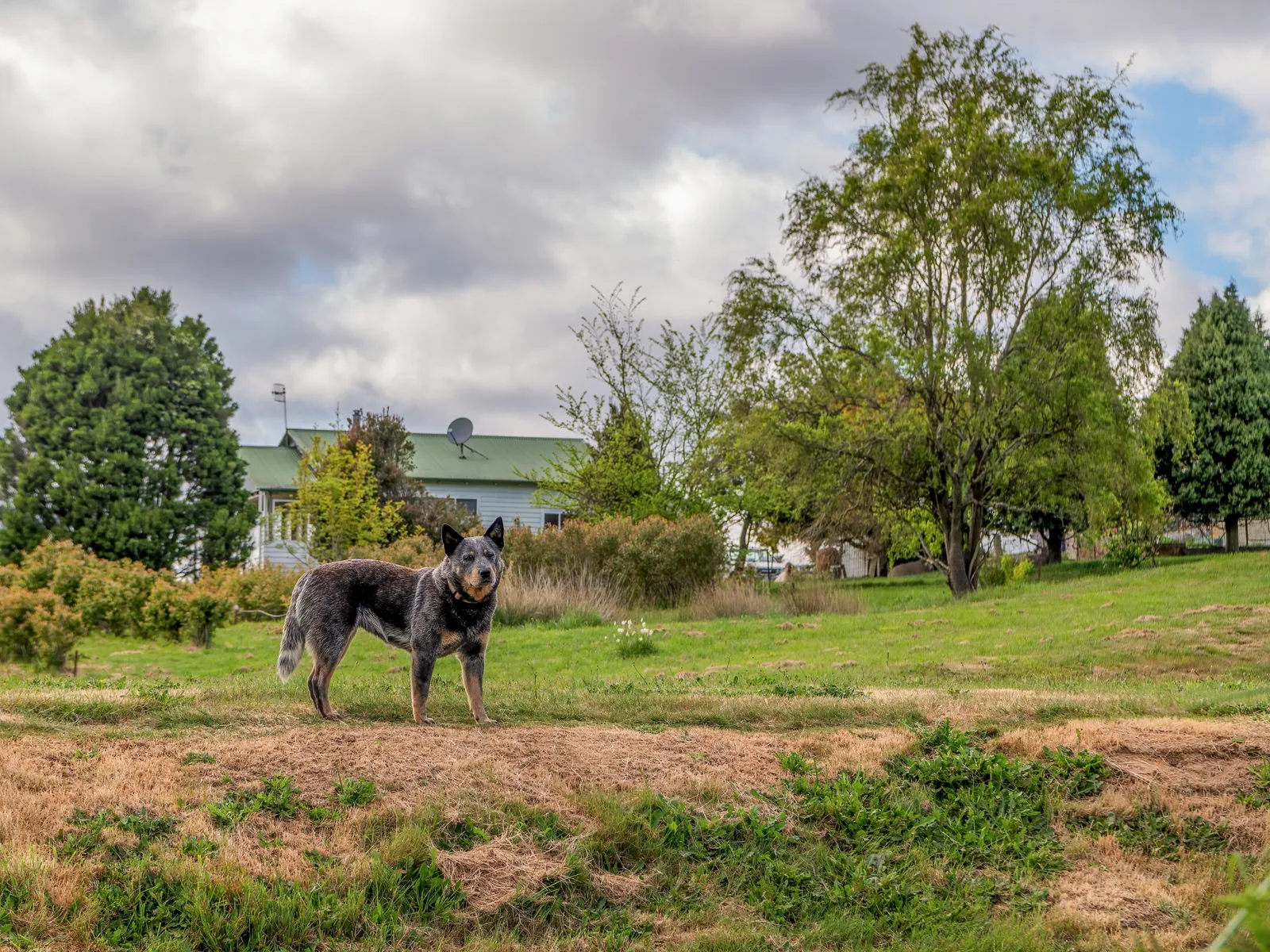
Adopting a Kelpie
Kelpies and Kelpie crosses turn up often in pounds and rescues, sometimes because a working dog didn't suit farm work or a pet was too much for a busy household. Listing sites such as PetRescue usually have plenty. An adult dog is a good choice, because you can see its energy level and how it reacts to movement before you commit.
Ask the rescue whether the dog is from working lines, how it behaves with children, cats and other dogs, whether it's been left alone and for how long, and how it handles fences.
Is a Kelpie right for you?
A Kelpie is a good match if you:
- Are active most days and enjoy training as well as exercise.
- Have secure, high fencing and are home for a good part of the day.
- Want a dog to do things with: sport, hiking, running or stock work.
Look at other breeds if you want a relaxed dog for short walks, are away most of the day, live in an apartment, or have a busy house with small children and not much time to train. If that's you, our first-time owner guide is a good place to start, and our dogs for active people list covers other energetic options.
Still deciding? Take the free dog match quiz to see how a Kelpie scores against your home, time and experience, or read the full Australian Kelpie breed profile.
Sources and further reading
- Dogs Australia: Australian Kelpie breed standard
- Dogs Australia: Australian Cattle Dog breed standard
- Working Kelpie Council of Australia
- Working Kelpie Council: Origin of the Kelpie
- Working Kelpie Council: Cerebellar abiotrophy (CA) Kelpie ataxias
- Cerebellar Abiotrophy in Australian Working Kelpies Is Associated with Two Major Risk Loci (Genes, 2022)
- Casterton: Birthplace of the Kelpie
- Hill's Pet: Australian Kelpie
- Wikipedia: Australian Kelpie
Cover photo: two red-brown Australian Kelpies. All photos: Shutterstock.
This article is general information, not veterinary advice. Checked November 2026; talk to your vet and breeder about health testing before you buy a puppy.