
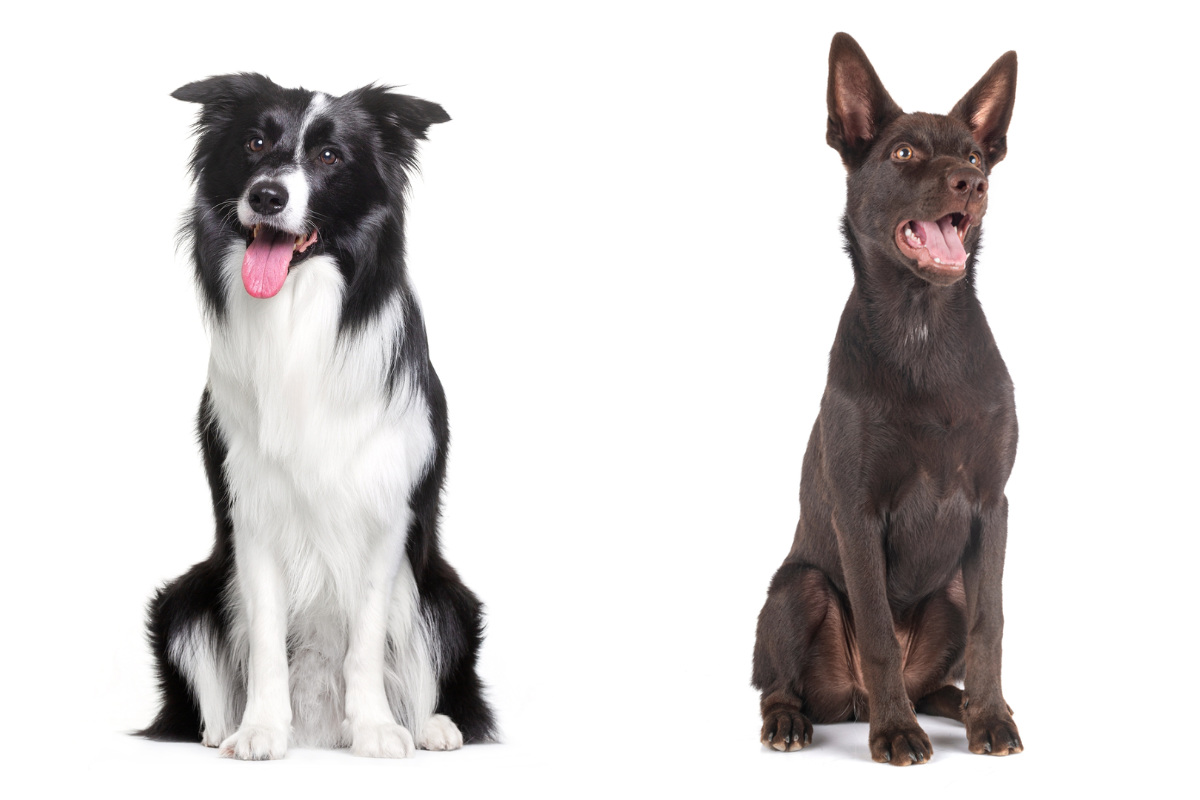
Short answer: Border Collies are often more handler-focused, while Australian Kelpies are commonly selected for independent stock work. Both are highly intelligent, high-drive herding dogs that need far more than a daily walk.
For most pet homes, the important question is not which breed is “smarter”. It is whether you can provide consistent training, safe exercise, mental work and a realistic plan for the dog's strong herding instincts.
The Quick Answer
Consider a Border Collie if you enjoy close, frequent training and dog sports. Consider an Australian Kelpie if you understand independent working behaviour and can provide secure space and purposeful activity. Individual lines and dogs vary, so meet the parents or assess the adult dog whenever possible.
How They Compare
| Trait | Border Collie | Australian Kelpie |
|---|---|---|
| Energy level | 5 / 5 | 5 / 5 |
| Good with kids | 4 / 5 | 3 / 5 |
| Training ease | 5 / 5 | 4 / 5 |
| Grooming needs | 3 / 5 | 2 / 5 |
| Barking | 4 / 5 | 3 / 5 |
| Shedding | 4 / 5 | 3 / 5 |
| Apartment friendly | 1 / 5 | 1 / 5 |
| Good with other pets | 2 / 5 | 2 / 5 |
| Separation anxiety risk | 4 / 5 | 3 / 5 |
The Key Difference the Numbers Do Not Capture
Border Collie: Bred for the Handler's Eye
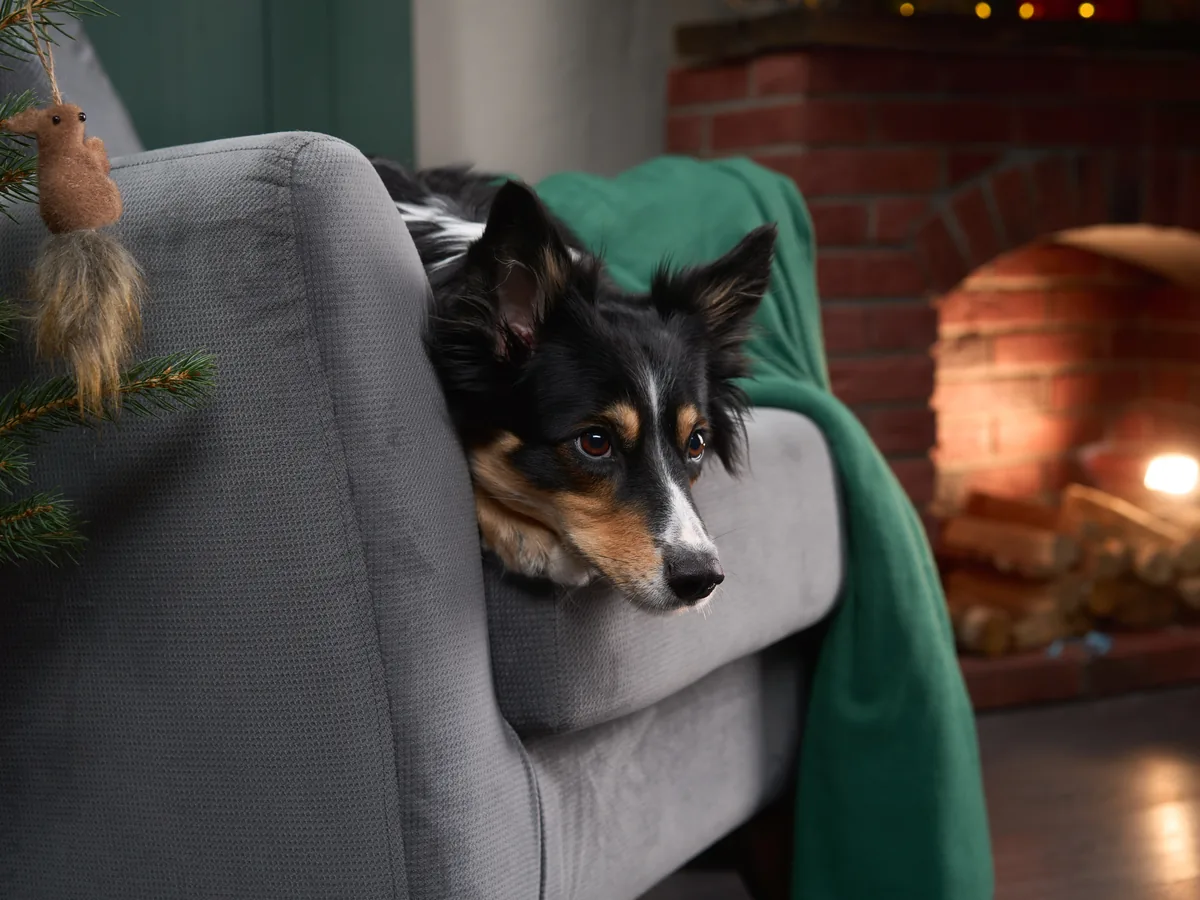
The Border Collie developed in the border country of Britain as a responsive herding dog working in partnership with a handler. Many show strong “eye”, sensitivity to movement and a desire for direction. Those traits can make advanced training rewarding, but they can also become fixation, chasing or repetitive behaviour when the dog lacks appropriate outlets.
Some Border Collies struggle with isolation or become focused on movement when their needs are unmet. Others settle well with training and an appropriate routine. Assess the individual dog and build comfort with short absences gradually; the breed score is not a diagnosis of separation anxiety.
Australian Kelpie: An Australian Working Dog
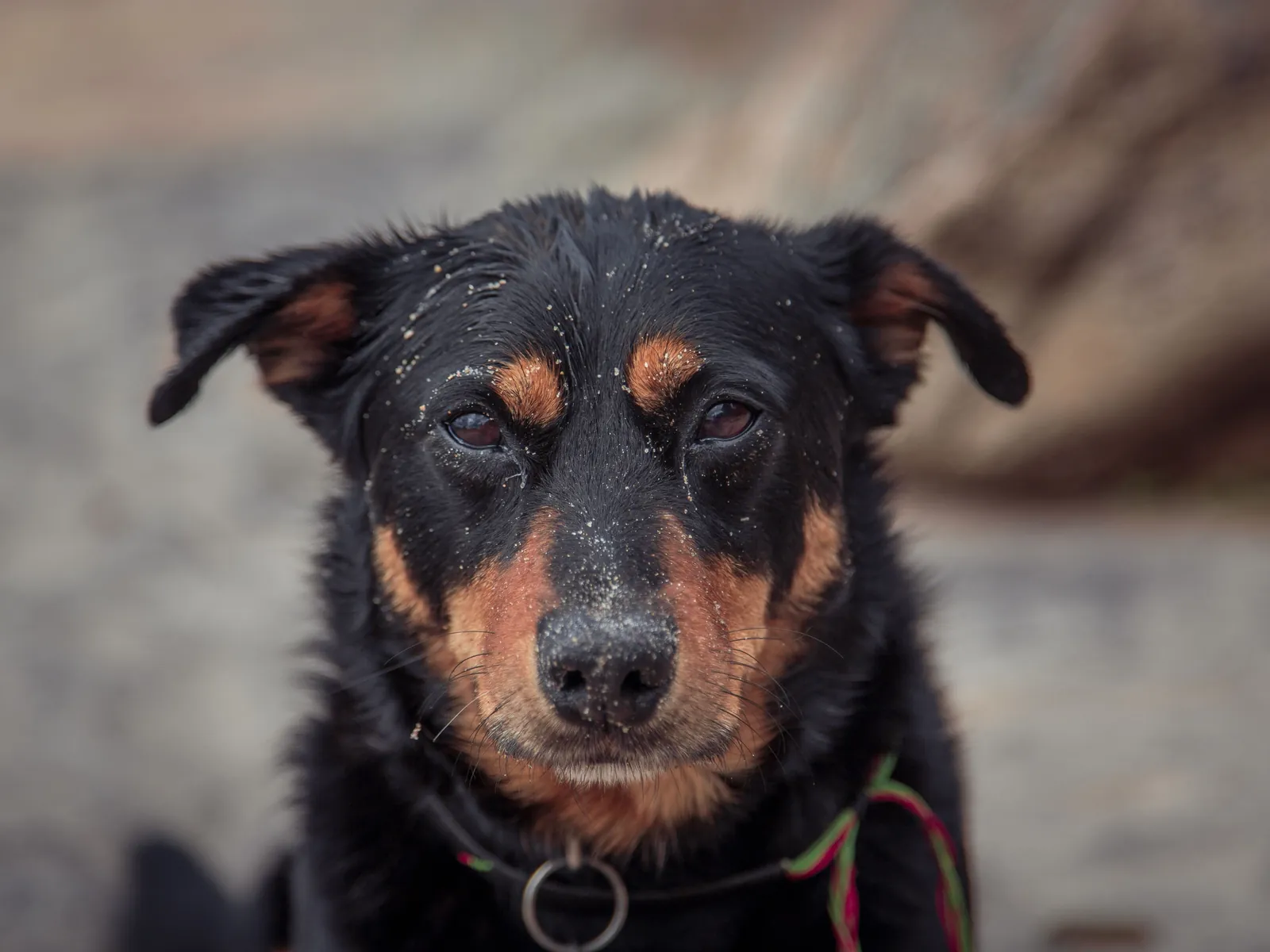
The Australian Kelpie was developed in Australia from British working collie stock for demanding sheep work. Kelpies are known for stamina, alertness and the ability to work at distance. A slightly lower training-ease score here does not mean lower intelligence; it reflects a dog that may make more independent decisions. Without enough work and guidance, that drive can be redirected into chasing, digging or testing insecure fencing.
The Kelpie's relatively short outer coat is usually simpler to maintain than a rough-coated Border Collie's, although both breeds have weather-resistant double coats and shed. Coat length alone does not make exercise in heat safe: every dog needs shade, water, acclimatisation and activity scheduled away from hot parts of the day.
Family Life and Other Pets
Either breed may try to control running children or pets through staring, circling, chasing or heel nipping. Ratings are useful prompts, not predictions for an individual dog. Ask about the parents or adult dog's behaviour, socialise carefully, supervise children and provide a quiet retreat. Existing cats and small pets need controlled introductions and ongoing management.
Daily exercise: more than a big backyard
Both breeds need an owner who enjoys training as well as being outdoors. Combine walks and sniffing with short training sessions, food-search games and suitable dog sports. Teach rest too: constant ball chasing is not a complete routine. The amount and type of exercise should suit the dog’s age, fitness and health.
A suburban Australian home can work when the owner meets those needs consistently. Acreage alone is not enough, and a Kelpie is not automatically content outdoors while the household is away. Ask a breeder or rescue about working versus companion lines, the dog’s ability to settle and its response to movement.
Coat care and shedding
The Kelpie’s short double coat is usually straightforward to brush. A rough-coated Border Collie needs more attention around feathering and tangles; smooth-coated Border Collies have a shorter coat. Both shed. Compare the particular dog’s coat and your tolerance for loose hair rather than assuming a short coat means no grooming.
Kelpie x Border Collie: a comparison is not a crossbreed guide
A Kelpie x Border Collie, sometimes called a Border Kelpie, combines the two breeds rather than being another name for either one. A cross can inherit a demanding mix of herding drive, stamina and sensitivity. It is not automatically calmer or easier to manage.
If you are considering an adult cross from a rescue, ask about its observed behaviour around children, cats, visitors and time alone. For a puppy, meet the parents where possible and discuss their working background. Size, temperament and lifespan cannot be reliably predicted from the crossbreed label alone.
Who Each Breed Suits
Choose a Border Collie if:
- You enjoy frequent reward-based training and can provide a consistent daily routine
- You are home most of the day, or can commit to structured mental work every day you are not
- You want to get into dog sports — agility, flyball, herding trials — and want a responsive training partner
- You can manage a dog prone to separation-related stress if left alone too long
Choose an Australian Kelpie if:
- You live rurally or have serious acreage and genuine work — livestock, a large secure property — for the dog to do
- You can schedule activity around Australian heat and provide shade and water
- You want a dog capable of independent problem-solving rather than one that waits on direction
- You have escape-proof fencing — Kelpies are exceptional jumpers and will test any weak point
Neither breed is an easy match for a low-energy household or an owner who is away most of the day. A large yard is not a substitute for engagement, and an apartment does not automatically make ownership impossible—but meeting either dog's exercise, noise and mental-work needs in a small home is difficult. Use our breed matching quiz to compare those demands with your actual routine.
If you like the Border Collie's training style, compare it with another demanding herding breed in our Border Collie vs Australian Shepherd guide.
Frequently Asked Questions
Is a Kelpie x Border Collie a good family dog?
It can be in a household prepared for a demanding herding dog. Assess the individual dog, supervise children and ask about chasing or nipping. A crossbreed label does not guarantee an easier temperament.
Which sheds more: a Kelpie or Border Collie?
Both shed. Rough-coated Border Collies generally need more brushing to manage their longer coat, while Kelpies have shorter coats. Coat length and grooming workload are more useful distinctions than a promise about how much hair an individual dog will shed.
Is a Kelpie the same as a Border Collie?
No. They are separate breeds with different origins — the Border Collie was developed in the England-Scotland border country, while the Kelpie was developed in Australia from Collie-type dogs adapted to outback conditions. They share herding ancestry and a similar size and energy level, but have different working styles and coats.
Are Kelpies harder to train than Border Collies?
Not harder — different. Border Collies are bred to take direction closely from a handler, which makes them extremely responsive to training. Kelpies are bred to work independently at a distance, so they are just as intelligent but naturally more inclined to make their own decisions rather than wait for a cue.
Do Kelpies handle heat better than Border Collies?
Kelpies were developed for Australian working conditions and may be better adapted to heat than many rough-coated Border Collies, but no dog should be worked hard in unsafe temperatures. Fitness, acclimatisation, humidity, sun and the individual coat all matter. Provide water and shade, avoid hot surfaces, and exercise during cooler hours.
Can a Kelpie or a Border Collie live in an apartment?
It is possible for an exceptional owner with a structured routine, but it is difficult. Space is only one factor: noise, movement sensitivity, daily exercise, training and mental work all need managing. Most apartment households will find a less intense breed easier to live with.
Which breed is better for a first-time dog owner?
Neither is usually an easy first dog, although a committed new owner with excellent support may succeed. Before choosing one, speak with trainers and breed-specific rescues, meet mature dogs from the relevant line, and write down a daily exercise and enrichment plan. Our first-time owner guide covers breeds with a gentler learning curve.