
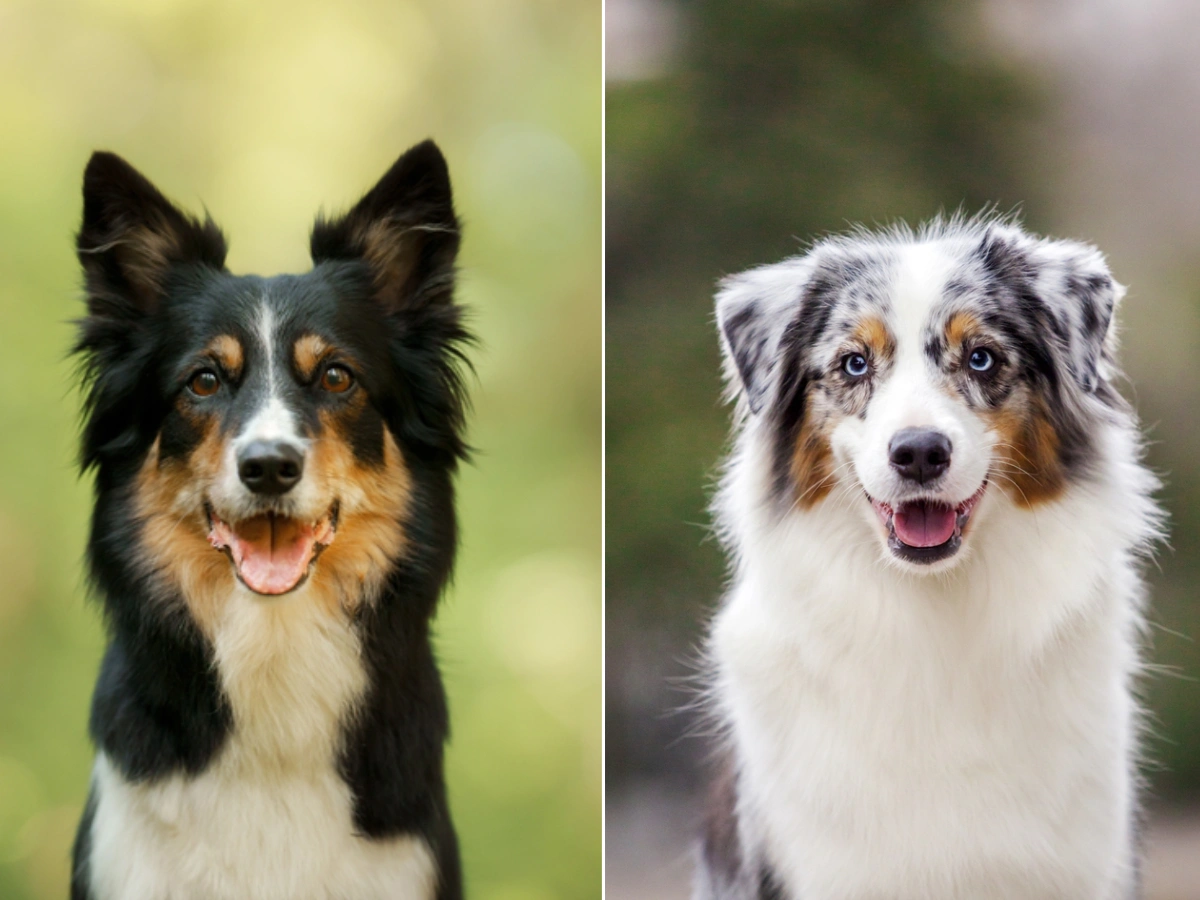
Ask almost anyone who has owned both a Border Collie and an Australian Shepherd and they will tell you the same thing: on paper, these dogs look almost identical. In practice, the Border Collie is in a different category of intensity entirely.
The numbers confirm the similarity. But the numbers do not tell the full story.
The Quick Answer
If you are an active, experienced owner who wants the most intelligent, responsive working dog available: Border Collie.
If you want a high-drive, highly capable herding dog with more family flexibility: Australian Shepherd.
How They Compare
| Trait | Border Collie | Australian Shepherd |
|---|---|---|
| Energy level | 5 / 5 | 5 / 5 |
| Good with kids | 4 / 5 | 4 / 5 |
| Training ease | 5 / 5 | 5 / 5 |
| Grooming needs | 3 / 5 | 3 / 5 |
| Barking | 4 / 5 | 3 / 5 |
| Shedding | 3 / 5 | 3 / 5 |
| Apartment friendly | 1 / 5 | 1 / 5 |
| Good with other pets | 3 / 5 | 3 / 5 |
The Key Difference the Numbers Do Not Capture
Border Collie Intensity
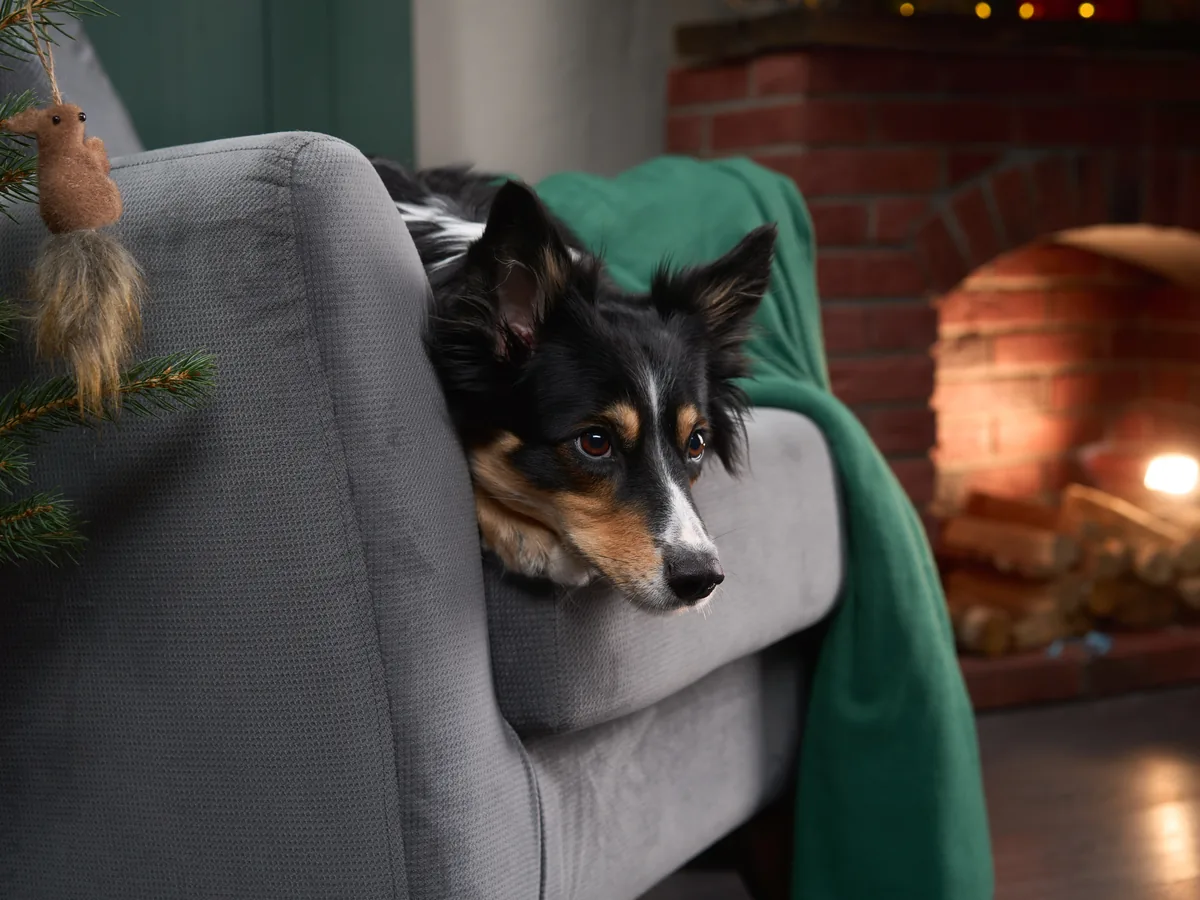
The Border Collie is widely considered the most intelligent dog breed in the world. It is also, for many owners, one of the hardest to live with — not because of aggression or bad temperament, but because of the sheer relentlessness of its working drive.
Border Collies were bred to work sheep for ten to twelve hours a day, responding to subtle commands at a distance, maintaining sustained concentration for extended periods. That drive does not switch off when the dog comes inside. An under-stimulated Border Collie will fixate. It may herd children, chase shadows, obsessively stare at moving objects, or develop repetitive behaviours. These are not behavioural problems — they are a working dog doing what it was designed to do with whatever outlet is available.
The single-point difference in barking (Border Collie 4/5 vs Aussie 3/5) matters in practice. Border Collies use vocalisation as a working tool and do not naturally quiet down without training. The herding instinct also shows up in how they interact with other pets and children — some will attempt to herd small family members by nipping at heels, which requires consistent redirection.
Australian Shepherd Flexibility
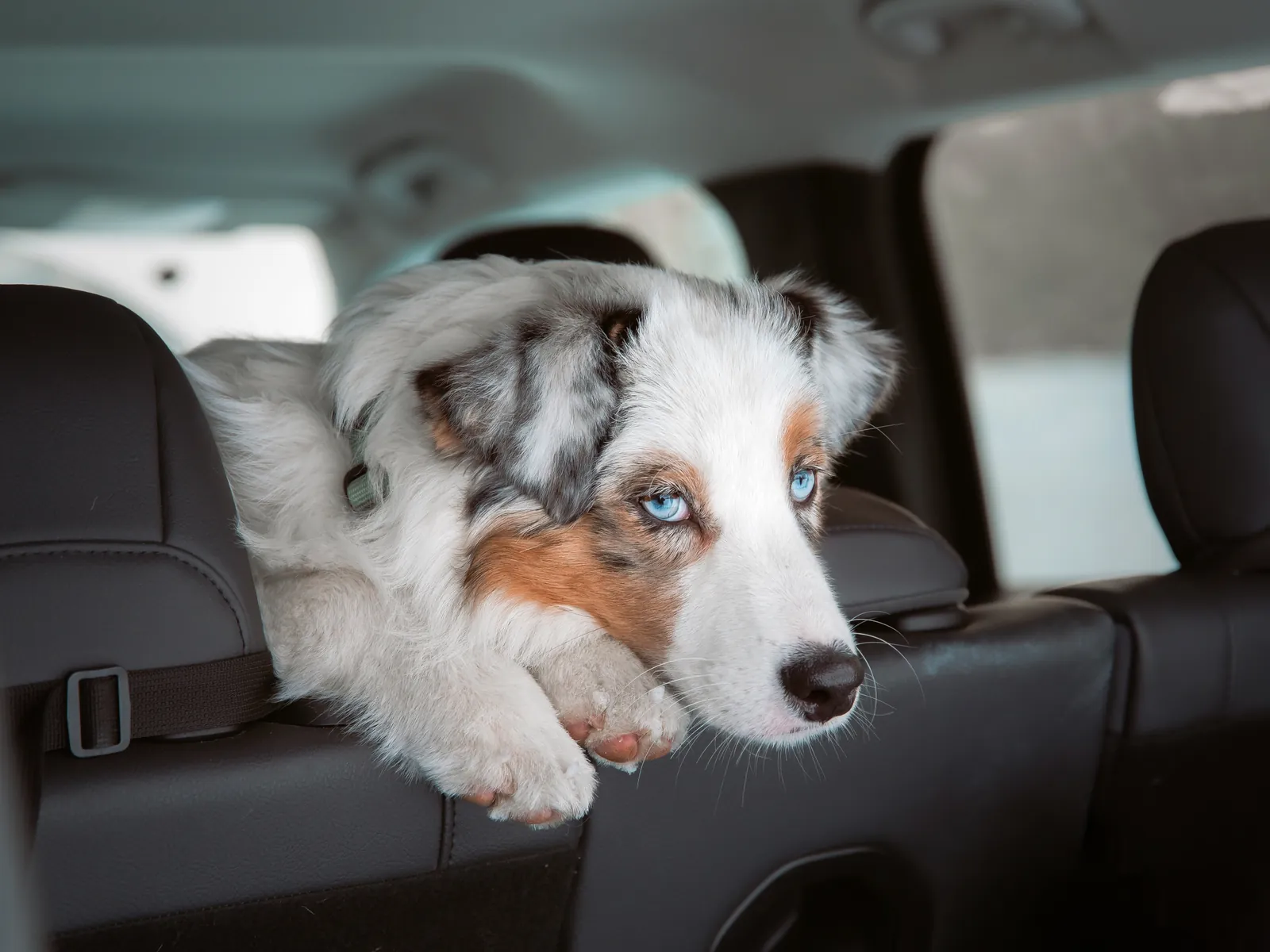
The Australian Shepherd was bred for ranch life in America — herding livestock across variable terrain, adapting to different tasks, and living alongside a working family with time both on and off-duty. This produces a dog with a slightly more adjustable gear range. An Aussie can work hard and play hard, but it can also settle in the evening in a way that feels more manageable for households that do not run dedicated dog sports or farm work.
The lower barking score reflects this. Aussies are vocal and alert, but slightly less compulsively so. The overall impression is a high-drive dog with more flexibility about where and how that drive gets expressed.
Mental Stimulation — Non-Negotiable for Both
Both breeds score 1/5 for apartment friendliness — do not attempt it with either. Both need space, significant daily outdoor exercise of at least 90 minutes, and consistent mental stimulation beyond physical activity. For the Border Collie this is especially important: physical exercise alone is not sufficient. Dog sports, trick training, agility, herding trials, and puzzle tasks are part of the necessary daily routine, not optional extras.
For the Australian Shepherd this also matters — but the threshold is slightly more forgiving for owners who are genuinely active without being competitive dog sport participants.
Who Each Breed Suits
Choose a Border Collie if:
- You have experience with high-drive working breeds
- You participate in or plan to start dog sports — agility, flyball, herding trials, frisbee
- You are home most of the day and can provide sustained mental engagement
- You want the most trainable, responsive dog available and can meet its demands
- You have a large property with space for a working dog to move and think
Choose an Australian Shepherd if:
- You are an active owner who wants a high-drive family dog rather than a working competitor
- Your household includes children and you want a herding breed with more family flexibility
- You want an intelligent, highly trainable breed without the intensity ceiling of a Border Collie
- You exercise seriously but do not run a dedicated dog sport program
Still unsure which high-drive dog is right for you — or whether either actually fits your lifestyle? Our breed matching quiz will tell you honestly. Both breeds score demanding on nearly every axis, and the quiz will surface whether your home, schedule, and experience level are a genuine match.
Frequently Asked Questions
Is a Border Collie smarter than an Australian Shepherd?
Border Collies consistently rank first in canine intelligence studies. Australian Shepherds rank in the top ten. Both are exceptionally intelligent — the meaningful difference is the intensity and persistence of the Border Collie's working drive, not just raw problem-solving ability.
Are Border Collies or Australian Shepherds better with children?
Both score 4/5 for compatibility with children. The relevant practical note is the Border Collie's herding instinct — some will attempt to herd small children by nipping at heels, which requires consistent training to redirect. Australian Shepherds have the same instinct but tend to be slightly more manageable in a family setting.
Can a Border Collie or Australian Shepherd live in an apartment?
Both score 1/5 for apartment friendliness. Neither should live in an apartment. Both need space, significant daily outdoor exercise, and mental stimulation that a confined environment cannot provide. These are not urban dogs.
Which is more energetic — a Border Collie or an Australian Shepherd?
Both score 5/5 — the maximum. The distinction is not energy quantity but quality: Border Collie energy is focused, persistent, and purposeful in a way that can become compulsive without an outlet. Australian Shepherd energy is high but slightly more variable and easier to channel for owners without a structured working or sport program.