
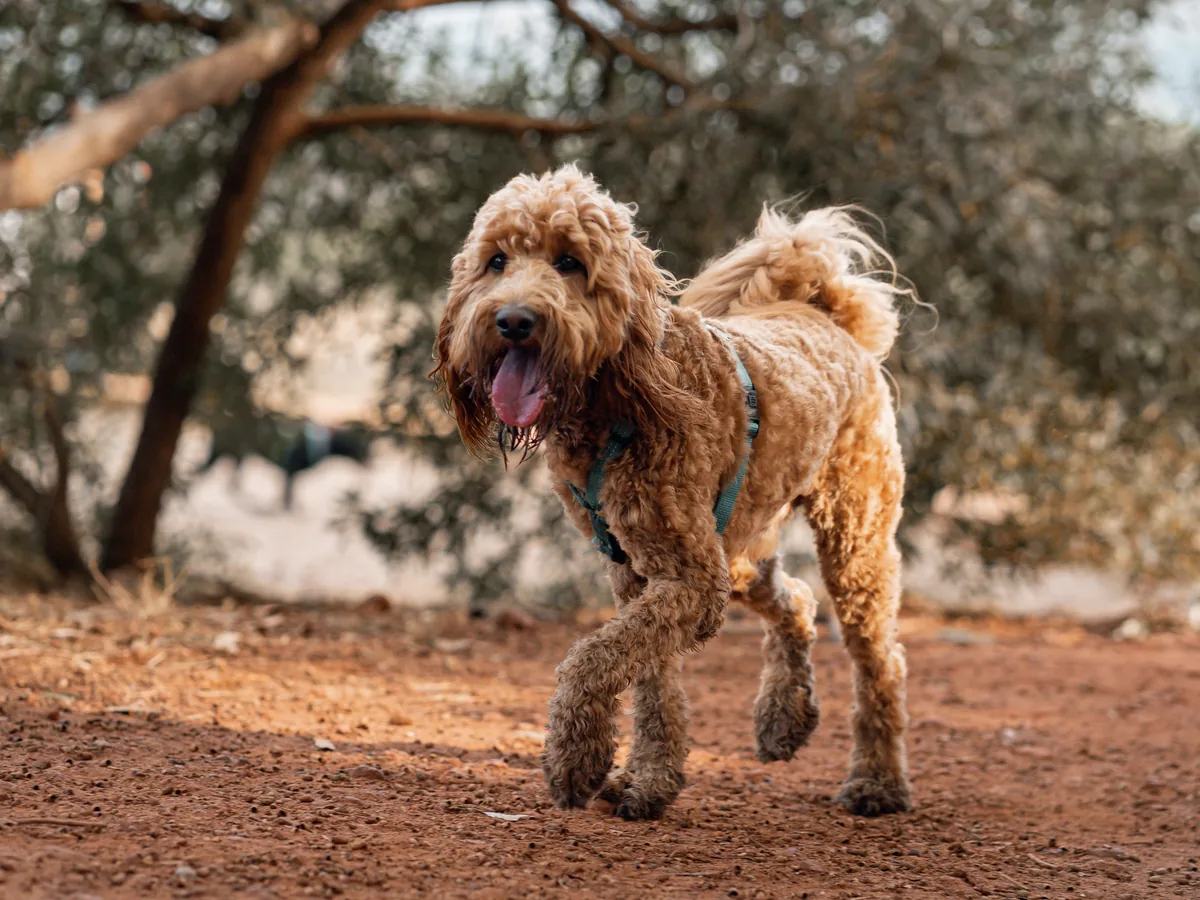
Short answer: a Cavoodle is a small dog, usually 5–12 kg, that suits apartments, retirees and families who want a cuddly companion with moderate exercise needs. A standard Groodle is a medium-to-large dog that can weigh up to about 45 kg, with the energy of a Golden Retriever and a big coat to match. Both are friendly, family-oriented and need regular professional grooming. The real decision is size and energy, and a "mini Groodle" muddies that line.
Both crosses are hugely popular in Australia, and both are sold as low-shedding family dogs. This guide compares size, exercise, grooming, health and family fit, then explains where mini Groodles fit in.
Cavoodle vs Groodle at a glance
| Cavoodle | Groodle | |
|---|---|---|
| Parents | Cavalier King Charles Spaniel × Toy or Miniature Poodle | Golden Retriever × Poodle (usually Standard) |
| Adult weight | About 5–12 kg | About 8–45 kg, depending on Poodle parent |
| Height | About 28–35 cm | About 35–70 cm |
| Life expectancy | About 10–15 years | About 10–15 years |
| Daily exercise | About 30–45 minutes of walks | 30 minutes to 2 hours of activity |
| Grooming | Brush every few days; groom every 6–8 weeks | Brush often; groom every 6–8 weeks |
| Best for | Apartments, smaller homes, moderate routines | Yards, active families, older children |
Crossbreeds have no breed standard, so these are typical ranges from Australian vet and pet insurance guides. Individual dogs can fall outside them. Sources are listed at the end.
Where they come from
A Cavoodle crosses a Cavalier King Charles Spaniel with a Toy or Miniature Poodle. A Groodle crosses a Golden Retriever with a Poodle, traditionally the Standard Poodle. Both became hugely popular in Australia's designer-dog boom, pairing a popular family breed with the Poodle's lower-shedding coat. Read more in the Poodle behind every oodle and designer dog generations explained.
The parent breeds explain most of the difference. Dogs Australia's Cavalier King Charles Spaniel standard gives a weight of 5.4–8.2 kg and the Toy Poodle stands under 28 cm. The Golden Retriever stands 56–61 cm (dogs) or 51–56 cm (bitches), and its standard calls it "kindly, friendly and confident". A Groodle is a much bigger dog from the start.
Size: the deciding factor
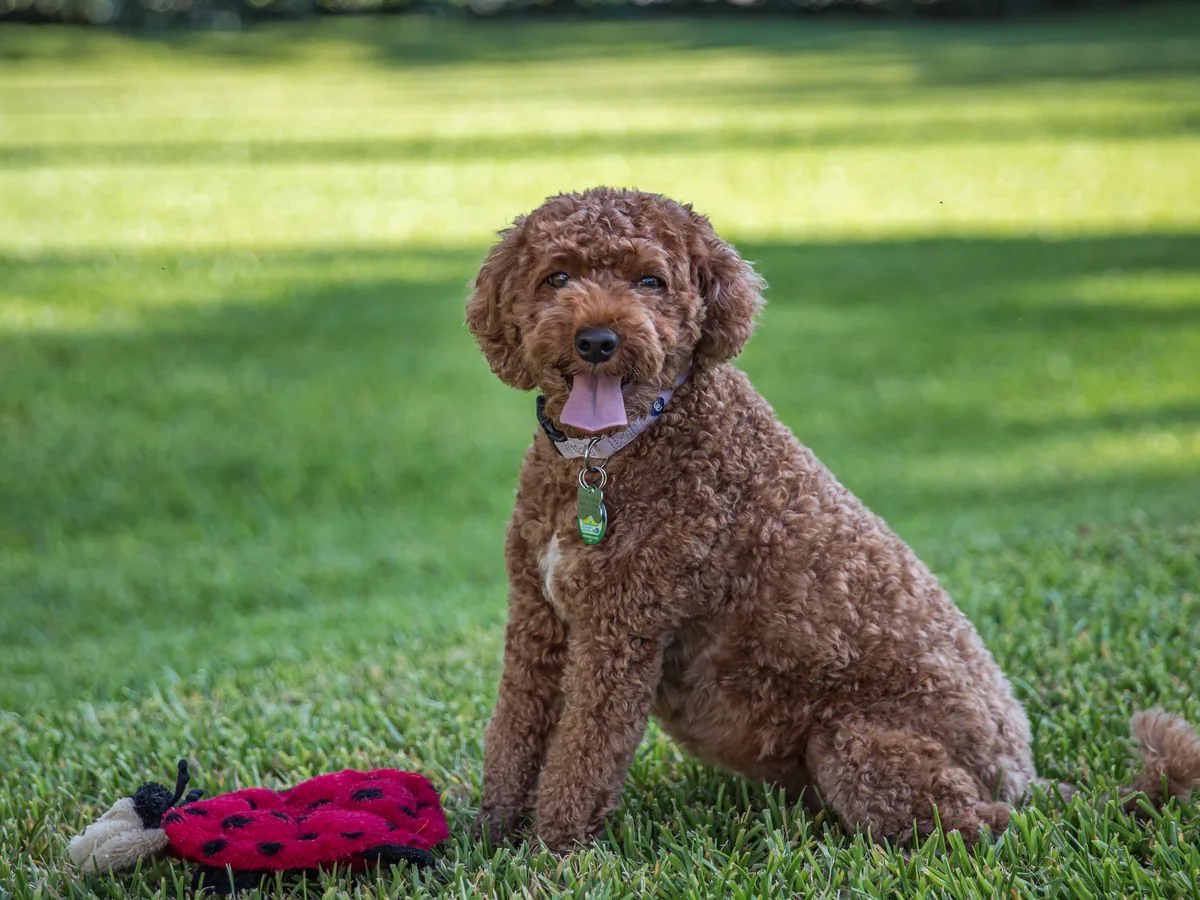
Australian guides put adult Cavoodles at about 5–12 kg and 28–35 cm tall: small enough to carry, fit in a car's footwell and live comfortably in an apartment.
Groodles vary much more. Pet Insurance Australia gives a range of 8–45 kg and 35–70 cm "depending on their type", with Miniature, Medium and Standard Groodles "determined by the Poodle parent's size". A standard Groodle from a Standard Poodle is a large dog that will take up a lot of the couch.
Not sure how big your puppy will grow? Our puppy growth calculator estimates adult size from age and weight.
Mini Groodle vs Cavoodle
A mini Groodle uses a Miniature Poodle (28–38 cm under the Dogs Australia standard) instead of a Standard. That shrinks the dog, but the other parent is still a Golden Retriever standing 51–61 cm, so mini Groodles are usually bigger and less predictable in size than Cavoodles. If you need a guaranteed small dog, a Cavoodle from parents of known size is the safer bet. Our Toy Cavoodle guide explains how size labels vary between breeders. Ask the breeder for both parents' adult weights, whichever cross you choose.
Energy and exercise
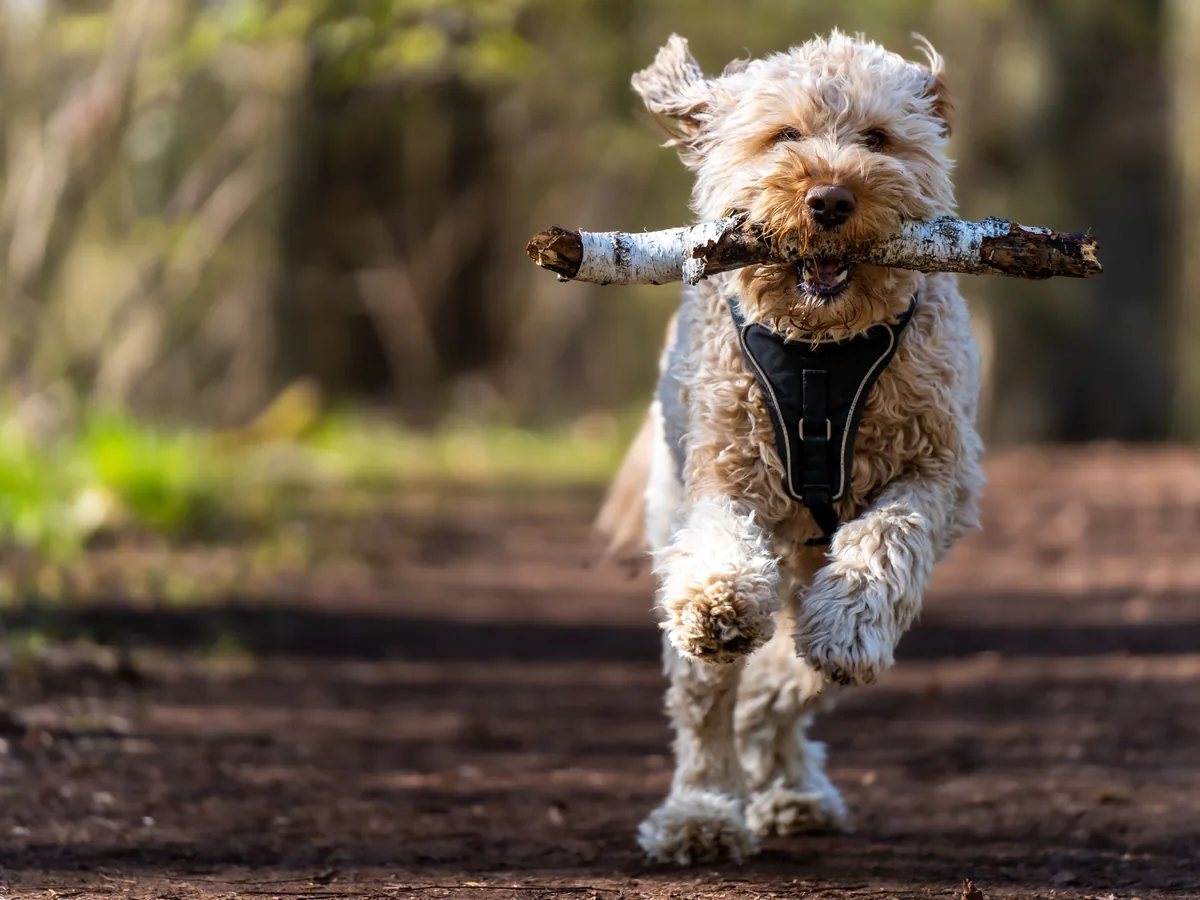
RSPCA Pet Insurance says "around 30 to 45 minutes of daily walks usually suits" a Cavoodle. They enjoy play and walks but are happy with a moderate routine, which makes them popular with older owners and busy households.
Groodles have "naturally medium to high energy levels and need room to play and run around", according to Pet Insurance Australia, with adults needing "at least 30 minutes to 2 hours of daily activity". A bored Groodle can be boisterous and destructive, and its size makes jumping up a real issue around toddlers and older relatives. Hill's notes that they may not suit apartments.
Grooming and shedding
Neither dog is maintenance-free. Both usually have curly or wavy coats that shed little but mat easily.
- Cavoodle: brushing every few days and a professional groom every six to eight weeks (RSPCA Pet Insurance).
- Groodle: regular brushing (Hill's suggests daily, to prevent matting) and a professional groom every six to eight weeks. More dog means more coat, a longer groom and a bigger bill.
"Low-shedding" isn't the same as allergy-free. Coats vary, especially in early generations, and no dog is truly hypoallergenic. Read what hypoallergenic really means before buying for an allergic household.
Temperament and family life
Both are bred as people-focused family dogs. Cavoodles "thrive on company and bond deeply with their families, including children and other pets", says RSPCA Pet Insurance, but can be "sensitive, excitable, and may suffer from separation anxiety". Hill's describes Groodles as "intelligent, obedient and extremely loving", patient with young children and good with other pets, but warns that long periods alone "could cause them to develop separation anxiety".
Neither copes well with being left alone all day. If everyone in the house works full-time away from home, plan for doggy day care or a dog walker, or read our guide to separation anxiety in dogs.
For families with toddlers, a Cavoodle's small size makes it less likely to knock a child over, but small dogs can be injured by rough handling. A well-trained Groodle can be a wonderful companion for older, active children.
Health
Each cross can inherit problems from either parent, so health-tested parents matter more than the label.
- Cavoodle: RSPCA Pet Insurance lists progressive retinal atrophy (an inherited eye disease), ear infections, patellar luxation (slipping kneecaps) and dental disease.
- Groodle: Pet Insurance Australia lists hip and elbow dysplasia, progressive retinal atrophy, gastric dilation (bloat), ear and skin infections, and cancer.
Ask the breeder for the parents' health-screening results, meet the mother, and use the RSPCA's guide to finding a responsible breeder.
Which should you choose?
- Choose a Cavoodle if you live in an apartment or townhouse, want a dog you can easily pick up and travel with, prefer moderate daily walks, or want lower food and grooming costs.
- Choose a Groodle if you have a yard, love long walks, beach runs or swimming, have older children, and are ready to train and groom a big, bouncy dog.
- Consider a mini Groodle only if you're comfortable with some uncertainty about adult size. Meet both parents first.
Still deciding? Compare them side by side in our breed comparison tool, see our Cavoodle vs Labradoodle, Groodle vs Labradoodle, Spoodle vs Cavoodle and Golden Retriever vs Groodle guides, or estimate costs with our dog cost calculator. Our free dog breed quiz compares your home and routine with more than 200 breeds.
Cavoodle vs Groodle FAQs
Which is bigger, a Cavoodle or a Groodle?
A Groodle, usually by a long way. Cavoodles are about 5–12 kg, while Groodles range from about 8 kg for small minis to 45 kg for large standards.
Is a mini Groodle the same size as a Cavoodle?
Usually not. A mini Groodle has a Golden Retriever parent, so it's typically bigger and less predictable in size than a Cavoodle. Ask for both parents' adult weights.
Which is better for an apartment?
A Cavoodle. It's smaller and needs less exercise. Groodles need room to play and more daily activity.
Which sheds less?
Both are usually low-shedding, but coats vary from dog to dog. Neither is guaranteed to be allergy-friendly.
Which lives longer?
Their typical lifespans overlap: guides give about 10–15 years for both. Smaller dogs often live a little longer, but health testing and care matter more.
Sources and further reading
- RSPCA Pet Insurance: Cavoodle
- Greencross Vets: Cavoodle owner's guide
- Pet Insurance Australia: Groodle
- Hill's Pet Nutrition Australia: Groodle
- Dogs Australia breed standards: Golden Retriever, Cavalier King Charles Spaniel, Poodle (Toy), Poodle (Miniature)
- RSPCA Knowledgebase: How do I find a responsible dog or cat breeder?