
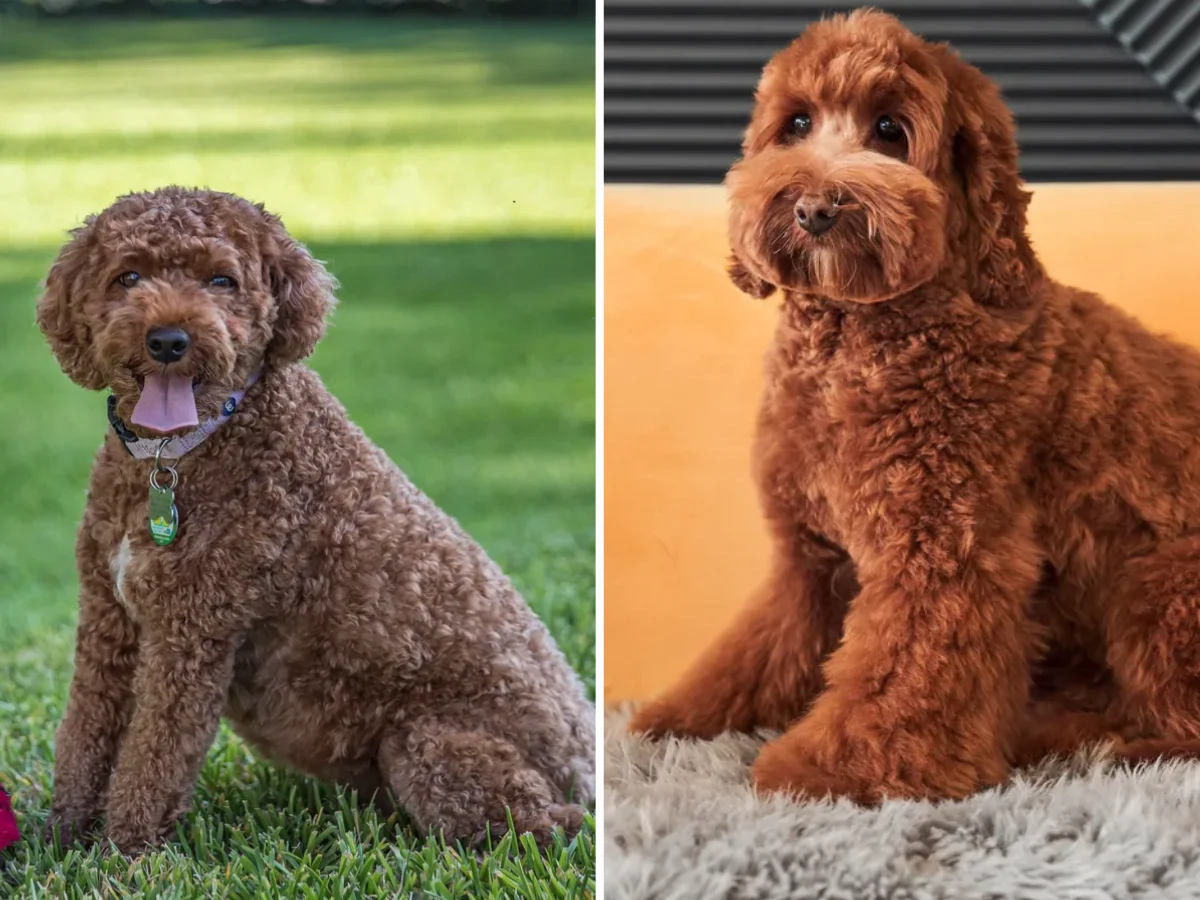
Short answer: a Cavoodle is usually the smaller starting point, while a standard-size Labradoodle means planning for a larger dog. But “Labradoodle” covers different sizes and breeding lines. Compare the actual dog's adult size, coat, behaviour and routine before choosing either.
A Cavoodle combines Cavalier King Charles Spaniel and Poodle ancestry; a Labradoodle starts with Labrador Retriever and Poodle ancestry. Both names can conceal important differences between individual dogs. Neither promises an allergy-free home, effortless training or a dog that copes with your working day alone.
Cavoodle vs Labradoodle at a glance
| What matters | Cavoodle | Labradoodle |
|---|---|---|
| Adult size | Often a small companion; ask about both parents and mature relatives. | Can be miniature, medium or standard in Australian Labradoodle lines; confirm the actual size. |
| Coat care | Plan brushing and any clipping around the dog's coat. | Coat type varies; ask about shedding and grooming rather than assuming. |
| Exercise and training | Small does not mean inactive, quiet or already trained. | Check the dog's activity and handling needs, especially for a larger adult. |
| Allergies | Not an allergy-free choice. | Not an allergy-free choice. |
| Family fit | Assess behaviour and supervise children with the dog. | Assess behaviour, physical handling and interactions with children. |
Size: compare the dogs, not just the labels
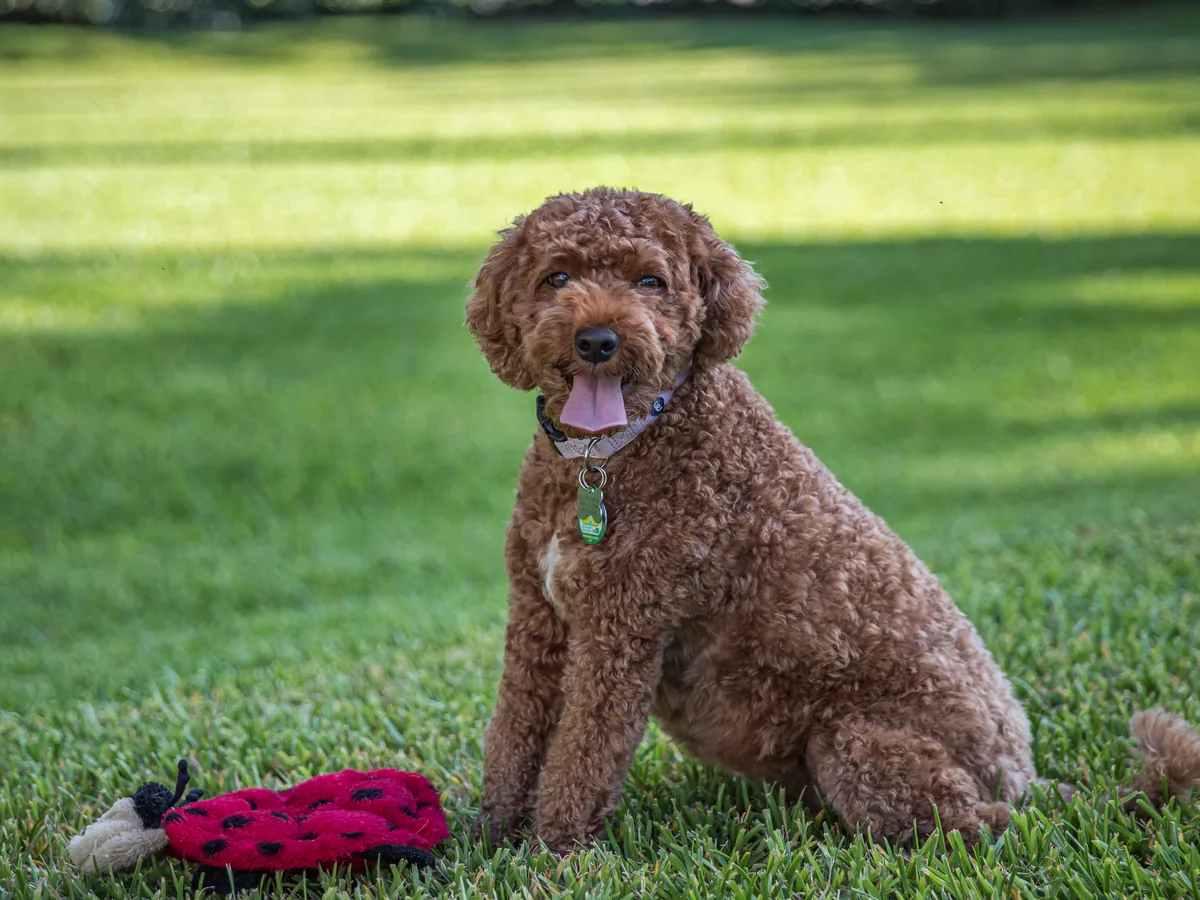
The Cavoodle is commonly a smaller companion. RSPCA Pet Insurance's Cavoodle overview lists an adult weight guide of 5–12 kg. That is an estimate for the type, not a guarantee for a particular puppy.
Do not compare every Cavoodle with a large standard Labradoodle. The Australian Labradoodle Association's own standard lists miniature dogs at 7–13 kg, medium dogs at 13–20 kg and standard dogs at 21–30 kg. Those are association standard ranges for Australian Labradoodles, not universal limits for all Labrador–Poodle crosses. Small examples can overlap with Cavoodles.
Ask what size both parents are, how large adult relatives became and how the estimate was made. If lifting the dog, carrying it on stairs or fitting it safely in your car matters, meet adult dogs of the relevant line before committing.
What does “Australian Labradoodle” mean?
It is worth asking this question when comparing breeders. The Australian Labradoodle Association describes established lines developed with additional parent breeds, including spaniels, beyond the original Labrador–Poodle cross. Do not assume that every dog advertised as a Labradoodle has the same ancestry, breeding history or size.
Ask for documented parentage and relevant health records. A label, a generation code or a seller's promise is not a substitute for information about the actual litter. Our purebred versus designer dog guide explains the broader distinction.
Shedding and grooming: less loose hair can mean more coat work

A Poodle parent does not make every cross non-shedding. The Australian Labradoodle Association describes fleece, wool and hair coats, including hair coats that shed to varying degrees. Ask what the adult coat is likely to be like and what evidence supports that expectation.
Brushing helps prevent tangles and matting; some coats also need professional clipping. The RSPCA's grooming guidance recommends suitable tools, gentle handling and getting professional help when needed.
Before choosing either dog, get a groomer's advice about the likely coat, a realistic appointment schedule and a quote. Check whether you can do the care between appointments. A small dog with a demanding coat may take more of your time than a larger dog with simpler coat care.
Use our low-shedding guide to compare cleaning priorities, and our low-maintenance dogs guide to consider the full workload rather than coat alone.
Are Cavoodles or Labradoodles hypoallergenic?
Neither is allergy-free. ASCIA's pet-allergy guidance explains that all dog breeds can cause allergies and that dog allergens are associated with saliva and dander. How much loose hair you see does not establish whether a dog is safe for a person with an allergy.
If someone in the household has symptoms or a known pet allergy, discuss the decision with an appropriate health professional before bringing a dog home. Do not treat a breeder's “hypoallergenic” claim, a coat description or a short visit without symptoms as a guarantee.
Exercise, training and apartment life
Both dogs need a routine that includes activity, mental stimulation and reward-based training. The RSPCA's general dog-care advice makes clear that a backyard does not replace walks and enrichment. There is no single exercise prescription that suits every dog carrying either label.
For an apartment, consider access to suitable outdoor areas, stairs or lifts, noise, settling behaviour and your daily schedule. A Cavoodle's smaller body may be easier to accommodate, but that does not prove it will be quiet or comfortable alone. A larger Labradoodle may need more physical handling than you want to manage.
Ask a breeder, rescue or current carer what the individual dog does on a normal day. Look for concrete observations of settling, lead walking and behaviour around visitors. Neither “clever” nor “family dog” means training will happen without patient work.
Children, other pets and time alone
Choose on observed behaviour, not a perfect family-suitability score. The RSPCA recommends direct adult supervision whenever children interact with dogs, and secure separation when supervision is unavailable.
Ask about the dog's experience with children and other pets, plan controlled introductions and provide somewhere it can retreat. Size affects handling, but a smaller dog is not automatically a safer match.
For time away from home, ask what has actually been observed and what support the dog will need. Neither name tells you that a dog will tolerate an entire working day alone. Consider the household's care arrangements before choosing, particularly if nobody can reliably help.
Five questions before you choose
- What is this dog's likely adult size, and what evidence supports it?
- What does its coat need between professional grooming appointments?
- What has been observed around children, pets, noise and time alone?
- What health records and relevant parent tests can I review with my vet?
- Can I maintain the daily care routine and meet ongoing costs?
The RSPCA's Smart Puppy and Dog Buyer's Guide explains what to ask a breeder and why visiting the place where dogs are kept matters. Ask for records rather than accepting reassuring descriptions.
Frequently asked questions
Is a Cavoodle smaller than a Labradoodle?
Often, when compared with a standard-size Labradoodle. Miniature Australian Labradoodle ranges can overlap with Cavoodles. Check the parents, family line and actual adult-size estimate.
Which is easier to groom?
There is no dependable winner from the names alone. Compare coat type, brushing requirements and clipping needs with a groomer, then choose a routine you can maintain.
Which sheds less?
It depends on the individual coat. Labradoodle coat types include shedding hair coats; do not buy either dog on a promise of zero shedding.
Which is better for an apartment?
The Cavoodle may be easier to fit physically, but behaviour and routine matter too. Check noise, settling, alone-time needs, outdoor access and the individual dog's comfort.
Is a Cavoodle or Labradoodle better for a family?
The better match is the individual whose needs and behaviour fit your household. Meet dogs, ask for specific observations and plan supervised child–dog interactions.
Find the dog that fits your routine
Take our dog breed matching quiz to compare your home, activity and grooming preferences. Use the results as a research shortlist, then meet dogs and ask the practical questions above.
Sources and further reading
- RSPCA Pet Insurance: Cavoodle overview
- Australian Labradoodle Association: its size standard
- Australian Labradoodle Association: parent breeds
- Australian Labradoodle Association: coat types
- ASCIA: Pet Allergy FAQ
- RSPCA: grooming guidance
- RSPCA: general dog care
- RSPCA: introducing dogs to children
- RSPCA: Smart Puppy and Dog Buyer's Guide