
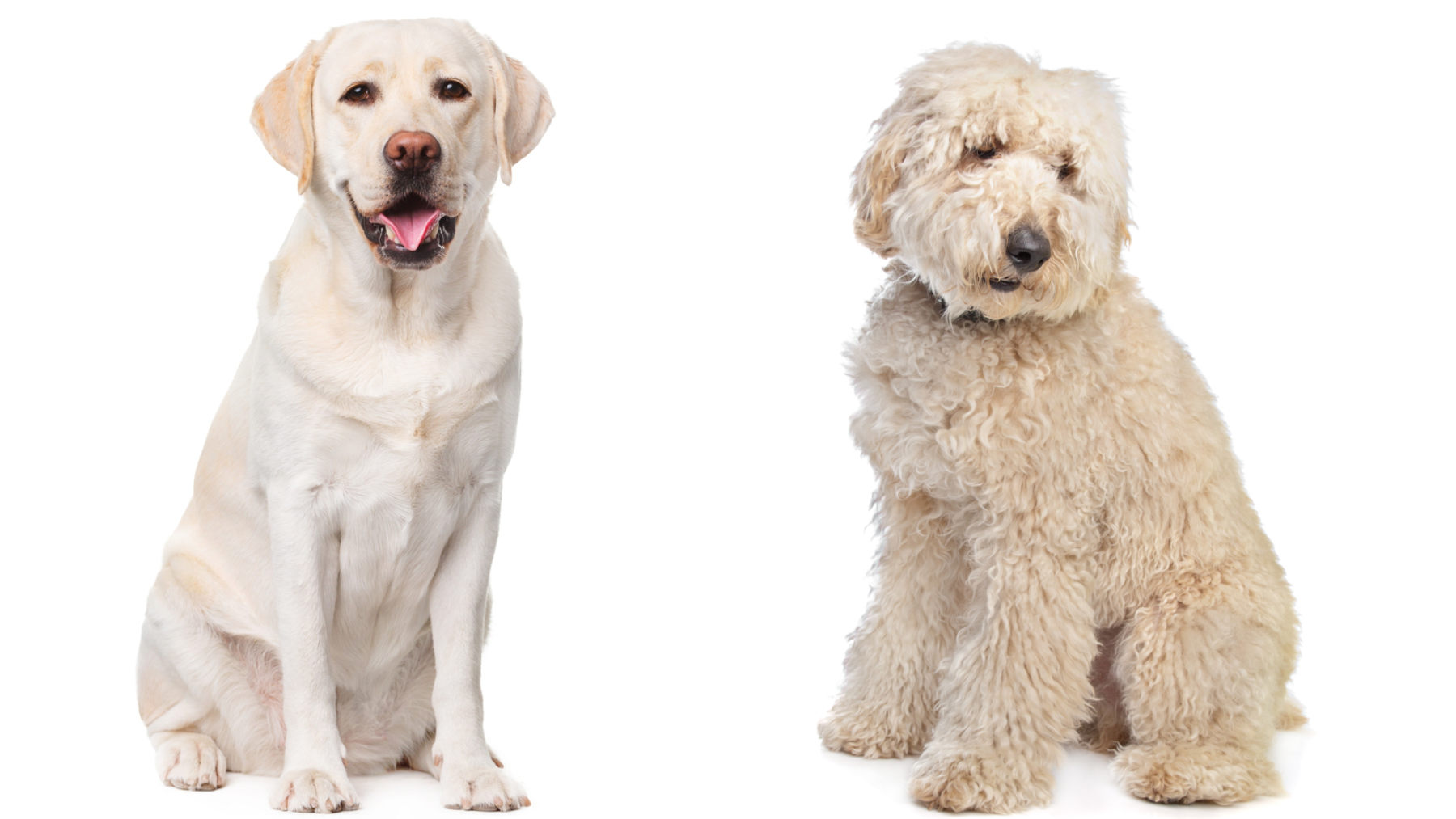
Short answer: choose a Labrador if you want a more predictable purebred, simpler coat care and do not mind heavy shedding. Consider a Labradoodle if lower shedding is important and you can accept a variable coat, regular professional grooming and less predictable adult traits.
Both are typically active, social dogs that need daily exercise and training. Neither is allergy-free, and breeder health testing matters more than the “purebred versus crossbred” label alone.
At a Glance: Labrador Retriever vs Labradoodle
| Labrador Retriever | Labradoodle | |
|---|---|---|
| Breed type | Purebred | Crossbred (Lab × Poodle) |
| Coat | Short, dense double coat | Wavy to curly |
| Shedding | Heavy (5/5) | Moderate (3/5) |
| Grooming needs | Moderate (3/5) | High (4/5) |
| Training ease | Excellent (5/5) | Very good (4/5) |
| Family fit | Often strong with training and supervision | Often strong; individual traits vary |
| Apartment friendly | Low (2/5) | Moderate (3/5) |
| Energy level | High (4/5) | High (4/5) |
| Separation anxiety risk | High (4/5) | High (4/5) |
| Purchase cost | Varies by breeder, pedigree and health testing | Varies widely; compare testing and support, not the label |
Labrador vs Labradoodle size: which is bigger?
A Labradoodle is not necessarily smaller than a Labrador. A Standard Poodle cross can grow into a similarly large dog, while a Miniature Poodle cross may be smaller. Ask which Poodle size is in the pedigree, meet the parents where possible, and ask about adult dogs from previous litters. Labels such as “mini” do not guarantee an adult size.
For Australian owners comparing centimetres, the Dogs Australia Labrador standard gives heights of 56–57 cm for males and 54–56 cm for females. These are breed-standard targets, rather than a promise for every pet. There is no single equivalent size range for all Labrador–Poodle crosses.
Temperament and daily exercise
Both can be social, enthusiastic companions. A Labrador’s established breed type gives you a starting point; a Labradoodle’s parentage and breeding line need closer attention. Neither label predicts whether an individual dog will be calm around visitors, comfortable alone or gentle with children.
Plan daily walks, sniffing, reward-based training and time to settle. Adjust activity to age, health and the individual dog rather than treating an exercise score as a prescription. Ask a breeder or rescue how the dog behaves indoors, on lead and when left briefly. In an Australian summer, arrange outings for cooler hours and provide water and shade.
Grooming costs: compare the adult coat
A Labrador generally needs brushing and cleaning up shed hair. A curly or fleece-coated Labradoodle may need careful brushing and recurring professional clipping; a straighter coat can shed more than expected. Ask a local groomer for an AUD quote based on adult size, coat and visit frequency before budgeting. Include home brushing equipment and the time needed to prevent matting.
Where Did They Come From?
The Labrador Retriever originated in Newfoundland, Canada (not Labrador, despite the name) as a working fisherman's dog. It was refined in England in the 19th century and became the definitive guide dog, assistance dog, and family companion.
The Labradoodle's modern story began in Australia. Guide Dogs Victoria records that its team crossed a proven Labrador guide-dog mother with a Standard Poodle in 1989 while exploring an option for a prospective handler whose husband was allergic to dogs. One puppy, Sultan, had the temperament for guide work and a coat the household could tolerate. That individual success did not make every later Labradoodle low shedding or suitable for a person with allergies.
The Labrador Retriever

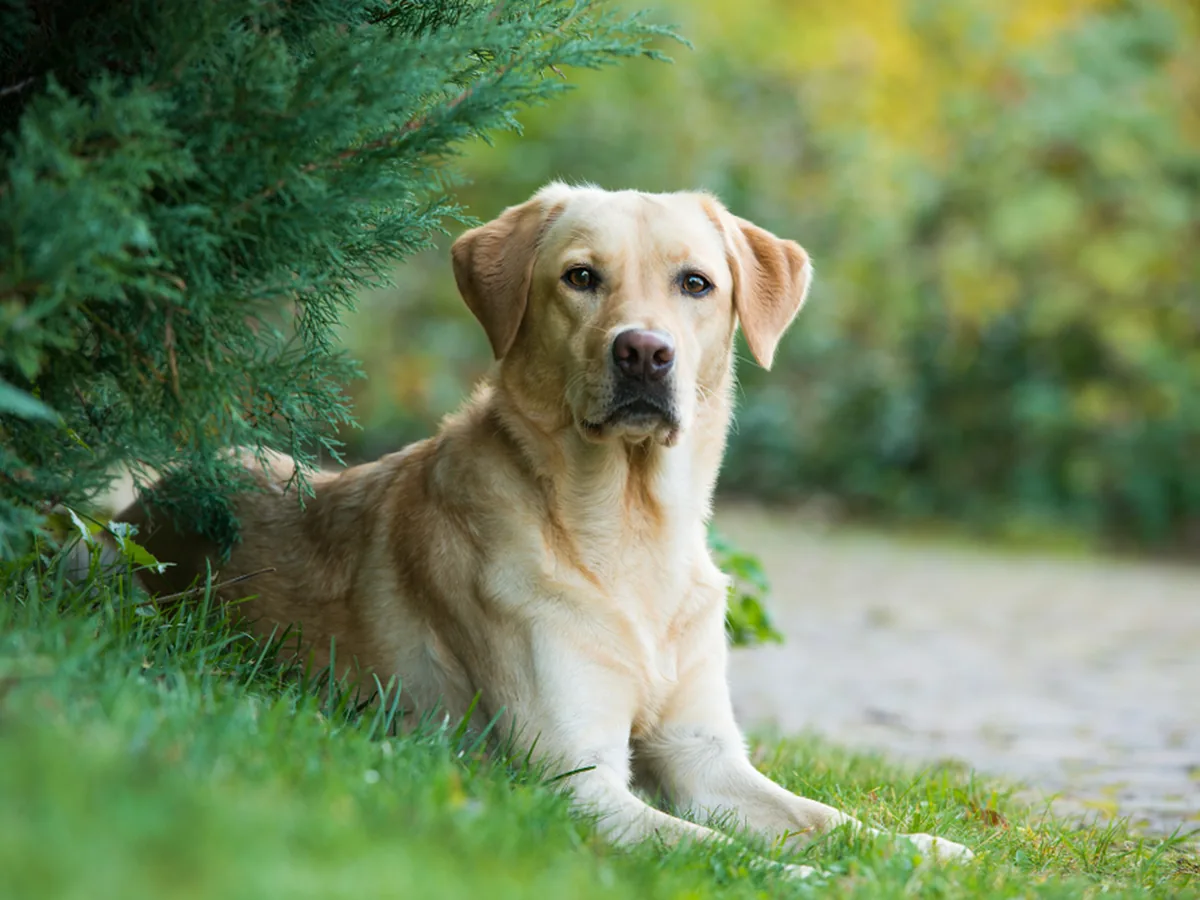
The Labrador Retriever is exactly what it appears to be: a large, friendly, high-energy dog with a strong desire to please and an even stronger desire to eat. It is one of the most trainable breeds in the world — used as guide dogs, assistance dogs, detection dogs, and search-and-rescue dogs for good reason. It will happily work all day if you ask it to.
What surprises some owners is the shedding. Labs have a short, dense double coat that sheds heavily year-round and more dramatically twice a year during seasonal moults. If dog hair on furniture and clothing is a dealbreaker, a Lab is not your dog. If it's manageable, a weekly brush and regular vacuuming keeps it under control — the grooming routine itself is simple and inexpensive.
Labs are highly trainable and often respond well to positive reinforcement, but an adolescent Labrador can still be strong, excitable and demanding. First-time owners benefit from early classes, consistent household rules and realistic exercise—not the assumption that a friendly breed trains itself.
The flip side: Labs are food-driven to a fault. They will overeat if allowed, and obesity is one of the most common health problems in the breed. They also carry a high separation anxiety risk — bred to work alongside people, they don't do well with long stretches of daily isolation.
Full Labrador Retriever breed profile →
The Labradoodle

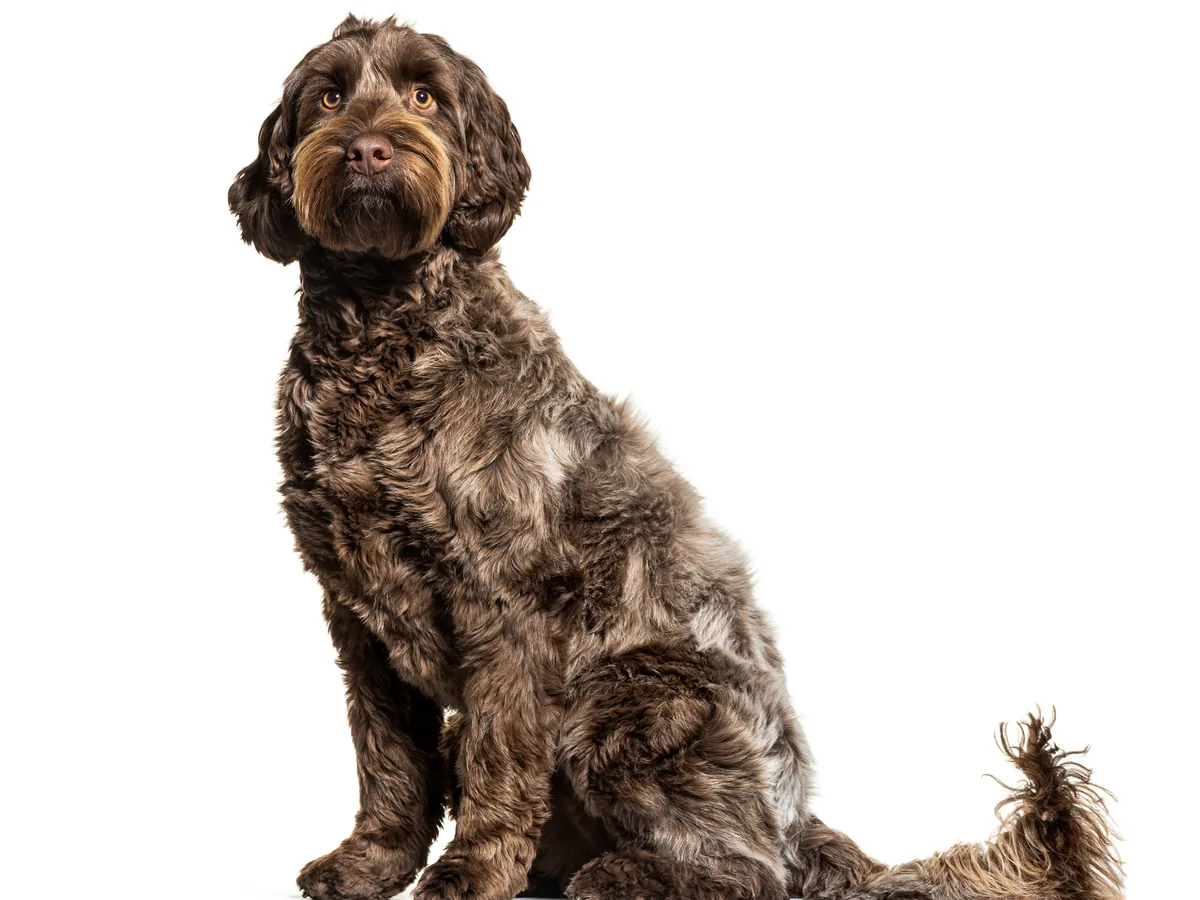
A Labradoodle may combine the Labrador's sociability with the Poodle's intelligence and lower-shedding coat. The result is not guaranteed: temperament, size and coat can vary, even within one litter. Look for stable parent temperaments, relevant health testing and evidence that puppies are raised and socialised well.
The central trade-off is variability. Individual dogs can lean more Labrador or more Poodle in coat, shedding, energy and temperament. The reputation of Labradoodles as “hypoallergenic” is also misleading: the Australasian Society of Clinical Immunology and Allergy says all dog breeds can cause allergies. Read our full explainer on what “hypoallergenic” really means.
Their energy level matches the Lab (4/5), which surprises some buyers who assume the Poodle cross makes them calmer. It doesn't. These are large, active dogs that need genuine daily exercise. A bored Labradoodle is a destructive Labradoodle.
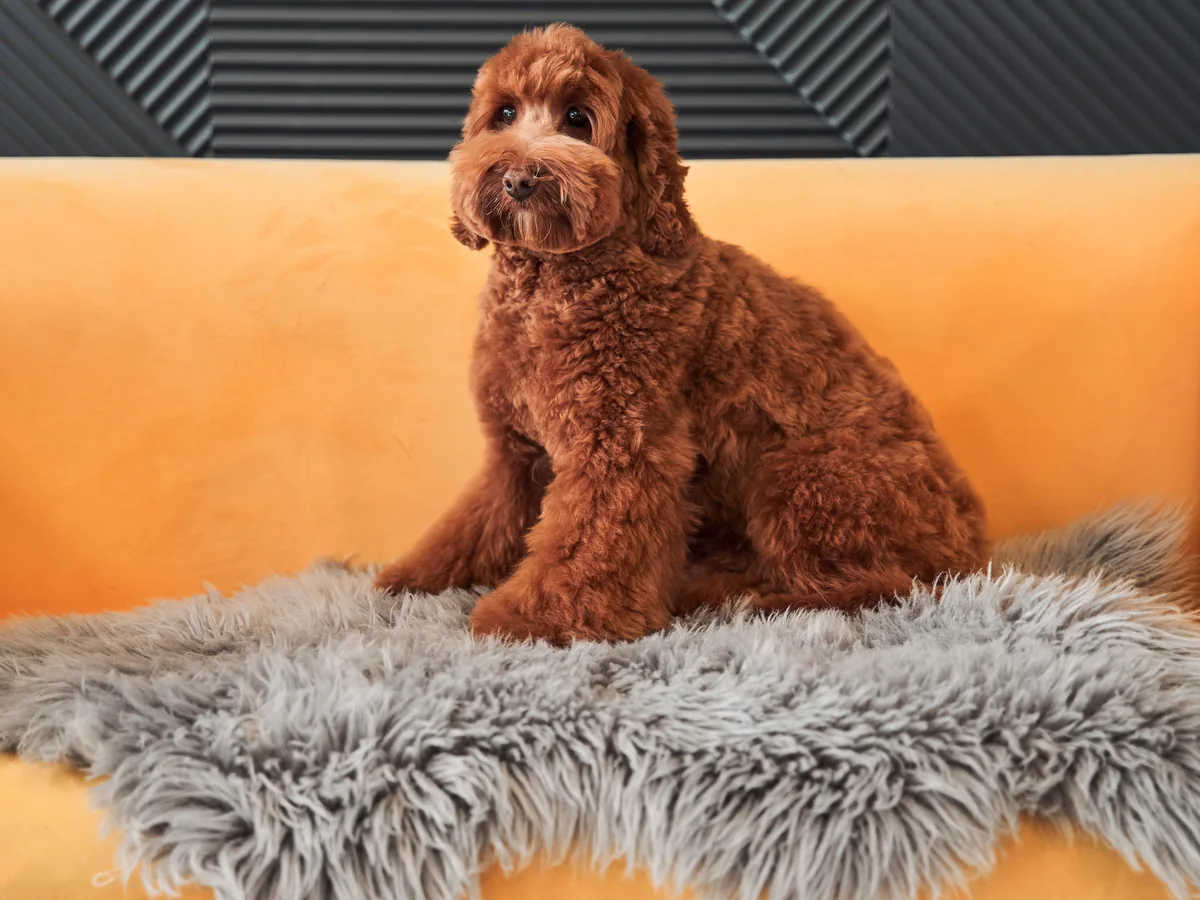
Despite the variability, Labradoodle temperament is consistently warm. They love people, they love other animals, and they take to training with enthusiasm. The Poodle's intelligence is real — Labradoodles tend to problem-solve and learn quickly, making training sessions rewarding for both dog and owner.
Full Labradoodle breed profile →
Shedding and Grooming: The Biggest Practical Difference
Most people choose a Labradoodle over a Labrador because of shedding. That's a reasonable decision — but it comes with a grooming trade-off that's easy to underestimate before you own one.
| Labrador Retriever | Labradoodle | |
|---|---|---|
| Shedding level | Heavy (5/5) | Moderate (3/5) |
| Grooming needs | Moderate (3/5) | High (4/5) |
| At-home brushing | Weekly | 2–3 times per week |
| Professional grooming | Occasional bath and clip | Every 6–8 weeks |
| Professional grooming cost | Usually lower | Usually higher and recurring |
| Matting risk | None | High (especially curly coats) |
Labs shed more, but their short coat requires very little professional attention. Labradoodles shed less, but their wavy or curly coats matt if not brushed regularly and most owners budget for professional grooming every 6–8 weeks. Over a 12-year Labradoodle lifetime, that's potentially $10,000–$20,000 in grooming costs on top of the higher purchase price.
Head-to-Head Trait Ratings
| Trait | Labrador Retriever | Labradoodle | Edge |
|---|---|---|---|
| Training ease | 5 / 5 | 4 / 5 | Lab |
| Good with kids | 5 / 5 | 5 / 5 | Tie |
| Good with other pets | 5 / 5 | 5 / 5 | Tie |
| Energy level | 4 / 5 | 4 / 5 | Tie |
| Shedding (lower = less) | 5 / 5 | 3 / 5 | Labradoodle |
| Grooming needs (lower = easier) | 3 / 5 | 4 / 5 | Lab |
| Apartment friendly | 2 / 5 | 3 / 5 | Labradoodle |
| Barking level | 2 / 5 | 2 / 5 | Tie |
| Drooling | 2 / 5 | 2 / 5 | Tie |
| Separation anxiety risk | 4 / 5 | 4 / 5 | Tie |
| Temperament predictability | High (purebred standard) | Variable (crossbred) | Lab |
Health and Lifespan
Published lifespan estimates vary, and a crossbreed is not automatically healthier than a purebred. Labradoodles can inherit conditions found in either parent line, while Labradors also have well-documented inherited risks. For either dog, prioritise documented health testing, body condition, preventive veterinary care and the health history of close relatives.
That said, Labradoodles are not immune to health issues. Common concerns include hip and elbow dysplasia (inherited from both parent breeds), progressive retinal atrophy, and — in some lines — epilepsy. A reputable breeder will health-test both parents for hip scores and eye conditions before breeding. If yours didn't, that's a red flag worth taking seriously.
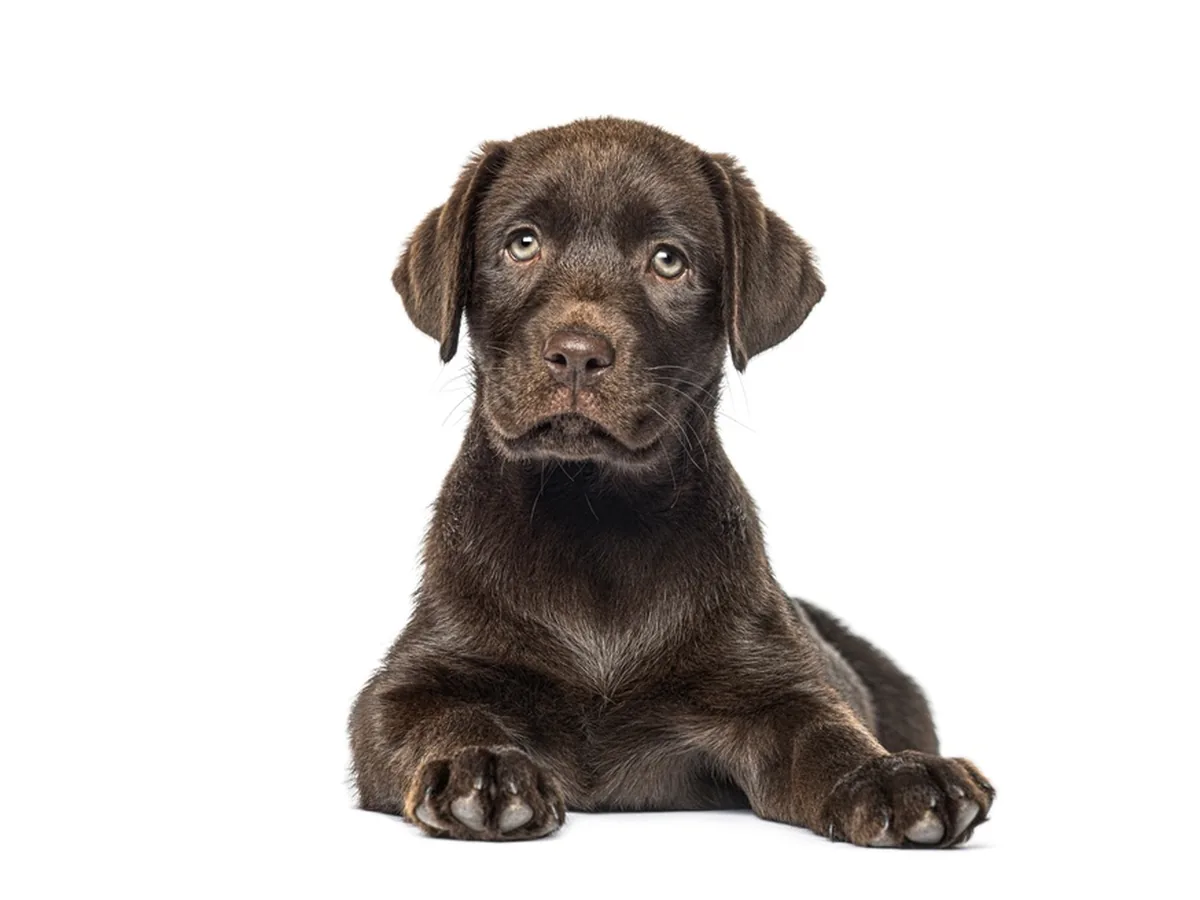
For Labs, the biggest health risks are obesity (their food drive makes them especially prone), hip and elbow dysplasia, and exercise-induced collapse (EIC) in working lines. Chocolate Labs have a well-documented shorter average lifespan than black and yellow Labs, believed to be partly linked to narrower gene pools in some chocolate breeding lines.
Which Dog Is Right for You?
| Choose a Labrador Retriever if… | Choose a Labradoodle if… |
|---|---|
| You want maximum training ease | You will assess the individual dog’s coat and shedding |
| You prefer a lower ongoing grooming bill | You can budget for recurring professional grooming |
| You value more predictable adult traits | You accept more variation in size, coat and temperament |
| You can manage heavy shedding | You want a chance of lower shedding—not an allergy guarantee |
| You value an established breed standard | You will assess both parents and previous litters |
| You're happy with weekly brushing at home | You love the Poodle's problem-solving intelligence |
Neither dog suits: people who work long hours without a dog walker, those wanting a low-energy companion, or anyone in a small apartment without reliable access to outdoor exercise. Both breeds need substantial daily activity and don't tolerate extended isolation well.
Not sure which suits your lifestyle? Our dog breed quiz scores your home type, experience level, and daily routine against the full breed database and flags compatibility issues before you commit.
Frequently Asked Questions
Is a Labradoodle smaller than a Labrador?
Sometimes, but a Standard Labradoodle may be a similar size. The Poodle parent’s size, the breeding line and the individual dog matter more than the name. Compare adult relatives before choosing.
Is an Australian Labradoodle the same as a Labradoodle?
Not necessarily. “Labradoodle” commonly describes a Labrador–Poodle cross, while “Australian Labradoodle” can refer to established multigenerational lines with a broader ancestry. Ask for the actual pedigree and health-testing records; the label alone does not guarantee size, coat or temperament.
Is a Labradoodle smarter than a Labrador?
Both breeds are highly intelligent and very trainable. Labs score 5/5 for training ease due to their exceptional eagerness to please. Labradoodles bring the Poodle's problem-solving ability but can be slightly more independent. In practical terms, the difference is small — both are among the easiest large breeds to train.
Do Labradoodles shed less than Labradors?
Generally yes — but it depends on which parent the individual dog takes after. Labs score 5/5 for shedding (heavy, year-round). Labradoodles score 3/5 (moderate). A Labradoodle with a tighter, curlier coat will shed much less; one with a loose, flatter coat may shed almost as much as a Lab. Ask your breeder about the coat type of previous litters from the same parent pairing.
Are Labradoodles hypoallergenic?
No. Dog allergens are associated with saliva and dander, and all breeds can trigger symptoms. A Labradoodle may shed less hair than a Labrador, but coat type does not guarantee an allergy-safe home. If someone has asthma or a known dog allergy, seek advice from an allergy specialist before getting a dog. Read more: what “hypoallergenic” really means.
Are Labradoodles healthier than Labradors?
Not automatically. A Labradoodle can inherit health risks from both Labrador and Poodle lines. A well-bred Labrador from health-tested parents may be healthier than a poorly bred cross, and the reverse can also be true. Compare the actual health tests, relatives and breeder practices rather than relying on “hybrid vigour” as a guarantee.
Which is better for families with young children?
Either can suit a family, but no breed is automatically safe with children. Consider the individual dog's temperament, size and training, supervise interactions, and give the dog a quiet place children do not enter. The practical breed-level differences are coat care, shedding and predictability—not a guarantee of behaviour.
How much does a Labradoodle cost compared to a Labrador in Australia?
Prices vary considerably by location, breeder and demand, so compare current written quotes rather than relying on a national range. Ask what health testing, veterinary care, early socialisation and post-purchase support are included. Also compare lifetime costs: a Labradoodle's recurring professional grooming is usually higher, while both dogs need food, training, insurance or emergency savings and routine veterinary care. See our guide to the real cost of owning a dog.
Is a Labradoodle a purebred dog?
No. A Labradoodle is a crossbreed — a first-generation or multi-generation cross between a Labrador Retriever and a Standard Poodle (or Miniature Poodle for smaller sizes). It is not recognised as a breed by Dogs Australia or international kennel clubs, which means there is no breed standard and traits vary between individual dogs. Learn more: designer dog generations explained.