
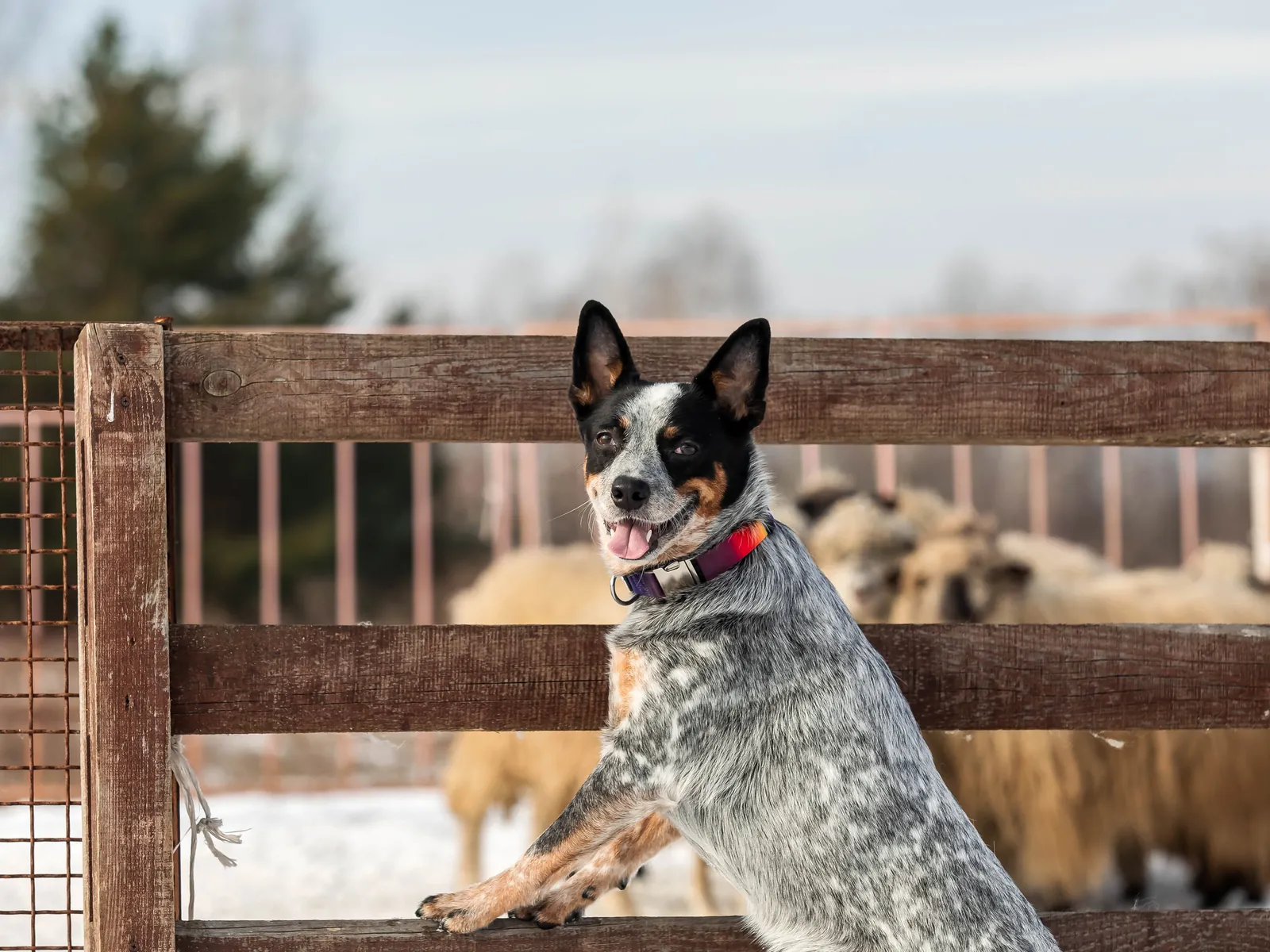
Short answer: a Blue Heeler is an Australian Cattle Dog with a blue coat. A Red Heeler is the same breed with a red speckled coat. They're tough, clever, loyal working dogs bred to move cattle by nipping at their heels. In the right home they're brilliant. In the wrong one, such as a small yard, long days alone or a busy house of toddlers, they can be a handful.
Most Australians know the look: the speckled coat, the pricked ears and the watchful stare from the back of a ute. This guide covers where the breed came from, what living with one is really like, the health checks worth asking about, and who it suits.
Blue Heeler vs Red Heeler (and Queensland Heeler): what's the difference?
There's no difference in breed. "Blue Heeler", "Red Heeler" and "Queensland Heeler" are all everyday names for the Australian Cattle Dog. The "heeler" part comes from the way the dogs work cattle, by nipping at their heels. The colour part is just the coat.
The Dogs Australia breed standard allows two colours:
- Blue: blue, blue-mottled or blue speckled, with or without other markings. Many blues have black and tan patches on the head and body.
- Red speckle: an even red speckle all over, including the undercoat, sometimes with darker red patches on the head.
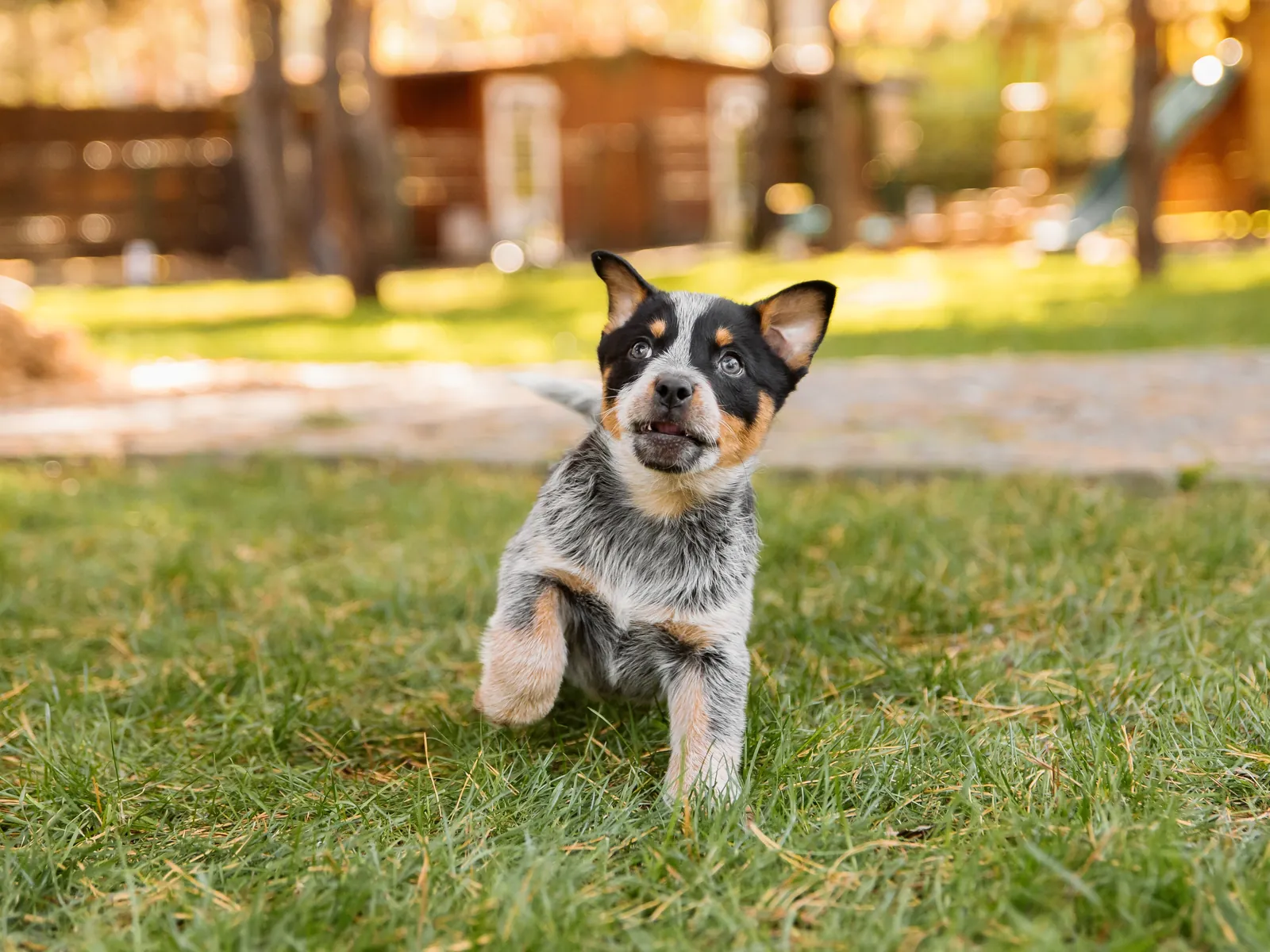
Colour doesn't change temperament, size or exercise needs. Puppies are born mostly white and the colour comes through as they grow. Some heelers have a white spot on the forehead, called the "Bentley mark", after a dog said to have had one. The story behind it can't be confirmed, but the name has stuck.
Where the Blue Heeler came from
The breed was developed in New South Wales in the 1800s to handle half-wild cattle over huge distances. The usual account goes like this:
- Thomas Hall crossed blue-speckled collie-type dogs from Britain with dingoes. The dogs became known as "Hall's Heelers".
- Later in the century, Sydney breeders including Jack and Harry Bagust are said to have added Kelpie and Dalmatian lines.
- Robert Kaleski wrote the first breed standard, published by the New South Wales Department of Agriculture in 1903.
The AKC still describes the breed as related to the dingo. You can see it in the compact build, the ears and the independent streak.
Size and appearance
The Australian Cattle Dog is a medium-sized, compact, muscular dog. The Dogs Australia standard sets height at the withers:
- Males: 46–51 cm
- Females: 43–48 cm
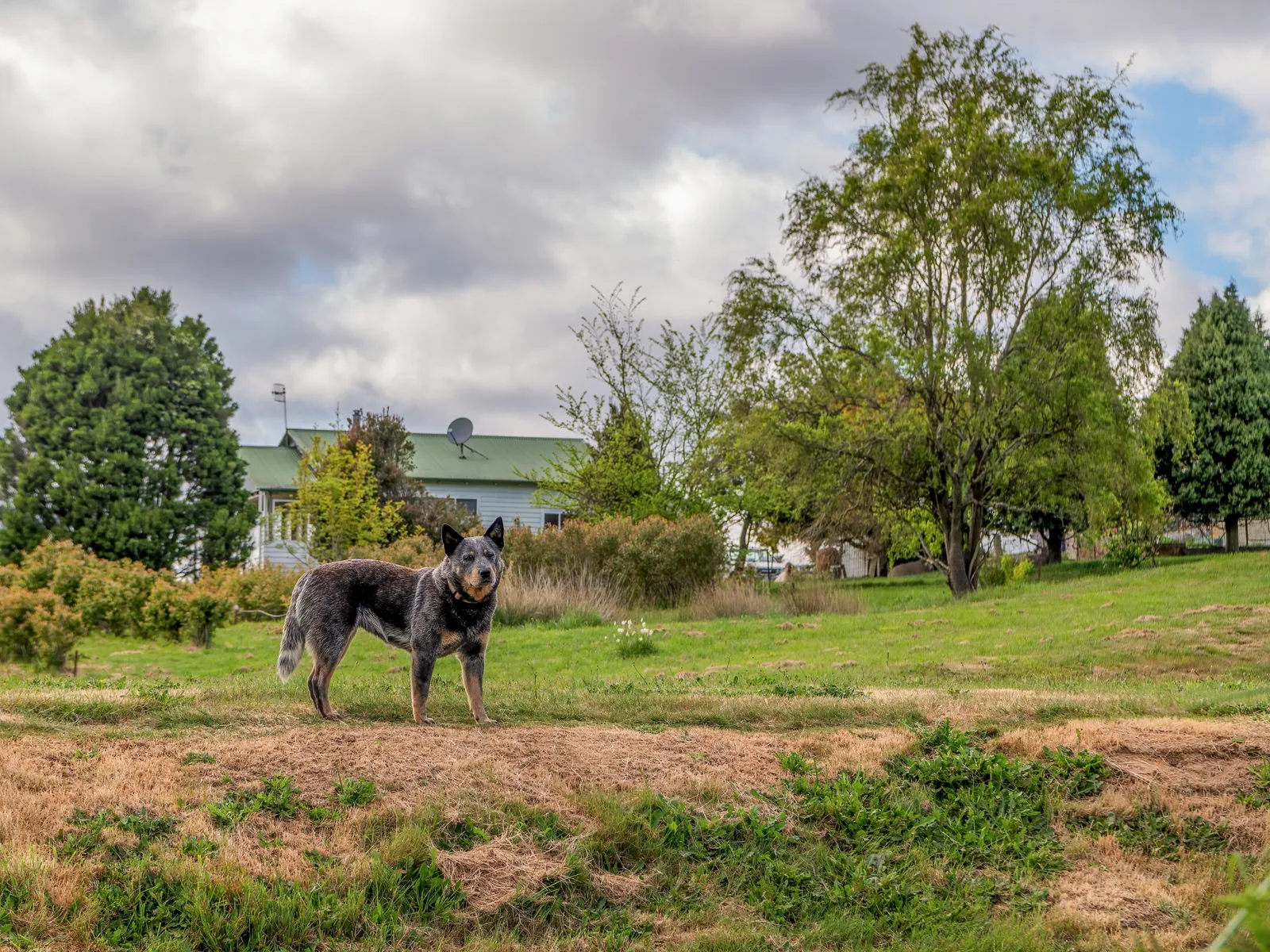
The standard doesn't set a weight. Greencross Vets gives a typical weight of about 15–22 kg. The coat is short, dense and weather-resistant. It needs little more than a weekly brush, but expect heavy shedding when the undercoat drops, usually once or twice a year.
Temperament: loyal, alert and a bit bossy
Greencross Vets describes the breed as known for "devotion to their family, their intelligence and boundless energy". In practice, that means:
- Strong bonds. Many heelers attach closely to one person and like to stay near them. People call them "velcro dogs" for a reason.
- Wary of strangers. They're watchful and protective. That makes a good watchdog, but they need early socialisation so caution doesn't become suspicion.
- Independent thinkers. They were bred to make decisions on the job. They learn fast, but they'll also test whether you mean what you say.
- Herding instinct. This is the big one for families. Greencross Vets notes they "have been known to nip running children", and VCA's breed guide suggests older children are a better fit.
Nipping isn't aggression. It's the dog doing its job on the wrong animal. You can manage it with training, supervision and teaching children not to run and squeal around the dog. A heeler can still be a good family dog, but a house of toddlers is a harder match than a house of teenagers. See our guide to the best dogs for families with kids if that's your situation.
Exercise and mental work
This is where most heeler problems start. A Blue Heeler needs:
- Daily physical exercise. Breed guides commonly suggest one to two hours a day for an adult, and more for working lines. A stroll around the block isn't enough.
- A job for its brain. Training sessions, scent games, puzzle feeders, fetch with rules, agility, herding or canicross all count. Ten minutes of hard thinking can tire a heeler more than half an hour of walking.
- Company. Left alone and bored all day, heelers often dig, bark, chew or escape.
Heelers suit people who already run, ride, hike or work outdoors and want a dog alongside them. Our list of the best dogs for active people has other options if you're comparing.
Training a Blue Heeler
Heelers are smart and quick to learn, which cuts both ways. They pick up good habits fast and bad ones just as fast. A few things help:
- Start puppy classes and socialisation early, with lots of calm exposure to people, dogs, traffic and visitors.
- Use reward-based training and keep sessions short and varied. Heelers switch off with repetition.
- Teach an "off switch". Reward settling on a mat, so the dog learns that quiet time is part of the day.
- Redirect herding and nipping early with toys and games that give the instinct a proper outlet.
Greencross Vets says the breed may not be an ideal first dog "unless you can show strong leadership", and recommends professional training. If you're new to dogs, our first-time owner guide lists easier starting points.
Blue Heeler vs Kelpie vs Border Collie
These three Australian working dogs often end up on the same shortlist. Here's how they compare.
| Trait | Blue Heeler (Cattle Dog) | Kelpie | Border Collie |
|---|---|---|---|
| Height (Dogs Australia) | 43–51 cm | 43–51 cm | 46–53 cm |
| Typical weight | About 15–22 kg | About 14–20 kg | No set weight in the standard |
| Bred to work | Cattle, by heeling | Sheep, in paddocks and yards | Sheep, with an intense "eye" |
| With strangers | Often wary and protective | Can be wary; a watchdog more than a guard dog | Usually reserved |
| Coat care | Short, weekly brush, seasonal shedding | Short, weekly brush | Rough or smooth; rough coats need more brushing |
| Biggest ownership challenge | Nipping and guarding without training | Near-endless energy | Obsessive behaviour when under-stimulated |
For more detail, read Kelpie vs Border Collie or our Koolie guide, or put a heeler and a Kelpie side by side in the breed comparison tool.
Is the Stumpy Tail Cattle Dog the same breed?
No. The Australian Stumpy Tail Cattle Dog shares the same early history, and a 1930s Queensland standard described "long tail" and "short tail" types. They have had separate breed standards since 1963. The Stumpy Tail's natural tail is no longer than 10 cm, and unlike the Australian Cattle Dog, it isn't allowed tan markings. If a breeder offers a heeler with a short tail, ask which breed it is registered as.
Lifespan and health
Heelers are one of the longer-lived breeds:
- VCA gives 12–16 years and Greencross Vets about 13–17.
- A 2024 UK study estimated an average of about 14 years.
- The oldest dog Guinness World Records has verified was an Australian Cattle Dog: Bluey, from Rochester in Victoria, who lived 29 years and 5 months and died in 1939.
The health issues to ask a breeder about are:
- Deafness. A 2012 Australian study tested 899 Cattle Dogs and found 10.8% were deaf in one or both ears: 7.5% in one ear and 3.3% in both. A BAER hearing test can check each ear in young puppies. Ask whether the litter was tested before going home.
- Progressive retinal atrophy (PRA). The form seen in this breed (prcd-PRA) is inherited and causes blindness later in life. A dog can carry the gene without being affected, so ask whether both parents have been DNA tested.
- Primary lens luxation, hip and elbow dysplasia. Greencross Vets lists these alongside PRA. Ask for hip and elbow scores on both parents.
Can a Blue Heeler handle Australian heat?
Heelers were developed for Australian conditions and handle heat better than most thick-coated or flat-faced breeds. No dog is heatproof, though. A heeler's work drive means it will often keep going long after it should stop. On hot days:
- Exercise at dawn or after dark.
- Give shade and plenty of water.
- Watch for heavy panting or slowing down.
- Never leave the dog in a car or on a hot ute tray.
Our guide to the best dogs for hot climates has more tips.
What about Bluey the cartoon?
The family in the ABC cartoon Bluey are heelers: Bluey is a Blue Heeler and her sister Bingo is a Red Heeler. That's lovely for kids, but a real heeler is a working dog with working-dog energy, not a cartoon character. If your children are asking for a "Bluey dog", read the temperament and exercise sections above together before you decide.
Is a Blue Heeler right for you?
A heeler is a great fit if you:
- Have a securely fenced yard and time for real exercise every day.
- Enjoy training and want a dog that wants a job.
- Are home a fair amount, or can take the dog with you.
- Have older children, or are ready to manage herding and nipping around young ones.
A heeler is usually a poor fit for apartments, for people away from home all day, and for first-time owners who want an easy, laid-back dog.
Thinking about adopting? Cattle Dog crosses do come up through rescues and the RSPCA. An adult dog lets you see energy level and temperament up front. Ask how the dog behaves with children, other dogs and visitors, and whether it has had a hearing check.
Not sure if a heeler fits your life? Take the free dog match quiz to compare breeds against your space, routine and experience.
Sources and further reading
- Dogs Australia: Australian Cattle Dog breed standard
- Dogs Australia: Australian Stumpy Tail Cattle Dog breed standard
- Dogs Australia: Australian Kelpie breed standard
- Dogs Australia: Border Collie breed standard
- American Kennel Club: Australian Cattle Dog
- Greencross Vets: Is an Australian Cattle Dog right for your family?
- Greencross Vets: Is a Kelpie right for your family?
- VetSupply: Australian Cattle Dog breed guide
- VCA Animal Hospitals: Australian Cattle Dog
- Sommerlad et al. (2012): Prevalence of congenital deafness in Australian Cattle Dogs
- Wikipedia: Australian Cattle Dog
- Wikipedia: Bluey (long-lived dog)
Cover photo: a blue Australian Cattle Dog at a sheep yard fence. All photos: Shutterstock.
This article is general information, not veterinary advice. Talk to your vet about your own dog's health and exercise needs. Checked November 2026.