
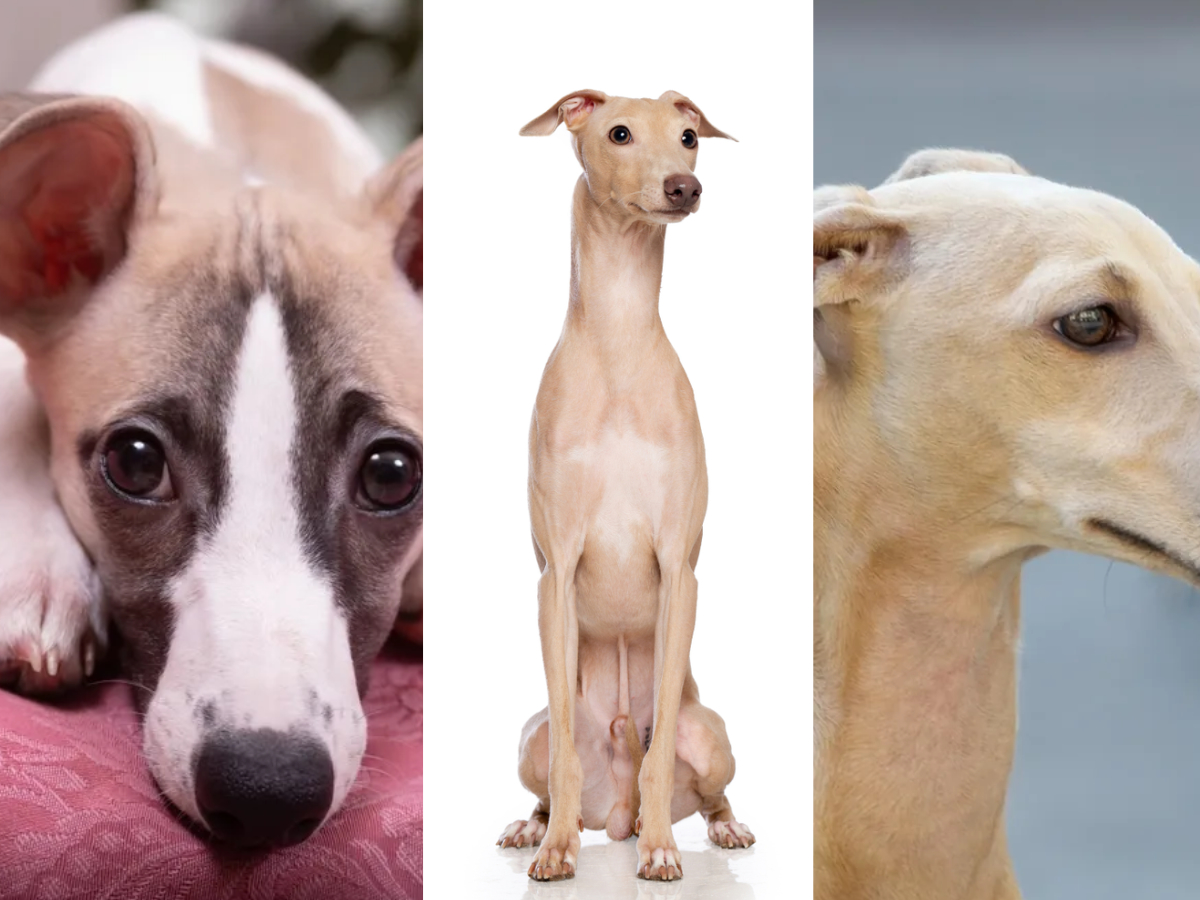
Short answer: the Greyhound, Whippet and Italian Greyhound are three sizes of sighthound with the same sleek shape. A Greyhound stands around 69–76 cm tall, a Whippet 44–51 cm and an Italian Greyhound just 32–38 cm. All three are gentle, short-coated sprinters that love a sofa, chase things that run, and feel the cold. The best choice depends on your space, your other pets and how much care a fragile small dog needs.
In Australia there's an extra twist: many pet Greyhounds are retired racers adopted through rehoming programs, which shapes what living with one is like. This guide compares size, temperament and care, then helps you decide which suits your home.
Greyhound vs Whippet vs Italian Greyhound at a glance
| Greyhound | Whippet | Italian Greyhound | |
|---|---|---|---|
| Height | Dogs 71–76 cm, bitches 69–71 cm | Dogs 47–51 cm, bitches 44–47 cm | 32–38 cm |
| Weight | About 27–32 kg | About 11–18 kg | 3.6–4.5 kg ideal |
| Life expectancy | 10–13 years | 12–15 years | 14–15 years |
| Temperament (breed standard) | "Intelligent, gentle, affectionate and even tempered" | "Gentle, affectionate, even disposition" | "Intelligent, affectionate and vivacious, may appear aloof" |
| Coat | Fine and close | Fine, short, close | Short, fine and glossy |
| Watch out for | Chasing small animals; skin tears | Chasing; feels the cold | Broken legs; feels the cold |
Heights, temperament and coat are from the Dogs Australia breed standards. Greyhound and Whippet weights and all life expectancies are from the American Kennel Club. The Italian Greyhound's ideal weight is from its Dogs Australia standard.
The big difference is size, and what comes with it
Put them side by side and they look like the same dog at three scales. That size difference changes almost everything about daily life: how much room the dog takes up, how much it eats, how easily it gets hurt and how it copes with the cold.
- Greyhound: a large dog that is often calm indoors once settled, but still needs room to stretch out.
- Whippet: the middle size. Sturdy enough for a long run, and easier to fit into most homes and cars than a Greyhound.
- Italian Greyhound: a toy breed weighing about as much as a house cat, with a delicate build that needs careful handling.
Greyhound: the gentle giant (often a retired racer)


The Dogs Australia standard describes the Greyhound as "intelligent, gentle, affectionate and even tempered". Many Greyhounds in Australian homes are retired racers adopted through programs such as Greyhounds As Pets.
Don't expect a ready-made couch potato, though. The Greyhounds As Pets NSW adoption guide warns that the "lazy, easy-to-handle" stereotype is "misleading particularly for greyhounds that are retired from the racing industry". Racing dogs are typically raised in paddocks and kennels, so the guide notes many "are not used to being in a domestic household", and many "have never been entirely alone". Expect to teach things like stairs and time on their own, with patience.
Their skin is thin. The American Kennel Club notes Greyhounds' "fine, taut skin can be prone to tears and lacerations", and that as athletes they can suffer sports injuries such as pulled muscles and split pads.
Whippet: the all-rounder in the middle
The Whippet standard calls for a "gentle, affectionate, even disposition", in a dog of about 44–51 cm. If you buy a Whippet puppy, meet the parents where you can and ask the breeder about their health and temperament.
Their coat is low-care: the AKC says it "needs little maintenance beyond regular weekly grooming with a brush and the occasional bath". Like their bigger cousins, Whippets love to sprint, then rest. A safely fenced area for a daily run makes a big difference.
Italian Greyhound: tiny, elegant and fragile


The Italian Greyhound standard describes an "intelligent, affectionate and vivacious" dog that "may appear aloof", with an ideal weight of just 3.6–4.5 kg. It's a companion-sized sighthound that suits smaller homes, but its fine legs need care.
The AKC notes that the breed "is not as delicate as he looks", but care is needed to avoid situations "that might result in a broken leg". Think jumping from furniture or out of arms, rough play with bigger dogs, and young children who might drop it. Our small dog guide covers gentle handling for very small breeds.
What all three have in common
They chase, so plan for off-lead time carefully
Sighthounds were bred to chase by sight, and a running cat, rabbit or small dog can trigger that instinct. The Greyhounds As Pets NSW guide stresses that a dog assessed as "cat tolerant" is no guarantee: it is "by no means a guarantee that the dog would never chase a cat", and other small animals such as rabbits, guinea pigs and birds "should always be kept separate and under supervision". The guide also advises against letting a Greyhound play off-lead with unknown smaller dogs.
The same caution applies to Whippets and Italian Greyhounds. Use securely fenced areas for running, practise recall, and never assume a sighthound will come back once it's chasing.
They feel the cold
Short coats and little body fat mean all three need warmth in winter. The Greyhounds As Pets guide recommends a winter coat for Greyhounds "when temperatures fall below approximately 15 degrees Celsius", and the AKC says Italian Greyhounds "need extra attention in cold weather". A soft bed away from draughts helps too.
They're low-maintenance to groom
Short, fine coats mean weekly brushing is usually enough, which makes all three appealing if you don't want a dog that needs clipping.
Do pet Greyhounds need a muzzle?
It depends on your state. The Australian Veterinary Association opposes compulsory muzzling of pet Greyhounds. Its April 2023 policy notes that NSW, WA, Victoria and Tasmania have lifted compulsory muzzling, South Australia offers exemptions after assessment, and some Queensland councils require exemptions. A 2026 Queensland report says greyhounds there are generally still required to wear a muzzle in public unless they have the Greyhound Adoption Program's green collar. Rules change, so check with your council before you adopt.
Which one should you choose?
A Greyhound may suit you if you have room for a large dog, want a calm adult companion, and like the idea of adopting a retired racer and helping it settle into family life.
A Whippet may suit you if you want a medium-sized, low-maintenance athlete you can raise from a puppy, with space for a daily sprint in a fenced area.
An Italian Greyhound may suit you if you want a small, affectionate companion, live in a smaller home, and can protect a fragile dog from falls, rough play and the cold.
All three may be hard work around cats and small pets, and none is ideal if you want a dog that can safely run off-lead in unfenced places. Our apartment guide and family dog guide cover other options, and our free dog breed quiz compares your home and routine with more than 200 breeds.
Already have a sighthound puppy? Our puppy growth calculator estimates adult size from age and weight. Curious about sighthound crosses? Read what a Lurcher is, or meet another ancient sighthound, the Saluki.
Greyhound vs Whippet FAQs
What's the difference between a Greyhound and a Whippet?
Mainly size. A Greyhound stands about 69–76 cm and weighs around 27–32 kg; a Whippet stands about 44–51 cm and weighs around 11–18 kg. Both are gentle sighthounds with short coats, but a Whippet fits more easily into smaller homes and cars.
What's the difference between a Whippet and an Italian Greyhound?
The Italian Greyhound is much smaller, at 32–38 cm and an ideal 3.6–4.5 kg, and more fragile, with a higher risk of broken legs. A Whippet is sturdier and better suited to running and active play.
Is a Whippet a small Greyhound?
No. It's a separate breed with its own standard, though it shares the Greyhound's sighthound shape and temperament.
Which lives longest?
The AKC gives life expectancies of 10–13 years for Greyhounds, 12–15 for Whippets and 14–15 for Italian Greyhounds.
Are Greyhounds good with cats?
Some are, some aren't. Adoption programs assess dogs for cat tolerance, but that's no guarantee in every situation. Introduce them carefully and keep small pets separate when you're not supervising.
Sources and further reading
- Dogs Australia: Greyhound breed standard
- Dogs Australia: Whippet breed standard
- Dogs Australia: Italian Greyhound breed standard
- American Kennel Club breed pages: Greyhound, Whippet, Italian Greyhound
- Greyhounds As Pets NSW and its adoption guide (March 2021)
- Australian Veterinary Association: Greyhound muzzling policy (April 2023)
- Mackay and Whitsunday Life (30 April 2026): Greyhound owners call for change to muzzle laws
Cover photo: Fireworks Whippets by Winky, Vancouver, Canada, Wikimedia Commons, CC BY 2.0.
