
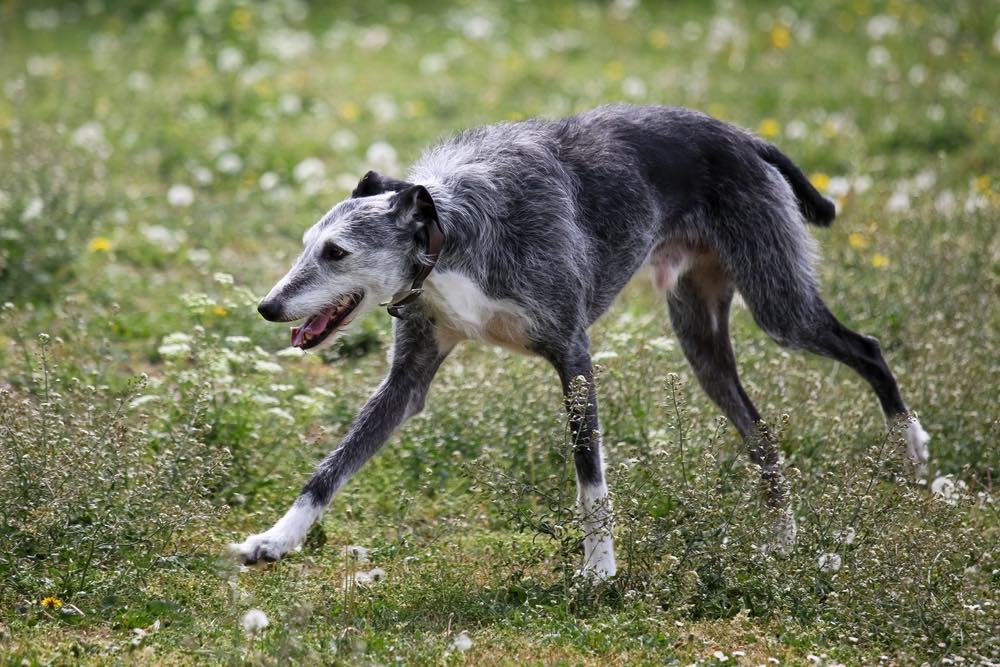
A lurcher is not a breed. It is a type of dog — and that single distinction explains almost everything that confuses people about them.
What Makes a Lurcher a Lurcher
Traditionally, a lurcher is created by crossing a sighthound — such as a Greyhound or Whippet — with another breed. The second breed is typically a working dog, terrier, collie or shepherd type. The result is a dog that combines the speed and athleticism of a sighthound with the intelligence, stamina or versatility of the other parent.
That means two lurchers can look completely different from one another. One might resemble a rough-coated Greyhound. Another could look almost like a Border Collie with longer legs. A third might have the build of a Whippet but the coat of a terrier. There is no single appearance, colour or size that defines a lurcher.
Common Lurcher Crosses
Because a lurcher is defined by its sighthound foundation rather than a breed standard, the combinations are wide-ranging. Some of the most common include:
- Greyhound × Border Collie
- Whippet × Bedlington Terrier
- Greyhound × German Shepherd
- Whippet × Jack Russell Terrier
- Greyhound × Labrador Retriever
Each cross produces a different result in terms of size, coat, temperament and energy. A Greyhound-Collie lurcher will behave very differently from a Whippet-Terrier lurcher — and that variety is part of what makes the type so interesting.
A Working Dog History
Lurchers were bred in the United Kingdom and Ireland by people who needed a dog capable of both speed and practical work. Rather than breeding for appearance or kennel club standards, owners bred for performance. If a dog could run, think and work, it was a success.
The word "lurcher" itself comes from Romani and means roughly "thief" — reflecting their original use for poaching, a task that required both the speed to catch game and the intelligence to do it quietly. They were the working dog of people who could not afford, or were not permitted, to own recognised hunting breeds.
Today, most lurchers are kept as family companions, and many have developed a reputation for being affectionate, gentle and surprisingly relaxed indoors — a far cry from their poaching origins.
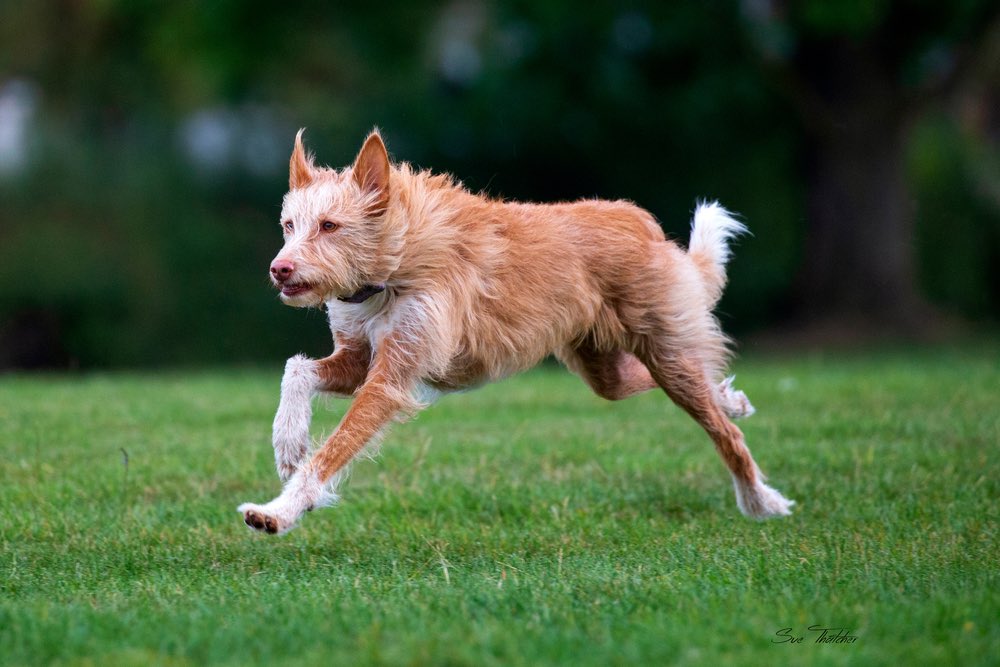
Three Things Most People Get Wrong About Lurchers
They need endless exercise
This is the most persistent myth. While lurchers enjoy running and can be extremely fast over short distances, many are happy with a couple of good walks each day and a safe opportunity to stretch their legs occasionally. Like most sighthounds, they often spend more time on the couch than people expect. A Greyhound-cross lurcher may be more like a retired racer than a Border Collie — built for explosive bursts, not all-day endurance.
They all have uncontrollable prey drive
Some lurchers do retain strong chasing instincts, particularly around small animals — and this is worth taking seriously when choosing one. But temperament varies enormously depending on the breeds involved and the individual dog. A Greyhound-Collie cross may be far more manageable around cats than a Whippet-Terrier cross. The sighthound heritage is always present, but how strongly it expresses itself depends on the whole dog.
They are a recognised pedigree breed
Lurchers are not recognised by major kennel clubs as a standardised breed. They are classified as crossbreeds, and intentionally so — the lurcher's defining quality is the combination of a sighthound with another working type, not conformity to a fixed standard. Two lurchers from the same litter can look quite different from one another.
The Simple Way to Think About a Lurcher
A lurcher is a purpose-built mix with a sighthound foundation. What matters is not what it looks like, but what it was bred to do: speed combined with working intelligence or stamina, in whatever ratio suited the owner's needs.
That variety is exactly what makes lurchers so compelling. No two are quite the same, yet many share the same core blend of athleticism, intelligence and laid-back companionship that has kept them popular for generations — long after the poaching that created them became a distant memory.
If you are trying to figure out whether a lurcher-type dog — or a sighthound cross — might suit your household, our breed matching quiz can help you think through lifestyle fit, energy levels and temperament in about three minutes.
Frequently Asked Questions
Is a lurcher a recognised breed?
No. Lurchers are not recognised as a standardised breed by major kennel clubs. They are classified as crossbreeds — defined by type (sighthound crossed with a working or terrier breed) rather than by a fixed breed standard. This means there is no single appearance or temperament that all lurchers share.
What breeds make a lurcher?
A lurcher is typically created by crossing a sighthound — most commonly a Greyhound or Whippet — with a working breed, terrier, collie or shepherd type. Common combinations include Greyhound × Border Collie, Whippet × Bedlington Terrier, and Greyhound × Labrador Retriever.
Are lurchers good family dogs?
Many lurchers make excellent family dogs — affectionate, gentle and calm indoors. The key considerations are prey drive (which varies by individual and cross) and whether young children are involved. A lurcher with strong Greyhound heritage and low prey drive can be a wonderfully relaxed family companion. Early socialisation and understanding the specific cross matters more than the lurcher label itself.
Do lurchers need a lot of exercise?
Less than most people assume. Lurchers are fast, but like their sighthound parents they are often built for explosive short bursts rather than sustained endurance. Many are content with two solid walks a day and occasional opportunities to run freely in a safe, enclosed space. Individual needs vary depending on which breeds are in the mix.
What is the difference between a lurcher and a Greyhound?
A Greyhound is a purebred sighthound with a fixed breed standard. A lurcher is a crossbreed that uses a sighthound — often a Greyhound — as one of its parent breeds. All Greyhounds are Greyhounds; a Greyhound cross is a lurcher.