
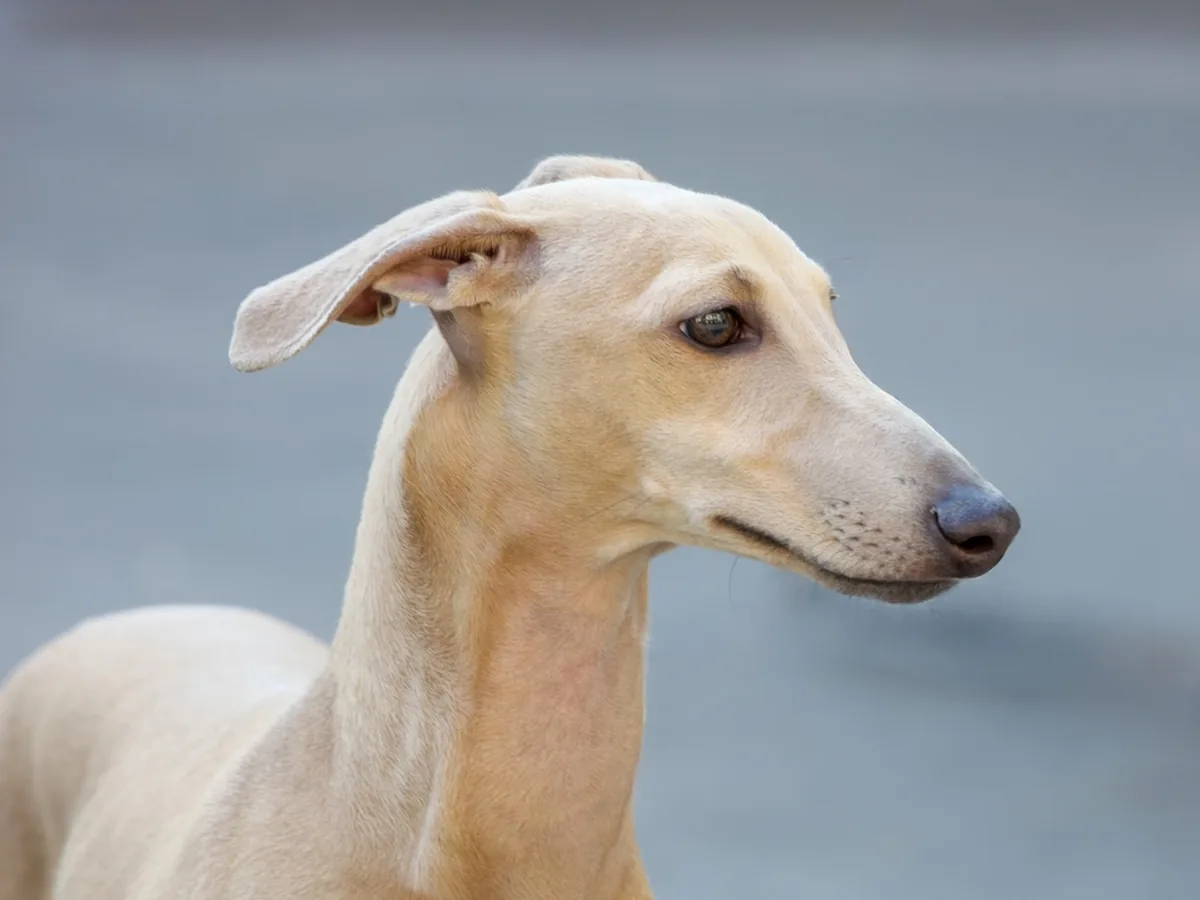
The Greyhound is a 40 kg couch potato wrapped in silk pyjamas and built like a piece of aerodynamic engineering. Standing around 68–76 cm tall with almost no body fat, they look like someone stretched velvet over an anatomy chart and called it a dog. Every line on them has a purpose. Long legs, narrow waist, deep chest, tail like a whip. This is a body designed to chase things at roughly 65 km/h, which it has been doing for several thousand years, from Egyptian hunting grounds to English coursing fields and modern racetracks. The recent career change to professional sofa ornament has been surprisingly smooth.
Here’s the part people don’t expect about the fastest dog on Earth. Hour for hour, it’s also one of the laziest. A Greyhound’s ideal daily routine involves a brief, glorious burst of speed followed by an extended period of horizontal reflection. One explosive run, then fourteen hours sleeping in positions that suggest their spine is more of a decorative suggestion than a structural feature.
Despite the racing pedigree, they’re gentle, quiet dogs with a slightly catlike personality. They drift around the house, silently claim the softest furniture and observe the household with calm, faintly amused detachment. Barking is rare. The dog smell most breeds come with is almost nonexistent. Grooming consists of the occasional brush and the quiet realisation that you may own the lowest-maintenance coat in the canine world.
There are, however, a few practical realities. That paper-thin coat and lack of body fat means anything below about 10 °C requires a jacket, and many Greyhounds will look personally offended if asked to stand on wet grass. Their thin skin also makes them walking barometers, which is why many end up with wardrobes that rival small children.
Training isn’t difficult so much as philosophical. Greyhounds understand commands perfectly well, they simply evaluate whether complying improves the current situation. They bond deeply with their people and tend to prefer company over long hours alone. And while they’re usually wonderful with other dogs and children, the prey drive hasn’t fully accepted that the neighbour’s cat is not, in fact, a prey. Off-lead in an unfenced area is a gamble most owners lose exactly once.
Lovely dogs, greyhounds bond closely with their people and generally prefer company, but they’re not high-maintenance about it. Most settle well into a routine and are content to spend long stretches doing very little, as long as their basic needs are met.