
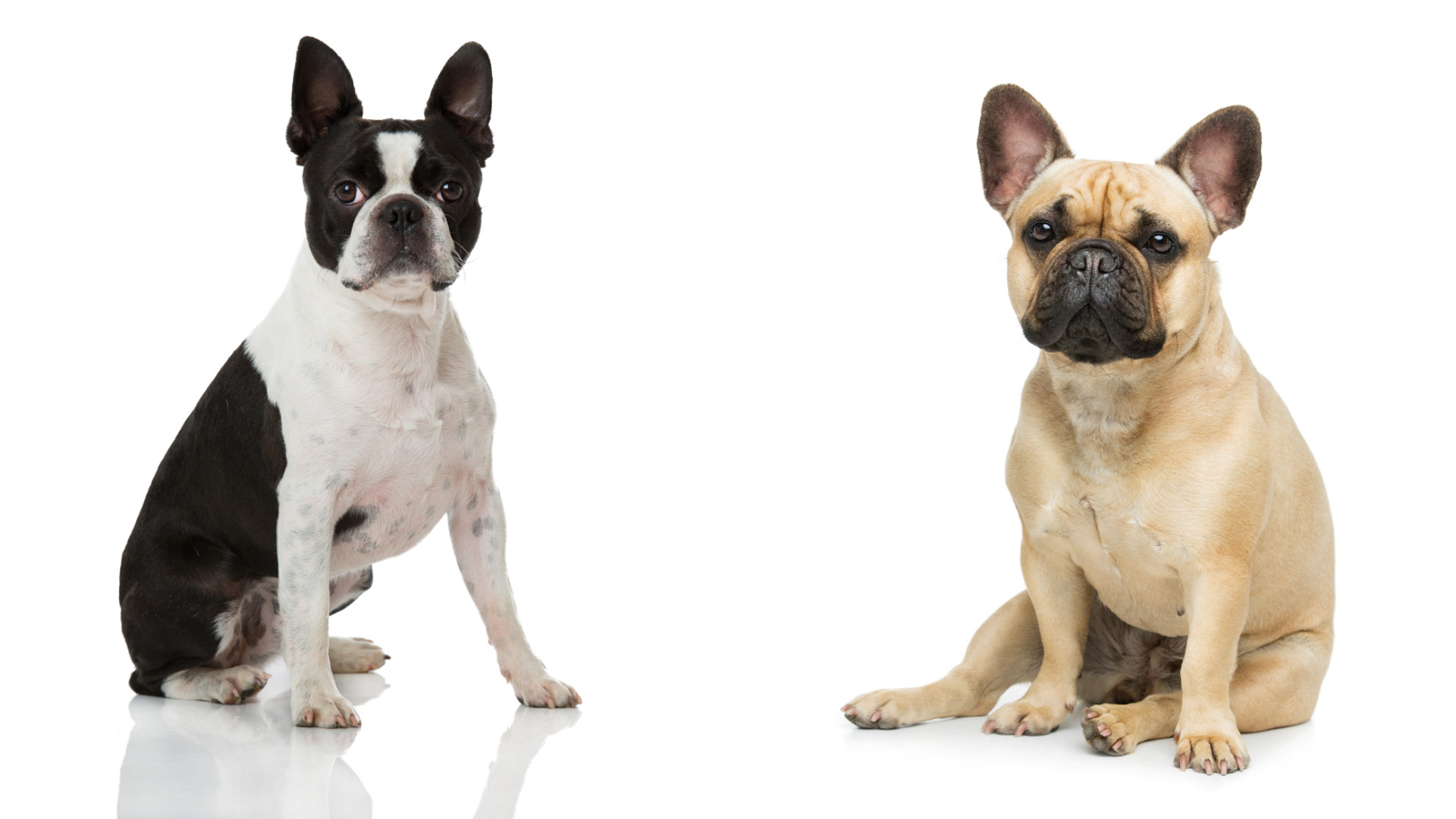
Walk through any inner-city dog park in Australia and you'll spot both of them within five minutes: the stocky, snorting French Bulldog and the sleek, tuxedo-coated Boston Terrier. They're often mistaken for each other, recommended for the same lifestyle, and shortlisted by the same first-time owners — but they are not the same dog.
Both breeds are compact, low-exercise, apartment-friendly companions with flat faces and big personalities. But the Boston Terrier is generally the lower-maintenance, lower-risk choice of the two, while the French Bulldog leans more affectionate, more stubborn, and more prone to the health issues that come with extreme brachycephaly. Here's a full breakdown to help you choose.
French Bulldog
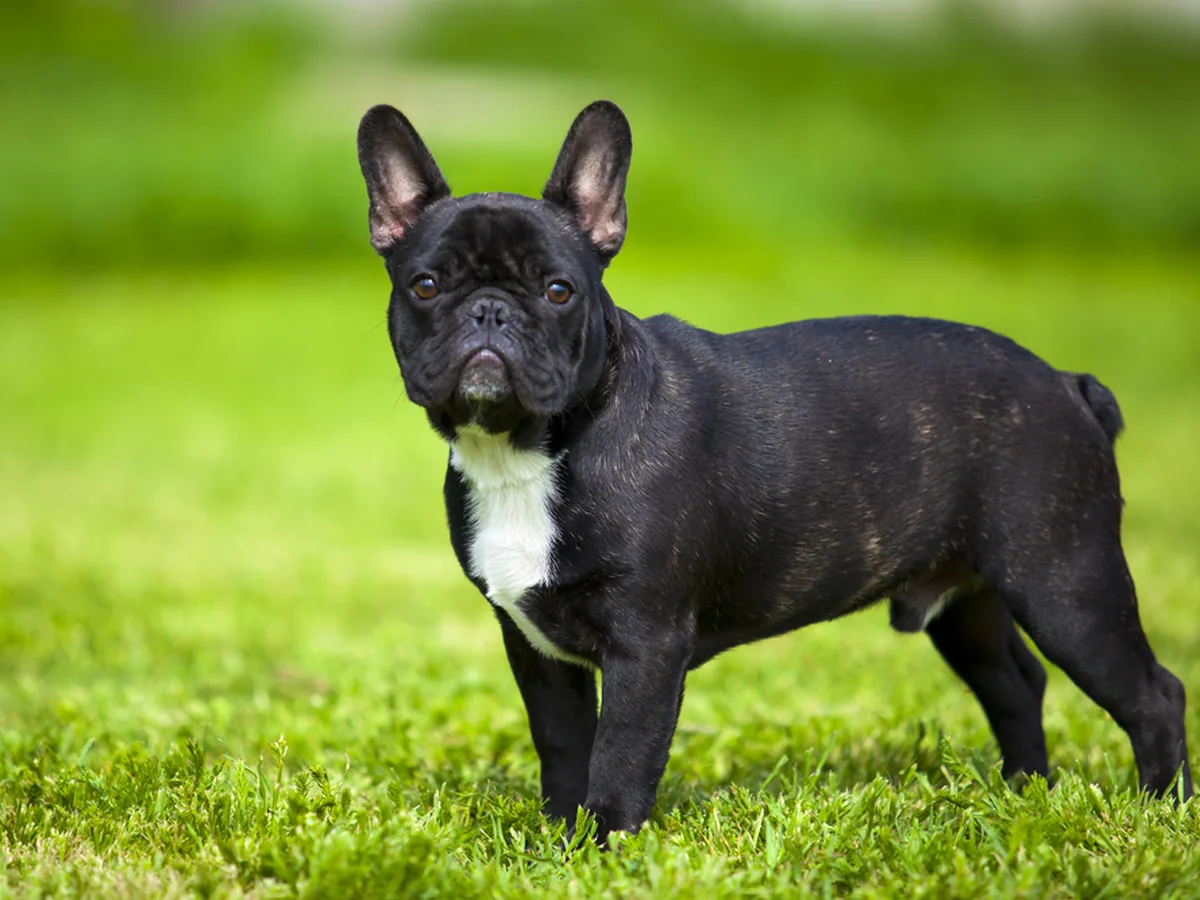
The French Bulldog is one of the most popular breeds in Australia, and it's easy to see why — a compact, muscular little dog with a big underbite grin and an even bigger appetite for being near you. Frenchies are affectionate, low-exercise, and genuinely thrive in apartments. They don't need much running, but they do need climate control: their short snouts make heat regulation difficult, so summer walks need to happen early or late, and air conditioning isn't optional in most Australian climates.
Training can be a mixed bag — Frenchies are intelligent but stubborn, and food-motivated training tends to work better than repetition-based methods. They shed moderately year-round and drool more than most people expect from a "small" dog.
| Trait | Rating |
|---|---|
| Energy level | Low (2/5) |
| Good with kids | High (4/5) |
| Training ease | Moderate (2/5) |
| Grooming needs | Low (2/5) |
| Barking level | Low (2/5) |
| Shedding | Moderate (3/5) |
| Apartment friendly | Excellent (5/5) |
| Good with other pets | High (4/5) |
| Drooling tendency | Moderate-high (3/5) |
Size: 8–13 kg, 27–35 cm at the shoulder. Lifespan: 10–12 years.
Boston Terrier
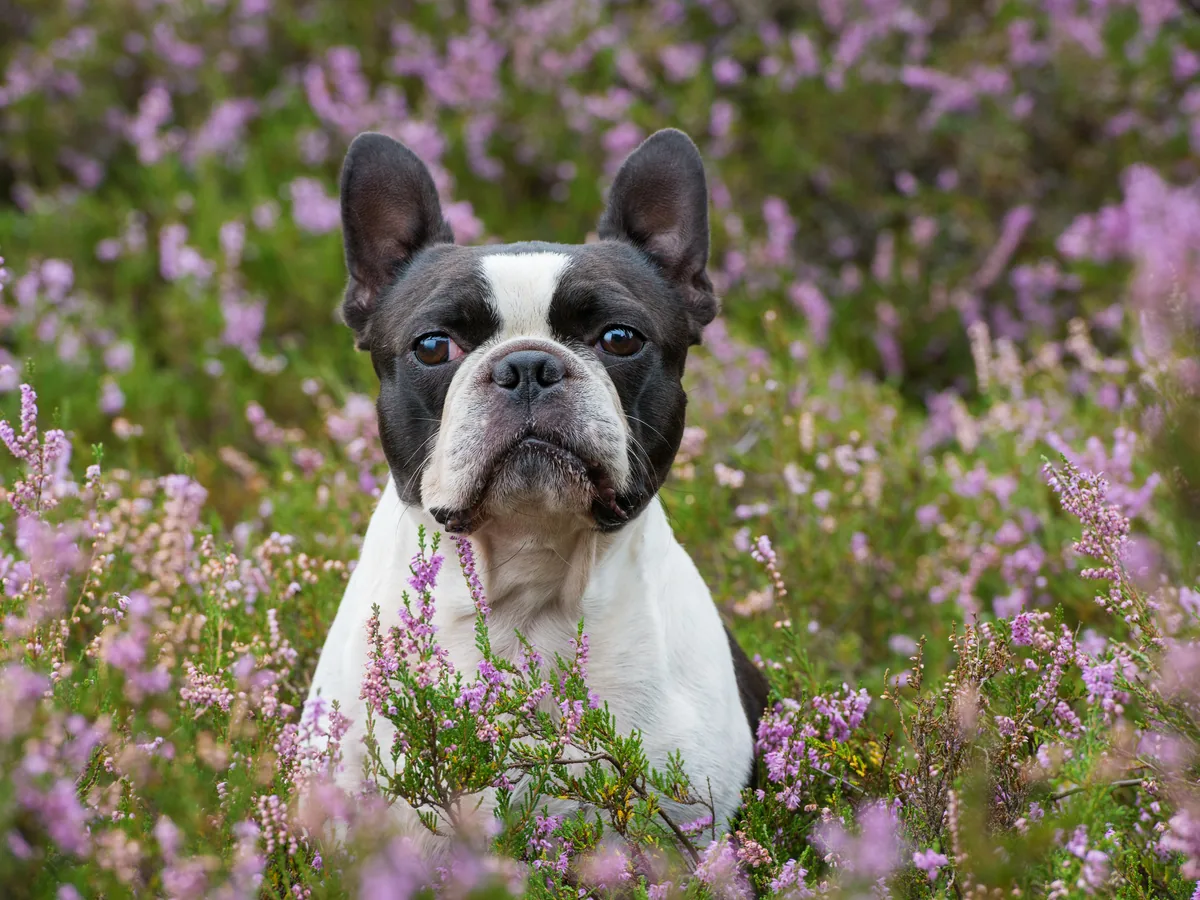
Nicknamed "the American Gentleman" for its tuxedo-like black-and-white coat, the Boston Terrier is a touch more athletic and a touch easier to train than the French Bulldog. It still has a flattened face and the same heat sensitivity, but its muzzle is slightly longer on average, which tends to make breathing a little less laboured than in a typical Frenchie.
Bostons are bright, eager to please, and pick up basic obedience faster than most flat-faced breeds — a real advantage for first-time owners. They're playful with kids, generally easygoing with other pets, and barely shed compared to the Frenchie's year-round coat drop. The trade-off is a slightly higher energy level: Bostons want a proper daily walk and some play, not just a couch and a cuddle.
| Trait | Rating |
|---|---|
| Energy level | Moderate (3/5) |
| Good with kids | High (4/5) |
| Training ease | High (4/5) |
| Grooming needs | Low (2/5) |
| Barking level | Low (2/5) |
| Shedding | Moderate (3/5) |
| Apartment friendly | Excellent (5/5) |
| Good with other pets | High (4/5) |
| Drooling tendency | Low (1/5) |
Size: 5–11 kg, 38–43 cm at the shoulder. Lifespan: 11–15 years.
French Bulldog vs Boston Terrier: Head to Head
| Factor | French Bulldog | Boston Terrier |
|---|---|---|
| Exercise needs | Minimal — short walks | Moderate — daily walk + play |
| Trainability | Stubborn, food-motivated | Eager to please, quicker learner |
| Lifespan | 10–12 years | 11–15 years |
| Drooling | Noticeable | Minimal |
| Breathing/heat risk | Higher — shorter, flatter muzzle | Moderate — slightly longer muzzle |
| Vet costs (lifetime average) | Higher | Moderate |
| Best for | Low-energy households, couch companions | First-time owners wanting an easier-to-train flat-faced dog |
Shared Health Considerations
Both breeds belong to the brachycephalic ("flat-faced") group, which means both are prone to Brachycephalic Obstructive Airway Syndrome (BOAS), heat intolerance, and eye injuries from their prominent eyes. The French Bulldog's shorter, broader skull generally puts it at higher risk than the Boston Terrier, but neither breed should be exercised in the heat of the day, and both need a vet who understands brachycephalic-specific anaesthesia risk before any surgery. For the full picture on what flat-faced ownership involves, see our guide on Brachycephalic Dog Breeds: The Truth Behind the Cute Face. If you're also weighing up the Pug, our French Bulldog vs Pug comparison covers how that breed stacks up against the Frenchie too.
Which One Should You Choose?
Choose a French Bulldog if:
- You want the lowest-energy companion possible — minimal walks, maximum couch time
- You don't mind moderate drooling and shedding
- You're prepared for higher potential vet costs related to brachycephalic health issues
- You live in an apartment with reliable air conditioning
Choose a Boston Terrier if:
- You want a flat-faced dog that's a little easier to train
- You can offer a proper daily walk, not just a stroll to the lift
- You'd prefer minimal drooling and shedding
- You want a slightly longer expected lifespan and a slightly lower health-risk profile
Frequently Asked Questions
Are French Bulldogs and Boston Terriers related?
Not directly, though they share some ancestry. Boston Terriers were developed in the United States from Bulldog and English Terrier crosses, while French Bulldogs descend from English Bulldogs bred down in size in France. Their similar appearance comes from convergent breeding toward a compact, flat-faced companion type, not a shared bloodline.
Which is cheaper to own — a French Bulldog or a Boston Terrier?
Boston Terriers are generally cheaper over a lifetime. French Bulldogs tend to need more frequent vet visits for skin fold infections, breathing issues, and a higher rate of caesarean births, all of which add up.
Which breed is better with children?
Both breeds score well with kids — they're sturdy, patient, and rarely aggressive. Supervision is still recommended with any small dog and young children, mainly to protect the dog from rough handling.
Do both breeds struggle in hot weather?
Yes. Both are brachycephalic and overheat more easily than longer-nosed breeds. Walks should happen in early morning or evening during Australian summers, and neither breed should be left outside unsupervised on a hot day.
Which breed sheds less?
The Boston Terrier sheds noticeably less than the French Bulldog, which has a denser double-layer coat despite its short length.