
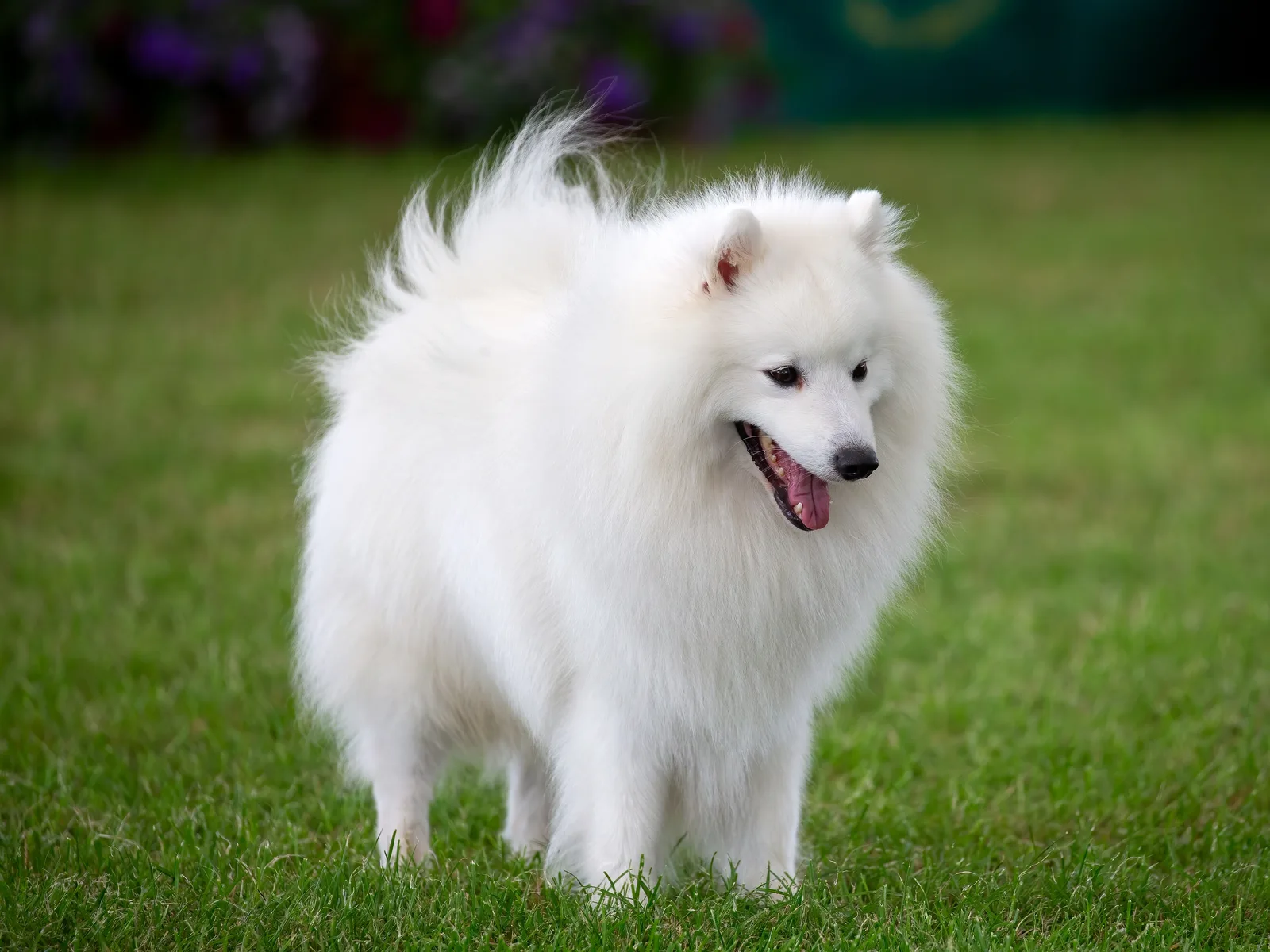
Japanese Spitz

Small
●●●○○ Energy
●●●●○ Family fit

Lively, affectionate and alert. A people-focused companion that is playful and bright but rarely frantic.

Size Small
Weight 5-10 kg
Height 30-38 cm
Life Span 12-16 yrs
Origin Japan

Daily Care at a Glance

Exercise

Around 30 to 45 minutes a day of walks and play keeps a Japanese Spitz happy, plus some training or puzzle games for its busy mind. It enjoys a run in a safe, fenced area. The thick coat makes it prone to overheating, so in an Australian summer walk early or late, keep it out of the midday sun and give it a cool place to rest.

Grooming

Brush two or three times a week, and daily during the seasonal shed. Brushing right down to the skin stops mats behind the ears and in the trousers. The coat's texture means it rarely needs a bath, and it should never be shaved, because the double coat protects against both heat and sunburn. Wipe around the eyes if they water.

Training

Bright and keen to please, a Japanese Spitz learns quickly with gentle, reward-based training. Teach a quiet cue early so alert barking doesn't become a habit, and build up time alone slowly from puppyhood, because this breed bonds closely and can fret when left.

The Japanese Spitz Story

The Japanese Spitz is a small, snow-white companion developed in Japan in the 1920s and 1930s from white spitz-type dogs. It looks like a pocket Samoyed, with a fluffy ruff, a plumed tail curled over the back and dark, bright eyes. It was bred to be a companion, and it shows: these dogs want to be close to their people.

A good Japanese Spitz is lively, affectionate and playful without being frantic. It is alert and will tell you when someone is at the door, but it is not usually a nuisance barker. It gets on well with children who are gentle and with other pets, and its size and moderate energy suit unit living, provided it isn't left alone for long hours.

That white coat is less work than it looks. Its texture tends to shed dirt once dry, so regular brushing does most of the job. It does drop a lot of hair, especially when the undercoat sheds once or twice a year. Commonly listed health issues include kneecaps that slip (patellar luxation) and runny eyes, so ask a breeder about both.

Breed Characteristics

Energy Level
3/5
Child-Friendly
4/5
Grooming Needs
3/5
Trainability
4/5
Barking Level
3/5
Shedding Level
4/5
Drooling Potential
1/5