
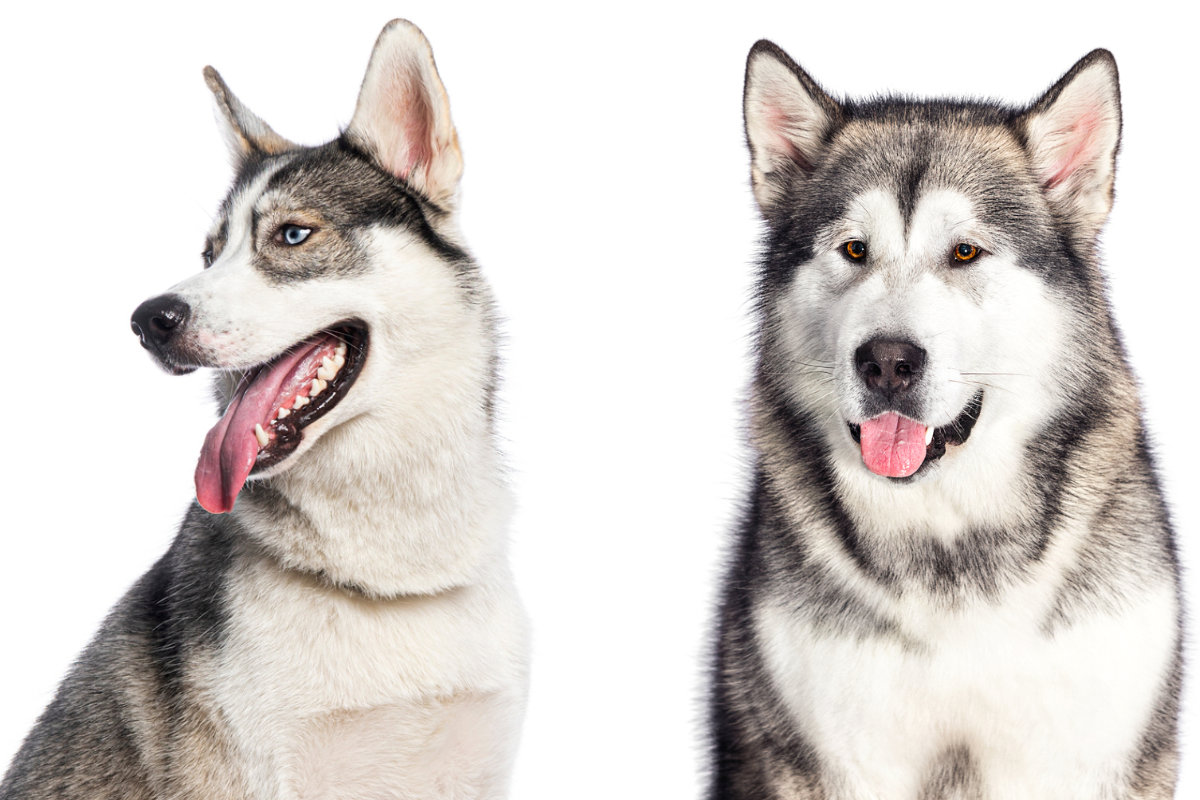
Mixing up a Siberian Husky and an Alaskan Malamute is one of the most common breed mistakes there is — and one of the most understandable. Both are wolf-faced Arctic sled dogs with thick double coats, curled-back grins and a talent for escaping backyards. Plenty of "Husky" photos online are actually Malamutes, and vice versa.
But these are two genuinely different breeds, developed thousands of kilometres apart to do two different jobs. One was bred to run fast and far on almost no fuel. The other was bred to haul serious weight, slowly, all day. That single difference in job description explains nearly everything that separates them — size, temperament, trainability, and which one (if either) belongs in your home.
The Quick Answer
If you want a medium-sized, endlessly social running partner and can handle a professional-grade escape artist: Siberian Husky.
If you want a big, powerful, more independent dog and you have the strength, space and experience to match it: Alaskan Malamute.
And if you want to tell them apart in the park: the Malamute is the big one with brown eyes and a plumed tail curled over its back. The Husky is the smaller, lighter one, often with blue eyes, carrying its tail low like a fox brush when relaxed.
How They Compare
| Trait | Siberian Husky | Alaskan Malamute |
|---|---|---|
| Size | Medium (16–27 kg) | Large (34–39 kg) |
| Energy level | 5 / 5 | 4 / 5 |
| Good with kids | 4 / 5 | 4 / 5 |
| Training ease | 2 / 5 | 2 / 5 |
| Grooming needs | 4 / 5 | 5 / 5 |
| Shedding | 5 / 5 | 5 / 5 |
| Apartment friendly | 1 / 5 | 1 / 5 |
| Good with other pets | 3 / 5 | 2 / 5 |
| Separation anxiety risk | 3 / 5 | 3 / 5 |
Two Different Jobs, Two Different Dogs
Siberian Husky: The Marathon Runner
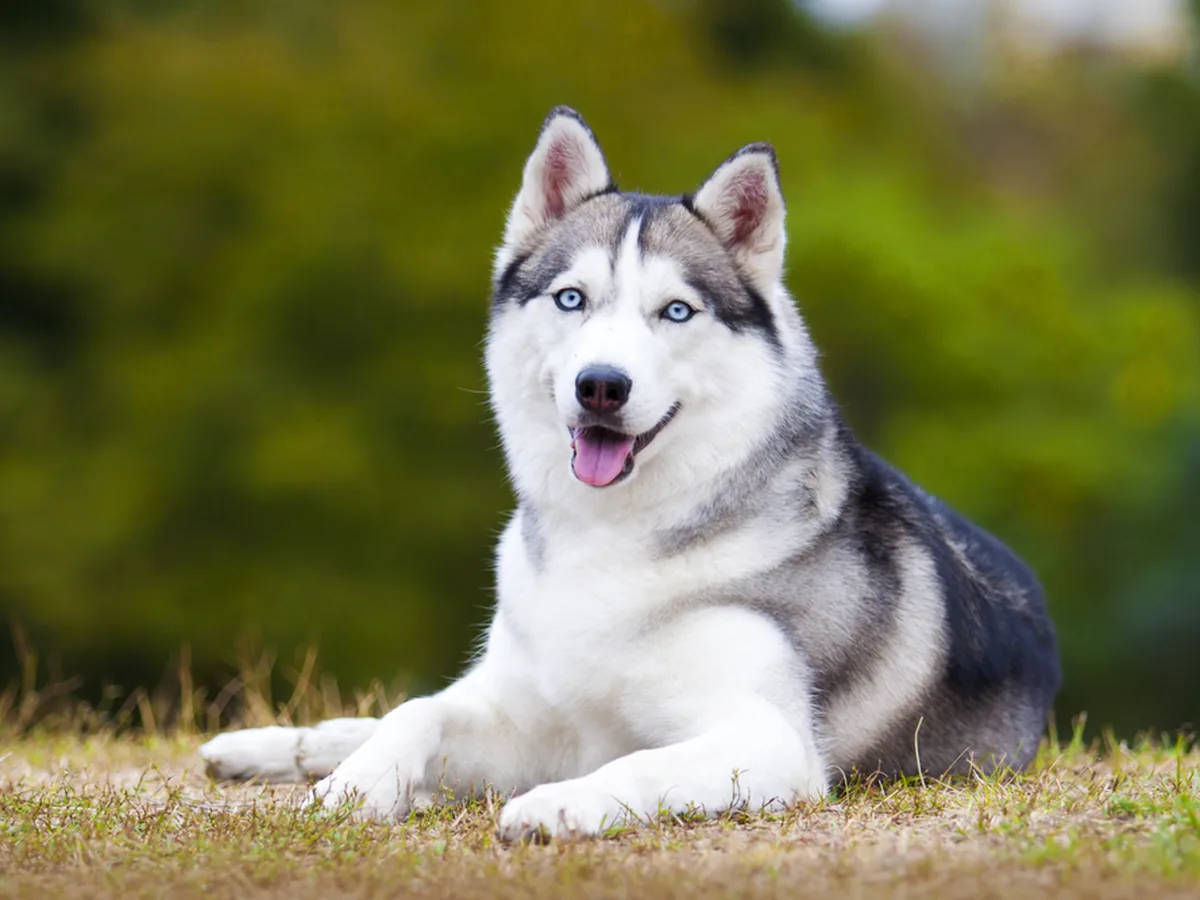
The Siberian Husky was developed over roughly 3,000 years by the Chukchi people of north-eastern Siberia to pull light sleds fast over enormous distances. A working Husky team can cover well over 100 km in a day on remarkably little food — an efficiency scientists still study. Everything about the breed follows from that job: a light, athletic frame, a metabolism built for endurance, and a mind that was expected to make its own decisions out on the ice when no human was in sight.
That last part is the bit that surprises new owners. Huskies are cooperative, but they are not compliant — the 2/5 training-ease score is not a lack of intelligence, it is a lack of interest in obedience for its own sake. They hear you, they understand you, and then they decide. Pair that with elite escape skills (jumping, digging, and genuine problem-solving against average fencing) and you have a breed that demands secure containment and a real daily outlet, not a quick walk around the block.
Socially, Huskies are famously friendly — with strangers, children and other dogs alike. As guard dogs they are hopeless; a Husky is more likely to show an intruder around than challenge one.
Alaskan Malamute: The Freight Hauler
The Alaskan Malamute is the Husky's older, heavier cousin in job description only. Developed by the Mahlemiut Inuit people of north-western Alaska, the Malamute was bred to haul heavy freight — hundreds of kilograms of it — at a walking pace, all day, in brutal conditions. Where the Husky is a marathon runner, the Malamute is a powerlifter with stamina.
That shows in the body: males commonly reach 34–39 kg (a big male can be half again the weight of a large Husky), with a broader head, heavier bone and a deep chest. It also shows in the temperament. Malamutes share the Husky's independence and friendliness toward people, but they are generally more dominant with other dogs — same-sex dog aggression is a well-known trait in the breed — and carry a stronger prey drive around cats and small animals, which is why they score 2/5 for other pets against the Husky's 3/5.
A Malamute that decides to pull goes exactly where it wants unless its owner has done the training work early. This is not a first-dog breed, and it is not a breed for anyone who cannot physically manage a determined 38 kg animal on lead.
How to Tell Them Apart at a Glance
- Size: Malamutes are substantially bigger and heavier-boned. If you are wondering whether it is a very large Husky, it is probably a Malamute.
- Eyes: Huskies famously come with blue, brown or odd-coloured eyes. Malamutes only ever have brown eyes — blue eyes disqualify a Malamute in the show ring.
- Tail: A Malamute carries a well-furred, plumed tail curled up over its back. A relaxed Husky carries its tail low, like a fox brush, lifting it in a sickle shape when alert.
- Face: Malamutes have a broader skull and heavier muzzle; Husky features are finer and more fox-like.
- Movement: Huskies move light and quick; Malamutes move with deliberate power.
Family Life and Other Dogs
Both breeds score 4/5 with kids — they are sociable, tolerant dogs that genuinely like people, which is more than can be said for many working breeds. The practical caveats are physical: a Husky's boisterous energy and a Malamute's sheer mass can both flatten a toddler by accident, so supervision and teaching kids how to interact are non-negotiable in either case.
The bigger difference is other dogs. Huskies are pack animals that generally get on broadly well with other dogs. Malamutes need earlier, more deliberate socialisation and often do best as an only dog or with a well-matched opposite-sex companion — putting two dominant same-sex Malamutes together is asking for trouble. Neither breed can be trusted off-lead around small animals; both were bred with functioning prey drive, and the Malamute's is stronger.
The Australian Climate Question
Here is the honest part for Australian readers: both of these breeds were built for the Arctic, and both wear insulation rated for minus forty. In an Australian summer that coat is a genuine liability, and the Malamute — bigger body, heavier coat — has it worse than the Husky.
That does not make ownership impossible in Australia, but it makes it conditional. Cooler southern climates (Tasmania, Victoria, the ranges) are a far better fit than Queensland or the northern half of the country. Summer management means early-morning and evening exercise only, constant shade and water, cool indoor space through the heat of the day, and never, ever shaving the coat — the double coat also insulates against heat, and shaving it wrecks the mechanism permanently. Expect year-round shedding from both breeds, escalating into a spectacular full coat-blow twice a year. Daily brushing during a blow is mandatory unless you are comfortable living in a snow globe of dog hair.
Who Each Breed Suits
Choose a Siberian Husky if:
- You want a running, hiking or bikejoring partner with effectively bottomless endurance
- You have a genuinely secure yard — high fences, dig-proofed, gates that latch — and take escape prevention seriously
- You want a sociable, dog-friendly breed and may want more than one dog
- You can give it serious exercise every single day, in a climate that allows it
Choose an Alaskan Malamute if:
- You have owned strong, independent breeds before and are confident handling a very powerful dog
- You want a calmer, steadier presence than the Husky's perpetual motion — power over pace suits you
- You have no small pets, and either no other dogs or a carefully matched one
- You live somewhere cool, with the space a 38 kg working dog needs
Neither breed suits apartment living, a hot-climate backyard with no summer plan, or an owner who is out all day — both score 1/5 for apartment friendliness and both will redecorate a boring yard. If you are not sure either one actually fits your lifestyle, our breed matching quiz will tell you honestly — it weighs your climate, space, experience and time before it recommends anything with this much coat and this much opinion.
Frequently Asked Questions
Is a Malamute just a bigger Husky?
No. They are separate breeds developed by different peoples on different continents — the Siberian Husky by the Chukchi of Siberia for fast, light sled work, and the Alaskan Malamute by the Mahlemiut of Alaska for heavy freight hauling. They share an Arctic sled-dog heritage and a similar look, but they differ in size, build, temperament and working style.
How do I tell a Husky and a Malamute apart?
Check three things: size (Malamutes are much bigger, 34–39 kg against the Husky's 16–27 kg), eyes (only Huskies have blue eyes — Malamute eyes are always brown), and the tail (a Malamute's plumes over its back; a relaxed Husky's hangs low like a fox brush).
Can a Husky or Malamute live in the Australian heat?
They can live in Australia with careful management, but hot climates are genuinely hard on both breeds — they carry Arctic double coats rated for extreme cold. Cooler southern regions are a much better fit. Summer means dawn-and-dusk exercise, shade, water and cool indoor space — and never shave the coat, which destroys its ability to insulate against heat as well as cold.
Are Malamutes more aggressive than Huskies?
Toward people, no — both breeds are friendly and make hopeless guard dogs. Toward other dogs, the Malamute is the more challenging of the two: same-sex dog aggression is a known breed trait, and its prey drive around cats and small animals is stronger than the Husky's. Early socialisation and sensible pairings manage it; ignoring it does not.
Which breed is better for a first-time dog owner?
Honestly, neither. Both are independent, high-shedding escape artists that need experienced handling, serious containment and a daily exercise commitment — and the Malamute adds 38 kg of pulling power to that list. If you are newer to dog ownership, our Best Dog Breeds for First-Time Owners guide covers breeds that will build your experience first.