
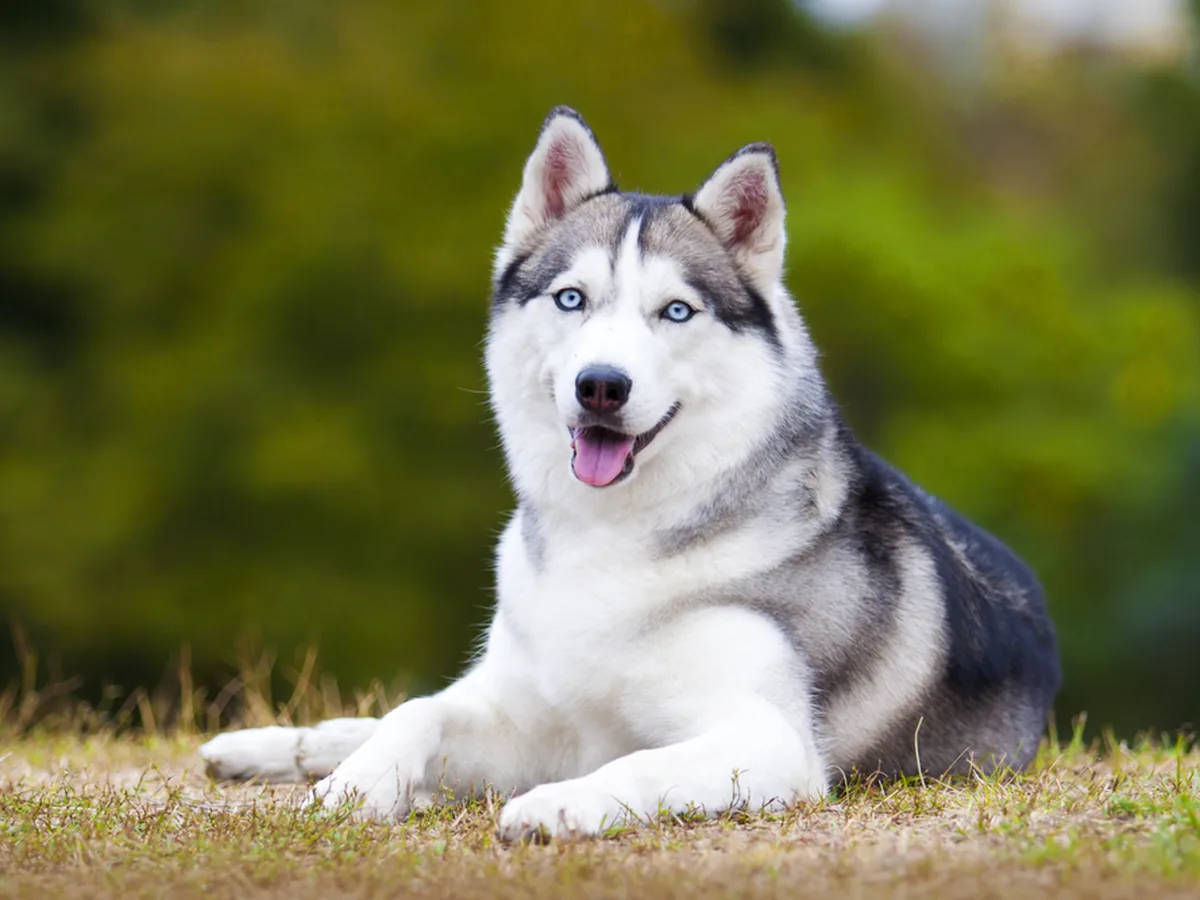
The Siberian Husky is not a recent invention. It’s a 3,000-year-old Arctic working dog, developed by the Chukchi people to haul sleds across enormous frozen distances with efficiency that still doesn’t quite make sense.
They can run well over 100 km in a day on minimal fuel, regulating their metabolism in ways scientists still study. Everything about them is built for survival: dense double coat rated to extreme cold, fur between the toes for traction, and a system that just keeps going.
That history explains the personality. Huskies are cooperative but not compliant. They’re pack dogs, not command-and-control dogs. The independence people struggle with isn’t stubbornness, it’s design. These dogs were bred to think for themselves when humans weren’t in sight.
They’re also famously friendly. With strangers, children, other dogs, it’s all broadly positive. As guard dogs they’re hopeless. A Husky is more likely to welcome an intruder than challenge one.
What they are, without negotiation, is high maintenance. Exercise isn’t optional or flexible. This is a dog built to move long distances, and without a serious daily outlet, they’ll create their own agenda. Containment matters just as much. They’re elite escape artists, jumping, digging, and problem-solving their way out of average fencing without much effort.
The coat is part of the deal. That Arctic insulation sheds heavily year-round and then explodes twice a year into full “arctic fur storm” territory. Daily brushing during those periods is mandatory unless you’re comfortable living inside a snow globe of dog hair.
They don’t bark much, but they’re far from quiet. Huskies howl, whine, and “talk” in a way that carries. It’s expressive, sometimes entertaining, and occasionally a neighbourhood issue.
They’re also surprisingly clean dogs, almost cat-like in their grooming habits, which is one of the few low-maintenance traits in the package.
For active, experienced owners with space, secure fencing, and the time to match the dog’s output, the Siberian Husky is exceptional. For everyone else, it’s a very good way to learn what 3,000 years of purpose looks like when it’s bored or under-exercised.