
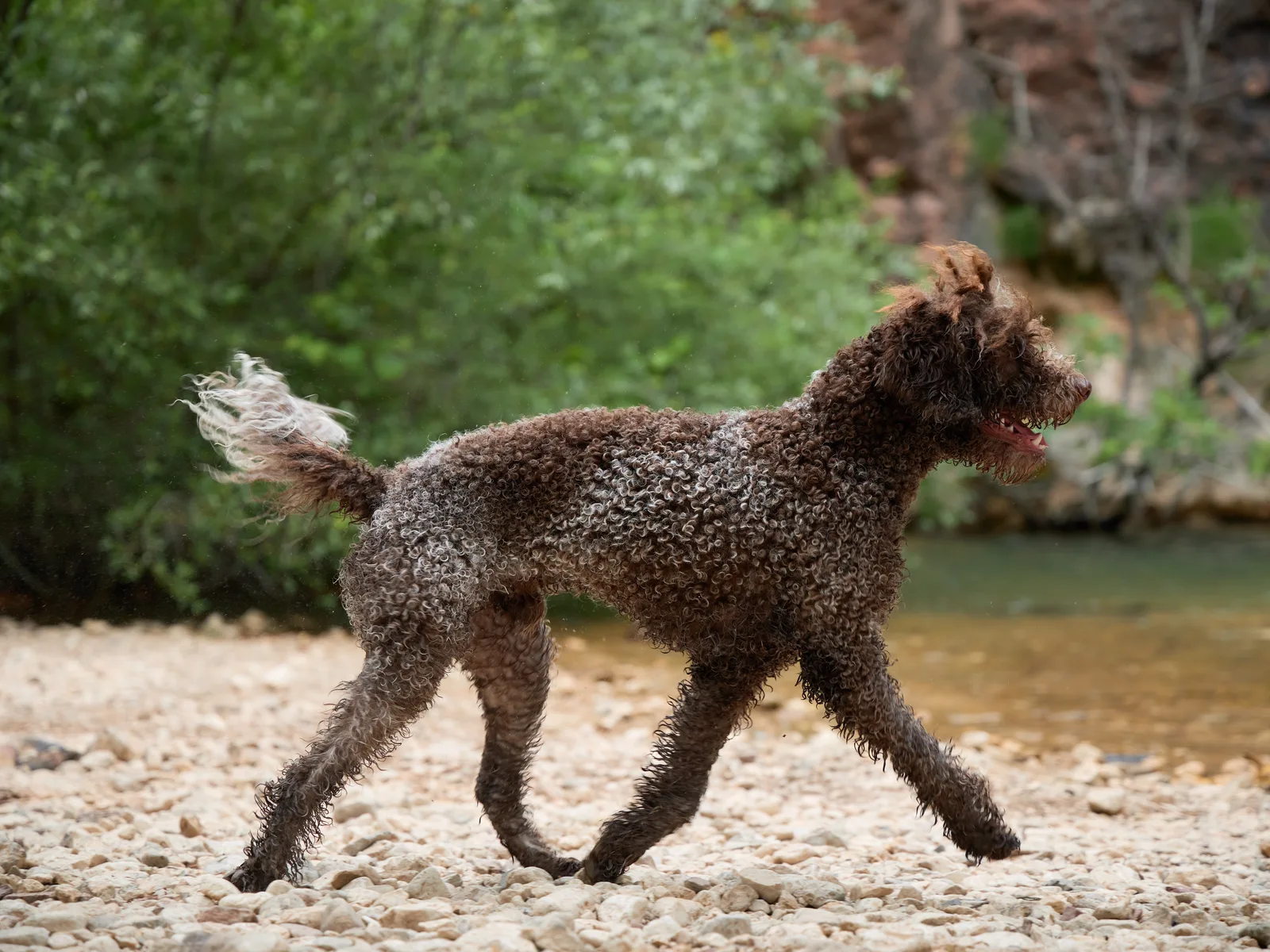
Lagotto Romagnolo

Medium
●●●●○ Energy
●●●●○ Family fit

Affectionate, lively and keen. A curly-coated Italian truffle dog with a great nose and a strong bond with its family.

Size Medium
Weight 11-16 kg
Height 41-48 cm
Life Span 15-17 yrs
Origin Italy

Daily Care at a Glance

Exercise

A Lagotto needs about an hour of activity a day: walks plus play, training and, ideally, scent work. Nosework, hide-and-seek with treats and tracking games suit it perfectly. Many enjoy swimming. Without enough to do, it may dig or bark out of boredom.

Grooming

The curly coat sheds very little but mats easily. Brush right down to the skin once or twice a week and book a clip every two to three months; many owners keep it in a short, even trim. Check and clean the ears regularly, as the curls trap moisture, and trim the hair around the eyes and paws.

Training

Lagottos are bright and eager, and they respond well to calm, reward-based training. They can be sensitive, so avoid harsh corrections. Channel the nose into games and teach a solid recall early, because a good scent can override everything else. Early socialisation helps keep their alertness from turning into excessive barking.

The Lagotto Romagnolo Story

The Lagotto Romagnolo comes from the Romagna region of north-east Italy, where it was a water retriever in the marshes before becoming the classic truffle-hunting dog. It is a medium-sized, sturdy dog with a dense coat of tight, woolly curls that covers the whole body, including a curly beard and eyebrows.

Lagottos are affectionate, lively and keen to work with their people. Their nose is exceptional, and many love scent games and nosework. They are generally good with children and other pets, and they bond closely with their family, so they don't like being left alone for long. They are alert and will bark to announce visitors, and the digging instinct of a truffle dog is real, so the garden may need some protection.

In Australia the breed is popular as a family dog that sheds little. The curly coat holds its hair rather than dropping it, but that means it needs regular brushing and clipping to stop it matting. Like any dog, it is not truly hypoallergenic. Commonly listed health issues include hip dysplasia and a form of juvenile epilepsy that can be DNA tested, so ask breeders about health and DNA testing.

Breed Characteristics

Energy Level
4/5
Child-Friendly
4/5
Grooming Needs
4/5
Trainability
4/5
Barking Level
3/5
Shedding Level
1/5
Drooling Potential
1/5