
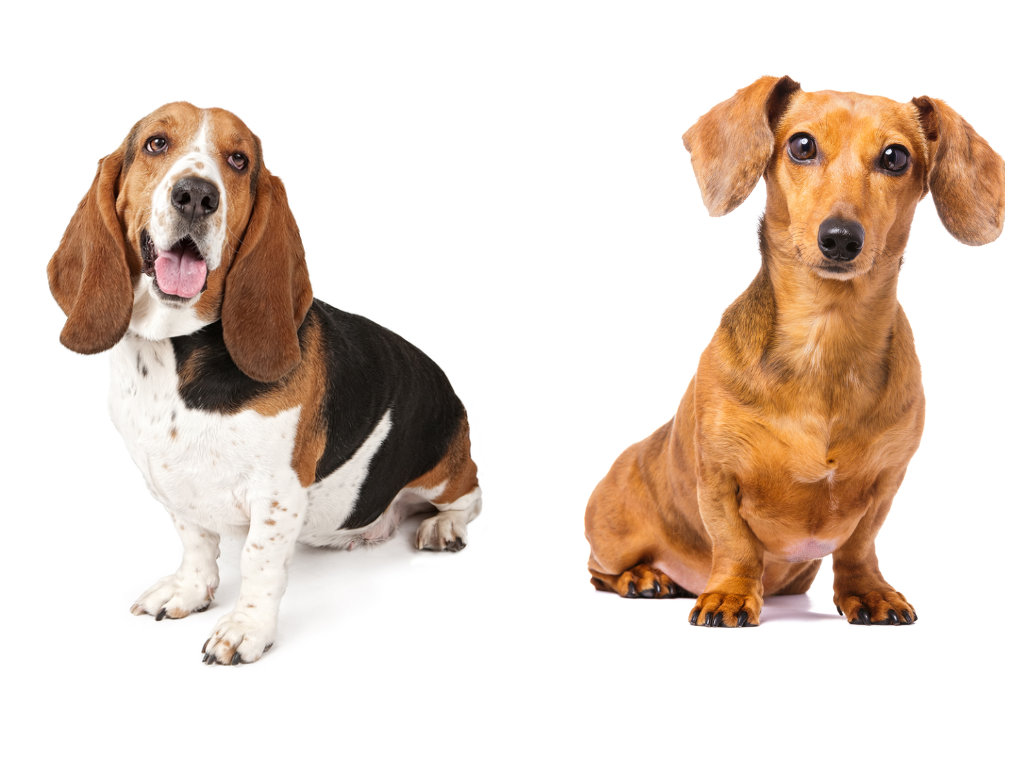
The Dachshund and the Basset Hound get lumped together constantly — both are long-bodied, short-legged hounds with oversized ears and a nose that runs the show. People shopping for one often end up looking at the other, assuming they're two versions of the same "low, long, droopy" dog with a big personality packed into a small frame.
They're not. Both are genuine scent hounds bred in Europe centuries ago, but for two very different jobs — one to work alone underground against an animal that could seriously hurt it, the other to work in a pack, trailing rabbits across open ground at a hunter's walking pace. That single difference in job description explains almost everything else about these two breeds, including which one is patient with a toddler and which one very much is not.
The Quick Answer
If you want a small, portable, endlessly bold dog who bonds hard to one family and can be a bit much with strangers, kids and other pets: Dachshund.
If you want a bigger, unhurried, famously tolerant dog who gets along with almost everyone, including toddlers and other animals: Basset Hound.
And if you're trying to tell them apart at the park: the Dachshund is the small one — usually under 15 kg — moving with a confident, almost comic trot. The Basset Hound is the much heavier one, often 20–29 kg despite standing barely taller, with ears that nearly touch the ground and skin that looks a size too big.
How They Compare
| Trait | Dachshund | Basset Hound |
|---|---|---|
| Size | Small (7–15 kg) | Large (20–29 kg) |
| Energy level | 3 / 5 | 2 / 5 |
| Good with kids | 2 / 5 | 4 / 5 |
| Good with other pets | 2 / 5 | 4 / 5 |
| Training ease | 2 / 5 | 2 / 5 |
| Barking level | 4 / 5 | 4 / 5 |
| Grooming needs | 3 / 5 | 3 / 5 |
| Shedding | 3 / 5 | 3 / 5 |
| Drooling | 1 / 5 | 4 / 5 |
| Apartment friendly | 5 / 5 | 4 / 5 |
| Separation anxiety risk | 2 / 5 | 3 / 5 |
Same Nose, Very Different Job
Dachshund: The Solo Badger Hunter
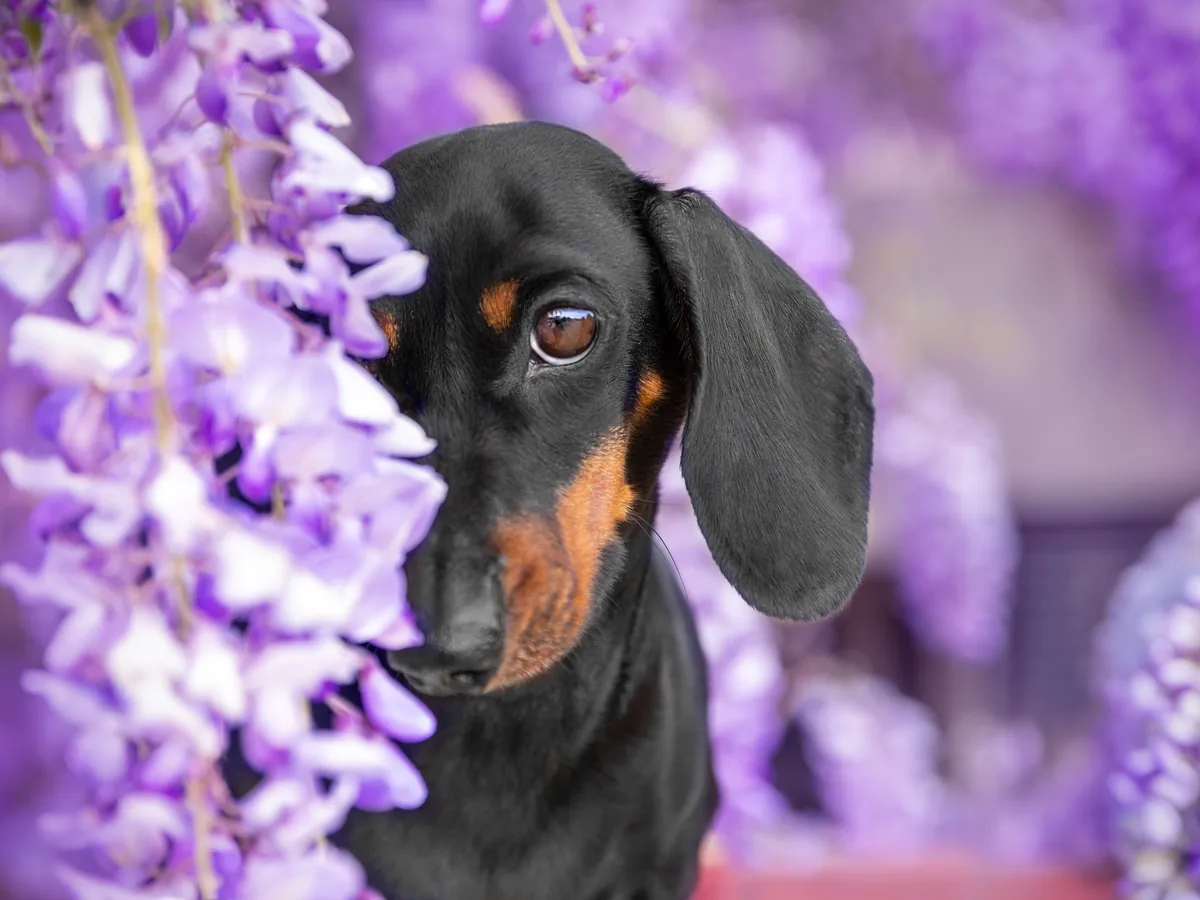
The Dachshund was bred in Germany to do something genuinely dangerous: follow a badger — an animal that can weigh more than the dog itself and will fight back in a confined tunnel — down into its den, alone, with no backup. The name literally means "badger dog." That job required a long, narrow body to fit the tunnel, powerful digging front legs, a loud voice so the hunter above ground could track the fight, and above all, a dog that didn't need a human's permission to make a decision. Nothing about working underground against a cornered badger rewards a dog for checking in with anyone first.
That solo, high-stakes heritage is still fully switched on. Dachshunds bond hard to one person or one family and can be genuinely wary of strangers, which makes them excellent, surprisingly loud watchdogs for such a small animal. It also makes them territorial in ways that show up clearly in the numbers: a good-with-kids score of 2/5 and good-with-other-pets score of 2/5 aren't about meanness, they're about a small, physically fragile dog (that long spine is prone to disc injury) with a low tolerance for being grabbed, startled or muscled out of its space by a bigger animal or an overexcited child. Rough handling is a genuine risk to a Dachshund's back, not just its patience.
Basset Hound: The Pack Rabbit Trailer
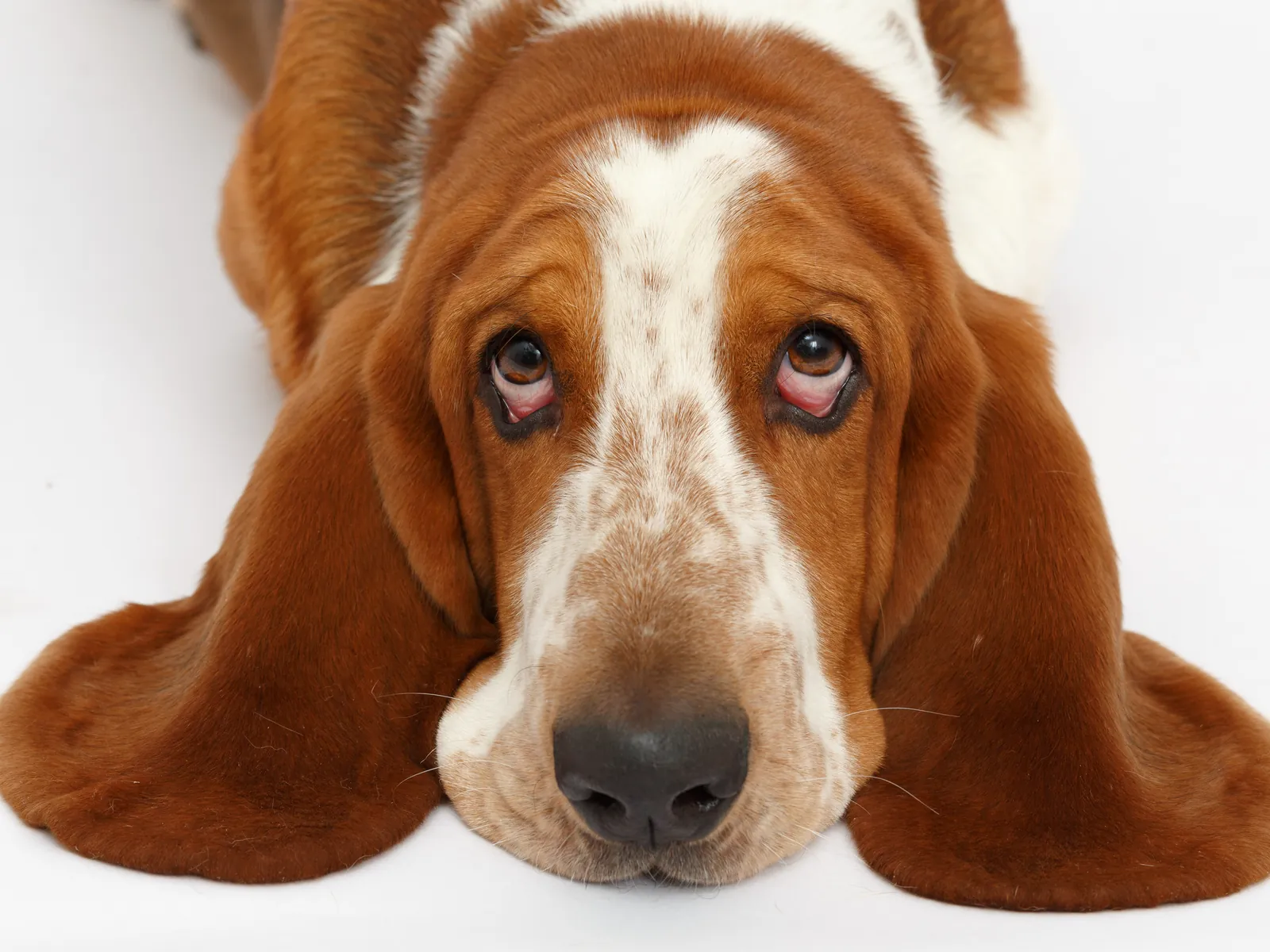
The Basset Hound comes from France, built for the opposite kind of hunt: trailing rabbits and hare above ground, in a pack alongside other hounds, at a pace slow enough for a hunter on foot to keep up. Every part of the design serves that job — the famous ears sweep scent particles up off the ground, the loose skin traps odour close to the face, and the short, heavy-boned legs keep the nose low without needing speed. Nothing about that job selects for territorial or possessive instincts. It selects for a dog that works calmly alongside other dogs and defers to the group.
That pack temperament is exactly why Basset Hounds score so much higher on kids (4/5) and other pets (4/5) than the solitary Dachshund. They were never asked to guard anything or make split-second decisions alone — they were asked to be patient, sociable, and unbothered by chaos around them, which is precisely the temperament that makes a good family dog. The trade-off is size and mess: a Basset is a genuinely heavy dog for its height (20–29 kg on legs barely 28–38 cm tall), and those loose jowls mean real drool, scored 4/5 against the Dachshund's nearly drool-free 1/5.
How to Tell Them Apart at a Glance
- Weight: A Dachshund tops out around 15 kg. A Basset Hound commonly weighs double that, despite similar leg length.
- Ears: Both have long ears, but a Basset's are longer, heavier and often drag on the ground; a Dachshund's sit closer to the head.
- Skin: Bassets have loose, wrinkled skin built to trap scent. Dachshunds have a tight, sleek coat with no wrinkling.
- Build: A Dachshund looks lean and low. A Basset looks heavy and low — more barrel than blade.
- Coat varieties: Dachshunds come in smooth, longhaired and wire-haired coats. Bassets have one short, dense coat type.
Family Life and Other Pets: The Real Difference
This is the number that actually matters if you're choosing between them for a household with kids or other animals, so it's worth being direct about it. A Basset Hound is one of the more genuinely patient, tolerant hound breeds around children and other dogs — bred for centuries to work calmly in a group, it takes a lot to rattle one. A Dachshund is not that dog. It can absolutely live well with respectful older kids and can learn to coexist with other pets it's raised alongside, but it needs supervision, gentle handling, and an understanding that this is a small, proud, physically delicate dog with a low threshold for being treated like a plush toy — not a family dog in the same easy-going sense a Basset is.
Where They Agree: Loud, Independent, and Fine in an Apartment
Strip away the family-life question and the two breeds converge more than you'd expect. Both are surprisingly loud (4/5 barking) — a side effect of being bred to vocalise to a hunter who couldn't see them. Both are stubborn and scent-driven enough to score just 2/5 on training ease; obedience for its own sake has never interested either breed, and positive reinforcement plus patience beats repetition every time. And despite being classic "hound" breeds, both actually suit apartment living better than most people assume (Dachshund 5/5, Basset 4/5) — neither needs the acreage a sporting or working breed would, just a solid daily walk and somewhere to sniff.
Who Each Breed Suits
Choose a Dachshund if:
- You live alone, as a couple, or with older kids who understand gentle handling
- You want a bold, watchful, portable dog and don't mind a big voice in a small body
- You can commit to protecting that long spine — controlled stairs, no jumping off furniture, careful lifting
- You're not planning to add a houseful of other pets it has to share attention with
Choose a Basset Hound if:
- You have young kids, other dogs, or a generally busy household
- You want a calm, unbothered presence rather than a dog that needs constant managing
- You don't mind drool on the walls and a wrinkly face that needs regular cleaning
- You can handle a surprisingly heavy dog on a lead that has decided a smell is more interesting than you are
Both breeds are loud, stubborn about training, and better suited to houses and apartments alike than their "hound" label suggests. If you're not sure whether either one actually matches your household — especially with kids or other pets already in the picture — our breed matching quiz weighs exactly this kind of trade-off before it recommends anything.
Frequently Asked Questions
Is a Basset Hound just a bigger Dachshund?
No. They're separate breeds from different countries with different original jobs — the Dachshund from Germany, bred to hunt badgers alone underground, and the Basset Hound from France, bred to trail rabbits in a pack above ground. They share a long, low body shape and a powerful nose, but the resemblance is largely skin deep.
Which is better with kids, a Dachshund or a Basset Hound?
The Basset Hound, clearly — it scores 4/5 on good-with-kids against the Dachshund's 2/5. That comes down to temperament (the Basset's pack heritage makes it patient and hard to rattle) and physical fragility (a Dachshund's long spine doesn't tolerate rough handling well, which matters with young kids).
Do Dachshunds and Basset Hounds bark a lot?
Yes, both are loud — each scores 4/5 on barking level. Both were bred to vocalise so a hunter out of sight could track them, and that instinct hasn't gone anywhere in a suburban backyard.
Are Dachshunds or Basset Hounds good apartment dogs?
Both are better suited to apartment living than their hound heritage suggests — the Dachshund scores 5/5 and the Basset 4/5 on apartment friendliness. Moderate exercise needs and a manageable size help, though the barking may be an issue with close neighbours.
Which is easier to train, a Dachshund or a Basset Hound?
Neither, honestly — both score just 2/5 on training ease. Each breed was bred to follow its nose and make independent decisions in the field, not to look to a human for instructions, so patience and positive reinforcement matter more than repetition with either one.