
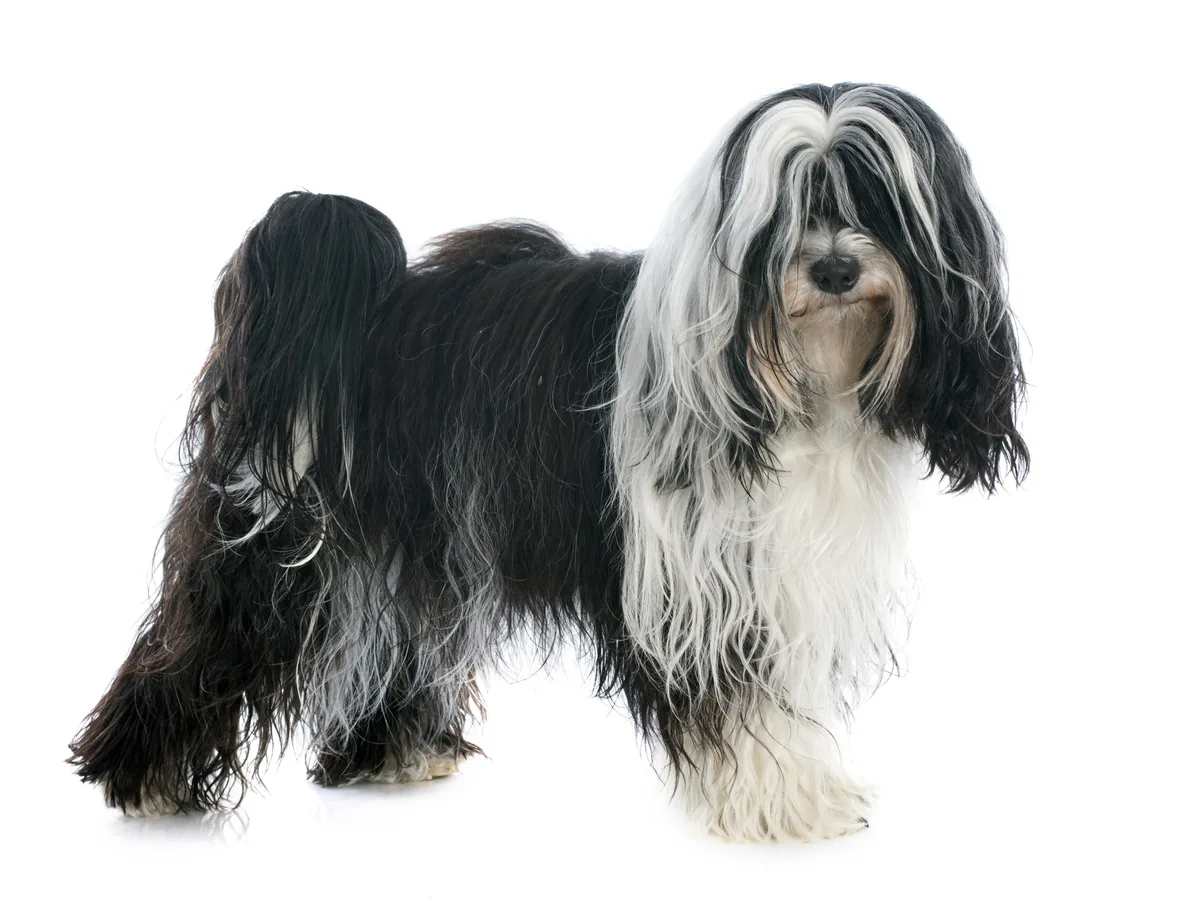
The Tibetan Terrier is misnamed in both words. It is not a terrier — it has never hunted vermin underground — and while it does come from Tibet, the “Tibetan Terrier” label was applied later by European veterinarians who weren’t entirely sure what else to call it. In Tibet they were known as “Holy Dogs” or Tsang Apsos, valued as companions, watchdogs, herding assistants, and good-luck charms in Himalayan villages and monasteries. Tradition held that they should never be sold, only gifted.
What you actually get is a medium-sized, heavily coated companion dog with an affectionate nature, surprising agility, and a quietly observant personality. They are warm with family, generally sociable with other animals, and adaptable enough to suit everything from country homes to apartments, provided they get regular walks and involvement in daily life. They’re not frantic dogs, but they are clever and curious. A bored Tibetan Terrier will absolutely invent hobbies, and you may not enjoy the results.
The coat is one of the breed’s defining features — long, dense, and developed to survive brutal Himalayan weather. It looks magnificent when maintained properly and like a neglected floor mop when it isn’t. Regular brushing is non-negotiable unless your long-term goal is to create one enormous knot with legs.
Their oversized, flat “snowshoe” feet are another charming leftover from their mountain heritage, designed to grip snowy terrain and move through deep snow and rocky ground with ease. Combined with the shaggy coat and cheerful expression, it gives Tibetan Terriers a slightly eccentric look that owners tend to become deeply attached to.
For the right owner, the Tibetan Terrier is a wonderfully balanced companion — affectionate without being clingy, lively without being frantic, and full of quirky Himalayan character. Live with one long enough and you start to understand why Tibetan monks considered them lucky dogs.