
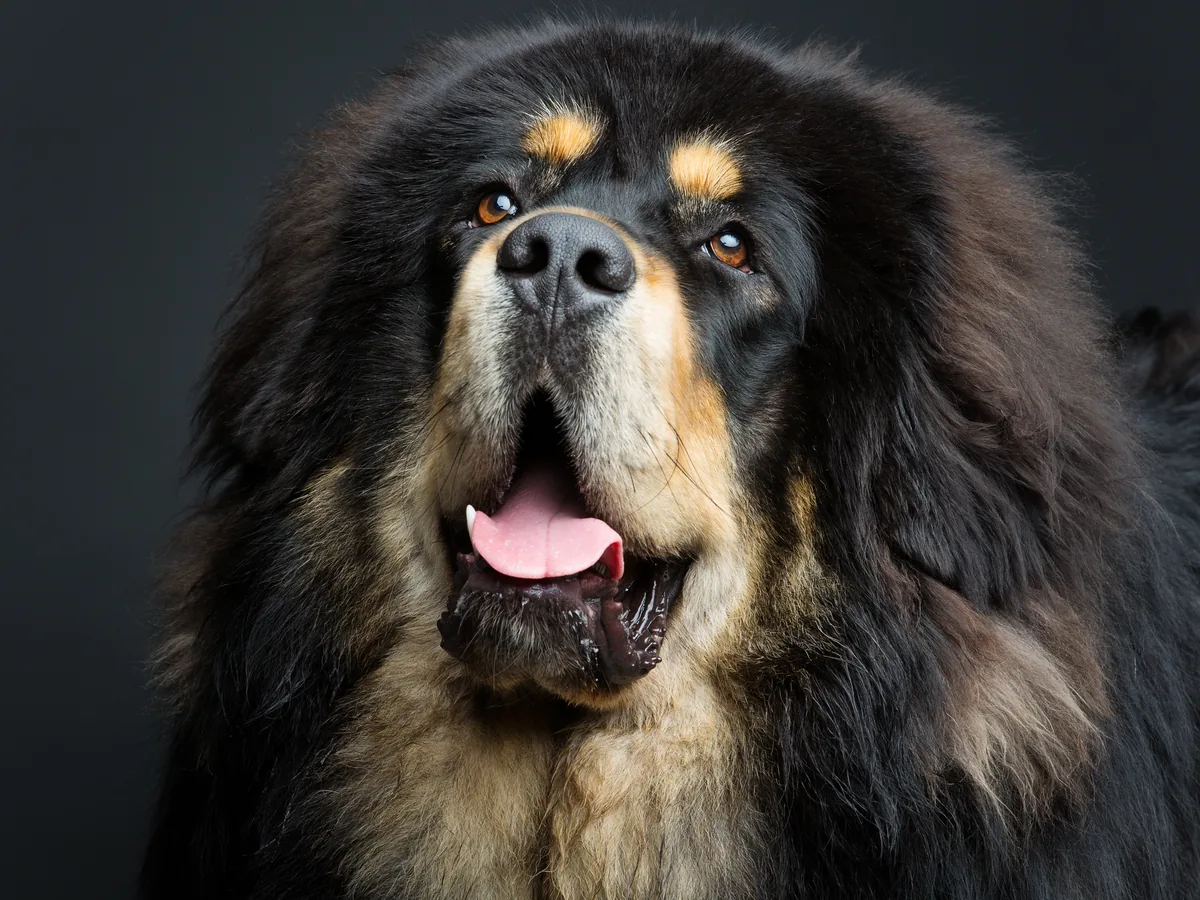
The Tibetan Mastiff is one of the most ancient large breeds on earth — a guardian dog that has watched over Tibetan monasteries, nomadic camps, and livestock for thousands of years, largely unchanged.
At 34 to 73 kilograms and up to 76 centimetres at the shoulder, they are imposing by any standard. At full coat, particularly on males, they are genuinely magnificent. They are also, to put it plainly, not a dog for most people.
The breed became briefly famous in China when one reportedly sold for more than a million dollars during the luxury-dog boom, which feels fitting for a dog that already carries itself like ancient royalty.
This is not a breed built for cheerful obedience. Tibetan Mastiffs were bred to work independently overnight, guarding against wolves and leopards, while their owners slept. Nobody told them what to do; they decided what needed doing. This instinct remains intact.
They are intelligent but profoundly self-determined — they weigh every instruction and decide whether to comply, and their threshold for "not in the mood" is considerably lower than most breeds. They are not aggressive by default, but they are territorial, they do not welcome strangers warmly, and they operate on their own schedule.
They are devoted to their families in a quiet, watchful way — not effusive, not demanding, but present. They tend to bond with one or two people most deeply and maintain a polite indifference toward everyone else. They will not beg for attention or perform for guests.
Tibetan Mastiffs require experienced owners who understand livestock guardian breeds, secure properties, and a patient willingness to work with rather than against a dog that has millennia of independent decision-making baked into its DNA.