
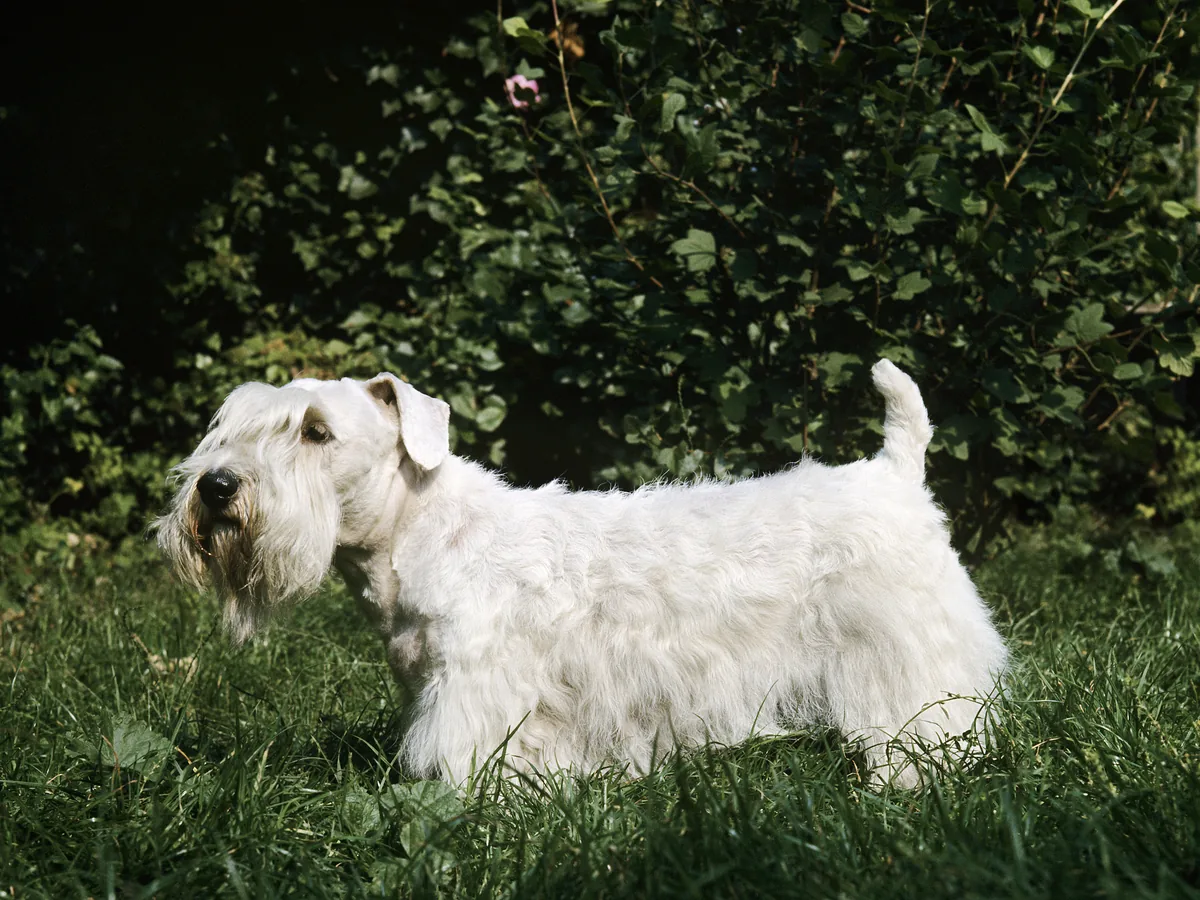
The Sealyham Terrier wasn’t an accident. It was engineered. Between 1850 and 1891 at Sealyham House in Wales, Captain John Edwardes set out to build a very specific kind of dog — tough enough for badger and otter, low enough to get underground, white enough to be seen in the field, and steady enough to work in a pack without starting fights. What he ended up with is still exactly that: compact, solid, and full of quiet confidence.
They’re bold, but not chaotic about it. There’s a slightly more measured feel to a Sealyham than many terriers — still confident, still curious, but less frantic, more deliberate. With their family they’re loyal and engaged, with a dry sort of humour about them. There’s always something going on in their head, and occasionally that becomes your problem.
With strangers, they’re reserved rather than instantly social. They’ll warm up, but they don’t rush it. The watchdog instinct is intact too — arrivals will be announced, often with conviction. Training tones it down, but the instinct to notice and comment isn’t going anywhere.
Training sits right in the terrier middle ground. They’re smart enough to learn quickly and independent enough to question the point of it. Keep it short, varied, and fair. Repeat yourself too much and they’ll mentally clock off and find something more interesting to do.
The coat is where the real commitment lives. That dense, wiry white double coat needs regular brushing and proper grooming every couple of months to keep its shape and texture. Let it go and it shows.
They’re also not common. The Sealyham sits on vulnerable breed lists, which means finding one takes some effort — but it also means you’re getting something a bit different from the usual run of terriers.
For someone who wants a terrier with substance, personality, and just a touch more composure than the typical model, the Sealyham delivers. Quietly confident, slightly stubborn, and very much its own dog.