
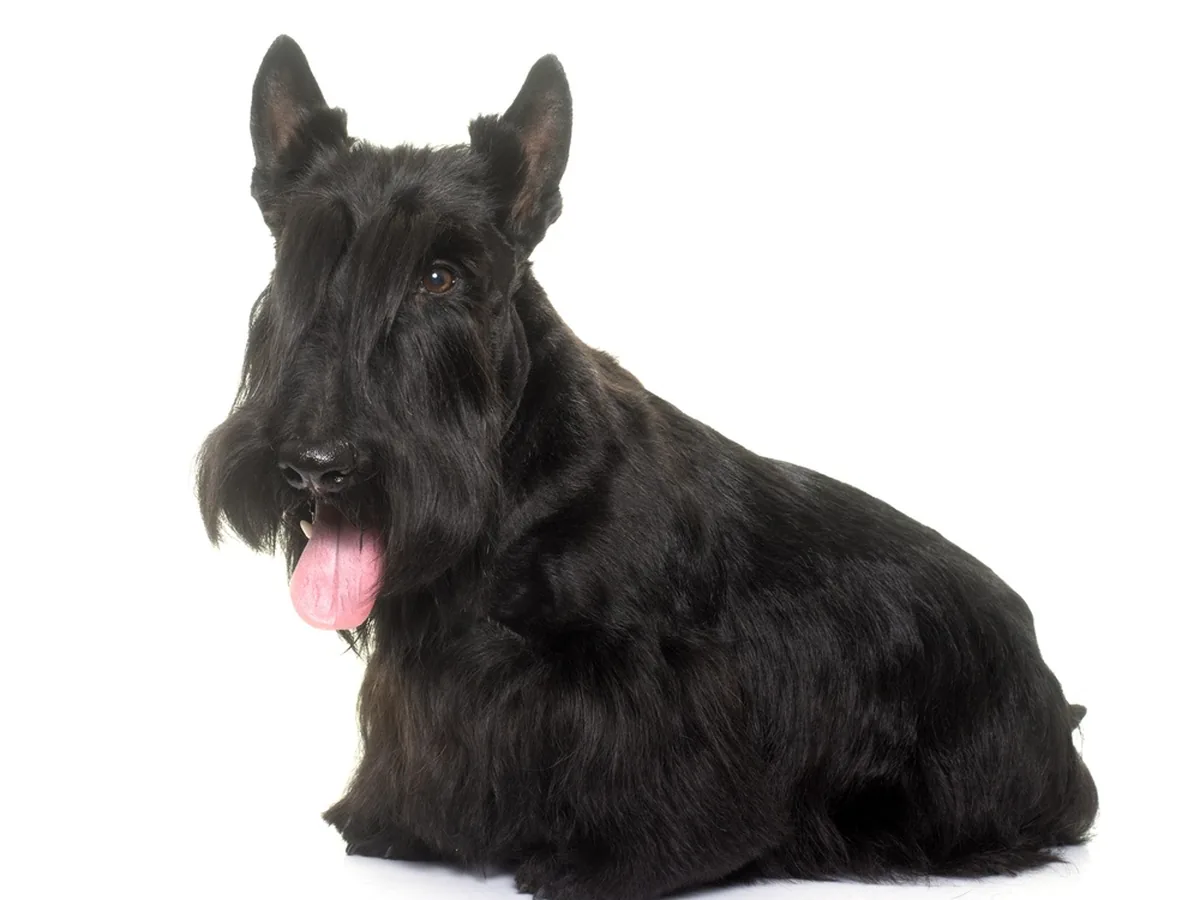
Scottish Terriers have always had a presence beyond their size. Oldest of the Highland terriers by most accounts, owned by presidents — Roosevelt’s Fala made himself famous — immortalised as the Monopoly token since 1942, and turned into Jock in Lady and the Tramp. None of this surprises anyone who’s met one.
The Scottish Terrier — the Scottie — is what happens when you compress a working dog’s mindset into a compact, bearded frame and remove any interest in compromise. Nicknamed “The Diehard” for a reason, they carry a stubborn resilience that borders on admirable until you’re trying to get them to do something they’ve decided isn’t happening.
They were bred for serious work in the Scottish Highlands — fox, badger, otter — going to ground without hesitation in rough country. That history didn’t soften over time. It produced a dog that is bold, independent, and entirely capable of making its own decisions, whether you’re involved or not.
They’re active, despite appearances. Daily exercise matters, and so does giving them something to do. The digging instinct is real and non-negotiable, and the barking is part of the package — they notice things, and they comment on them.
With their people, they’re loyal but measured. Affection is there, but on their terms. They’re more likely to sit beside you than on you, watching the room like they’ve been appointed to it. Once that bond is formed, it’s solid.
Training is a negotiation. They’re intelligent and learn quickly, but they’re not interested in repetition or pointless drills. Keep it fair, varied, and consistent. Push too hard or bore them, and they’ll simply disengage.
For owners who appreciate a dog with real character and don’t need constant approval, the Scottie is a deeply satisfying companion. Just understand — you’re working with them, not over them.