
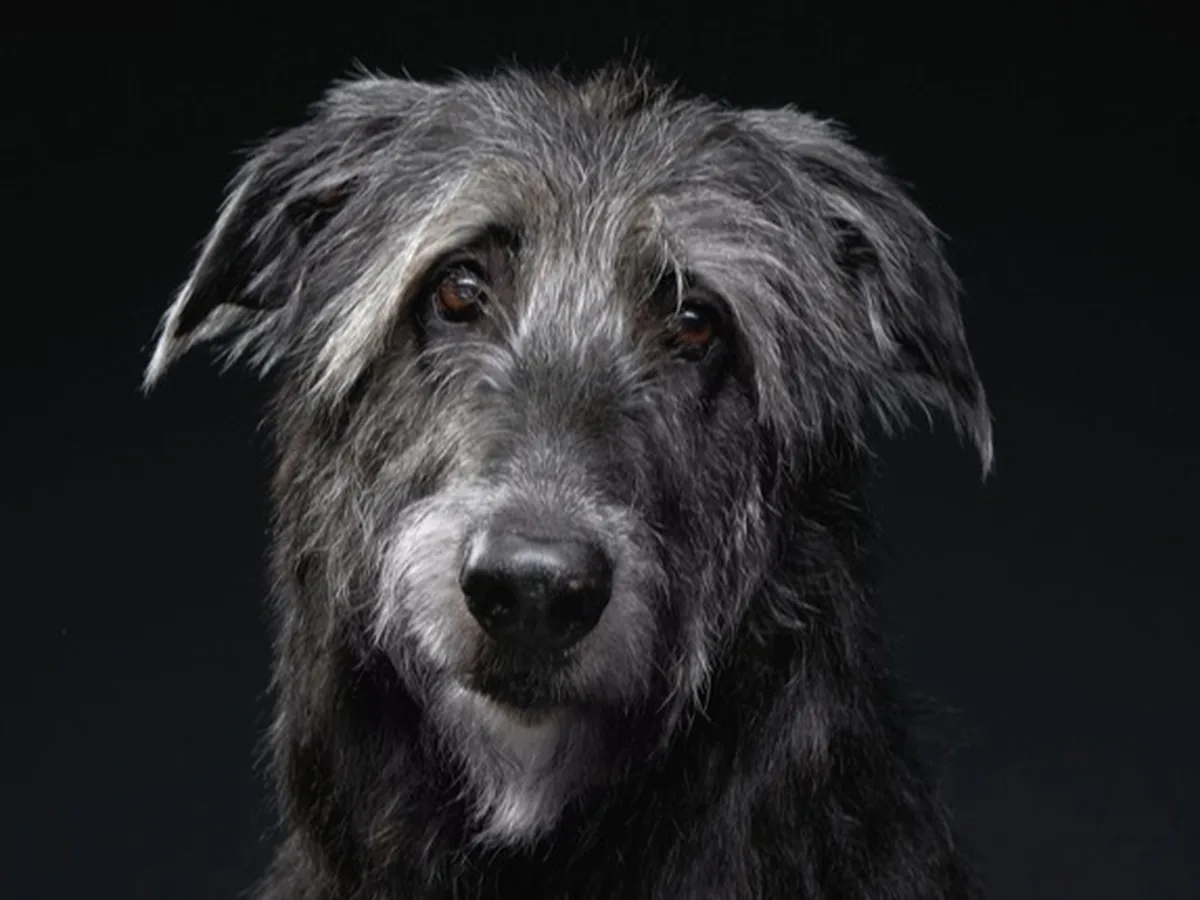
In the Age of Chivalry, you had to be an Earl or better to own a Scottish Deerhound, which tells you roughly how they were regarded. Built to course red deer across the Scottish Highlands, they’re tall, rough-coated sighthounds with that familiar look: all elegance at rest, then sudden, explosive speed when something moves.
Despite that history, they’re about as far from drama as a hunting dog can get. Deerhounds are famously gentle, almost to the point of being disarming. They’re calm, quiet, and carry themselves with a kind of built-in dignity that doesn’t need to prove anything.
With family they’re affectionate without being needy. With strangers they’re polite and largely uninterested. As watchdogs, they’re close to useless. Someone could walk through the front door and they’d probably just look up, acknowledge it, and go back to sleep.
That “gentle couch potato” reputation is real. Once exercised, they settle hard. Indoors they’re relaxed, quiet, and take up space in a way that makes furniture feel like a suggestion rather than a rule.
The sighthound reality still applies. Prey drive is high and very real. If it moves, they’ll consider chasing it, and recall in open areas is optimistic at best. Off-lead time needs to happen in properly enclosed spaces. That’s not a training issue, it’s what they were built for.
Exercise is more about quality than volume. They don’t need endless miles, but they do need the chance to stretch out properly and run. Without that, you don’t get chaos, you just get a very large, slightly bored aristocrat.
The coat looks rough but is manageable. Regular brushing keeps it in order. Shedding is there but not overwhelming.
For someone with space, secure areas, and an appreciation for a large, quiet dog that brings presence without noise, the Scottish Deerhound is a rare thing. A hunting dog that would rather share the couch than guard the house, and does it with more dignity than most people.