
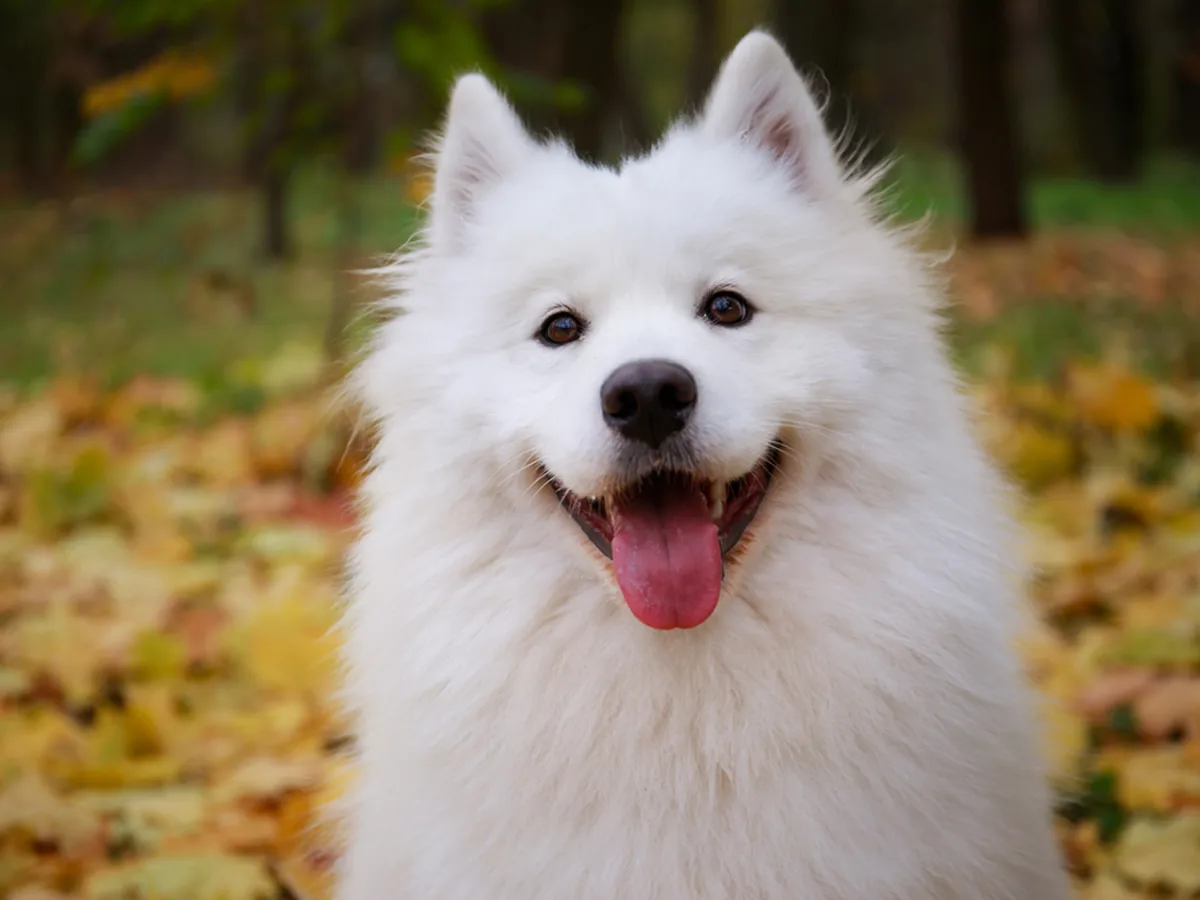
The Samoyed came out of Siberia, where the Samoyede people bred them as all-purpose working dogs — hauling sleds, herding reindeer, and sleeping pressed up against their owners for warmth in arctic conditions. That wasn’t a casual relationship. It produced a dog that is wired for closeness, cooperation, and a kind of easy warmth that still defines the breed. The modern Samoyed hasn’t lost any of it. You get the personality first, then the coat.
And the coat is the conversation. White, dense, double-layered, and impressive — it sheds constantly, blows out seasonally with real commitment, and needs regular brushing if you want to spare your vacuum's motor. The upside is it’s more practical than it looks. It’s naturally self-cleaning, with dirt often dropping off once dry, and the famous “Samoyed smile” isn’t just charm — that slight upturn of the lips reduces drool, which mattered when icicles were a real problem.
They’re sociable dogs. Not selectively friendly — broadly friendly. Family, strangers, kids, other dogs, all generally welcome. As guard dogs they’re close to useless. An intruder is more likely to be greeted than challenged.
They’re also vocal. Not just barking — talking, howling, and occasionally producing something that sounds suspiciously like singing. It’s part of the breed. Endearing at the right time, less so through a wall at night.
Exercise needs are real but not extreme. They’re built for endurance and need consistent daily movement to stay settled. They don’t need to run marathons, but they do need proper time outside.
There’s a bit of history in them too. Samoyeds were used on early polar expeditions — one named Etah helped lead Roald Amundsen’s team to the South Pole — which tells you everything about their toughness under that soft exterior.
For the right owner, the appeal is obvious: a genuinely warm, social dog with personality to spare. Just go in with open eyes about the coat, the noise, and the fact that this much friendliness tends to come with opinions.