
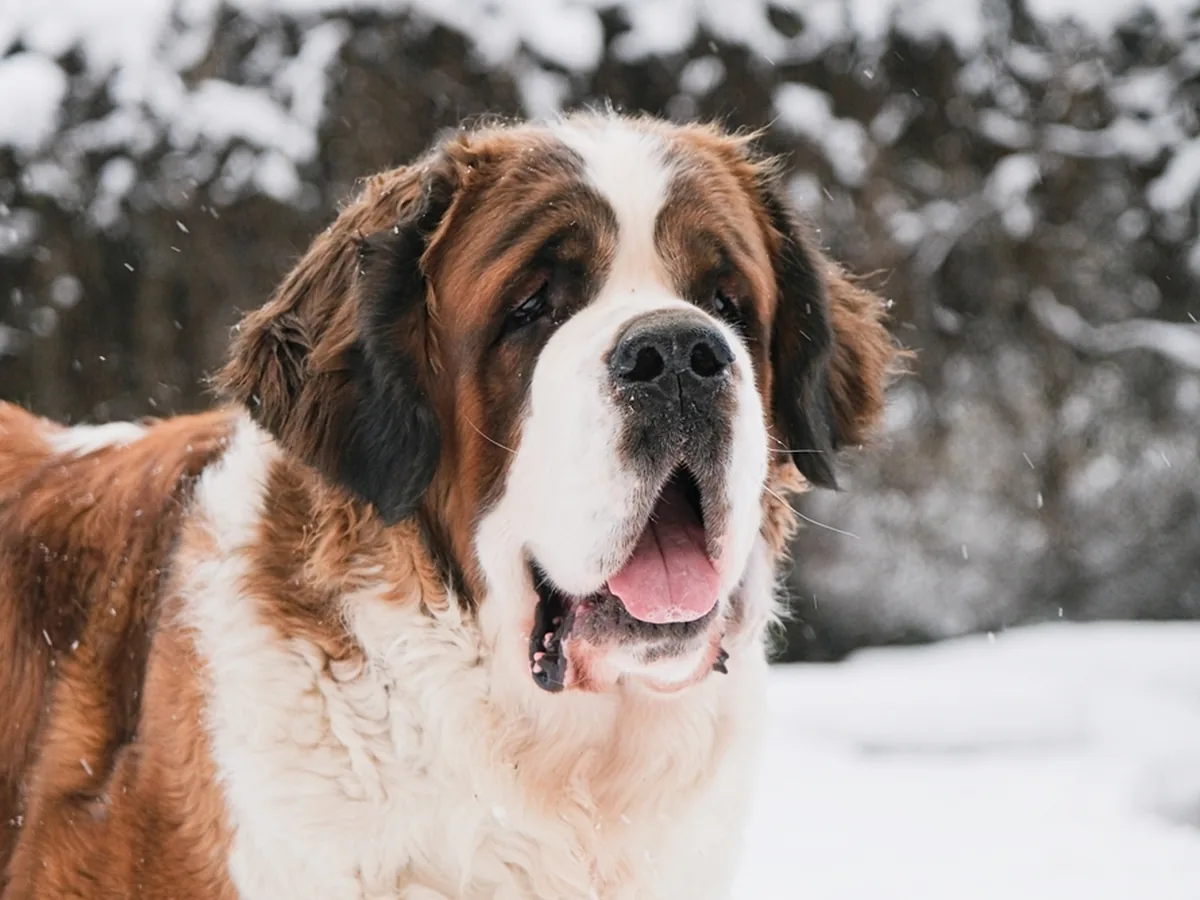
The Saint Bernard came out of the Swiss Alps, working the Great St Bernard Pass where monks used them to find travellers buried in avalanches. That job didn’t just require size — it required a calm, methodical dog that could think under pressure and keep going in brutal conditions. A famous 19th-century dog named Barry is said to have saved around 40 lives, which gives you a fair idea of what the breed was built for. The barrel of brandy is a myth — one historical mention, then cartoons ran with it — but the rescue work is very real, and it shaped the dog you get today.
They’re outstanding with children. Patient to a fault, steady, and largely unbothered by noise or chaos. This is a dog that doesn’t escalate. They absorb. That calm, tolerant temperament is the same trait that made them reliable in life-and-death conditions in the Alps.
The size needs to be taken seriously. At 54–82 kg it’s a presence. When a Saint Bernard stands up or walks through a room, the room adjusts. They’re also famous for drooling, and not in a cute, occasional way. It’s constant, enthusiastic, and part of daily life. Shedding is heavy too, with serious coat blows twice a year.
They’re not apartment dogs. The size alone rules that out for most people, and they need space to move and settle comfortably. Exercise needs are moderate for a giant breed, but daily movement still matters.
They grow fast. Really fast. A Saint Bernard puppy can put on 1.5 to 2.0 kg a week early on, which means you don’t get a long adjustment period — you go from small to enormous in a matter of months.
The lifespan is short at 8–10 years. That’s the trade-off with giant breeds, and it’s one worth being honest about before committing.
What you end up with is something quite specific: a genuinely gentle giant with a serious working history behind it. Just don’t expect a low-maintenance one.