
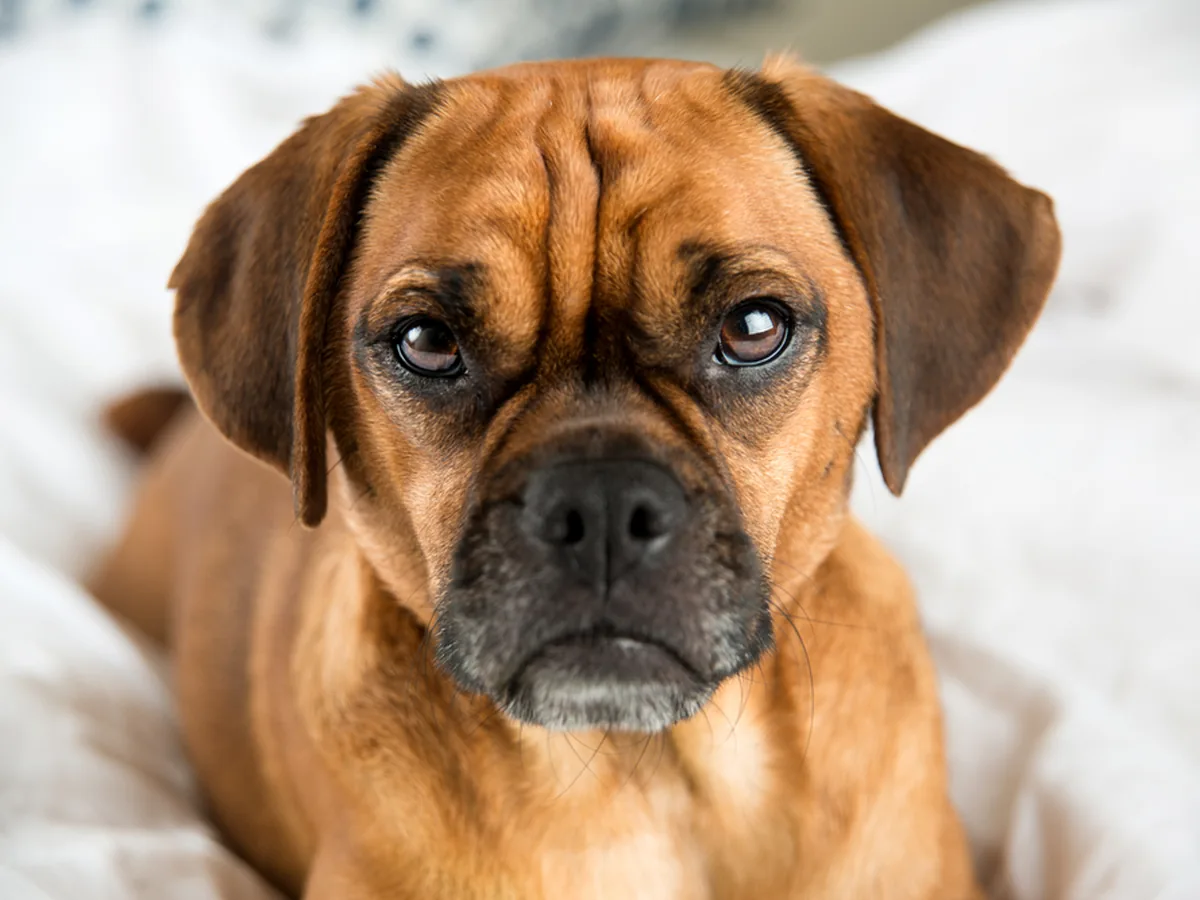
The Puggle is a Pug crossed with a Beagle, first developed in the United States in the 1980s. The idea is simple: keep the Pug’s sociable warmth while easing some of the flat-faced issues with a longer Beagle snout. It often works, but not always. With any cross, you’re rolling the dice. Some lean Pug, some lean Beagle, most land somewhere in the middle.
What you usually get is a friendly, food-motivated, moderately energetic dog with a good nature and a nose that will be the most committed part of its personality. The Beagle influence shows up there. Once that nose switches on, you’re negotiating. Recall in interesting environments is the main training challenge, and it needs consistent, reward-based work.
They’re excellent with children. Both parent breeds bring patience and tolerance, and Puggles tend to inherit it. They’re also social with other dogs and generally easy with people, the kind of dog you can take places without overthinking it.
They can be vocal. The Beagle side brings barking and the occasional howl, so a “moderate” noise level can quickly become more if it’s not managed early.
Training sits in the middle. They’re willing and very food-motivated, which helps, but the Beagle stubbornness balances the Pug’s eagerness. You’ll get results, just not perfection.
Shedding is steady. Both parents shed and so will the Puggle.
Physically, they often carry that wrinkled face and darker mask that’s earned them the nickname “miniature mastiff,” though the size stays small to medium.
For families or individuals wanting a sociable, good-natured companion with manageable needs, the Puggle is a solid choice. Just go in knowing the personality can tilt either way depending on which parent shows up more on the day.