
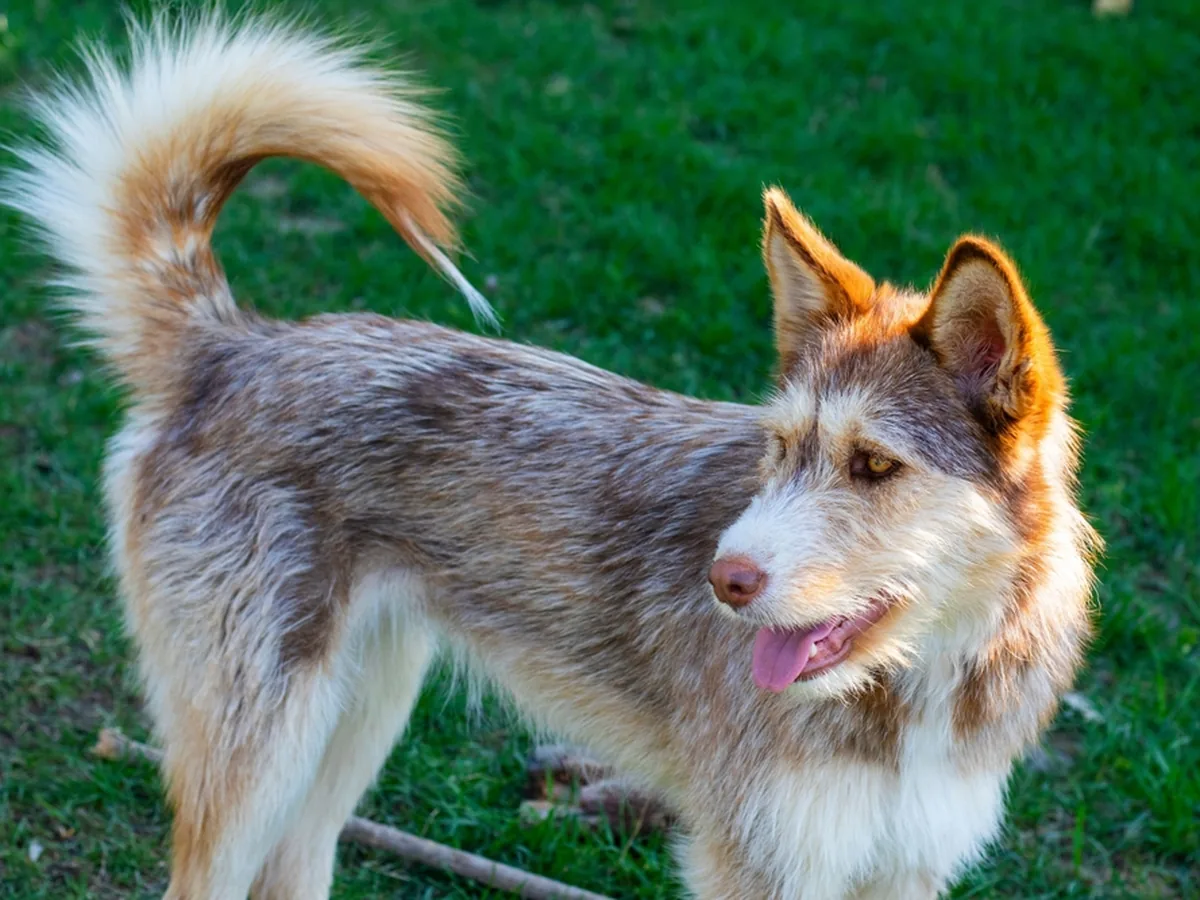
The Portuguese Podengo isn’t one dog but three: Pequeno (small), Médio (medium), and Grande (large). All sit under the same breed identity, rarely interbred, and historically used for different quarry. The type is ancient, over 2,000 years on the Iberian Peninsula, brought by Phoenicians and later Romans. That lean, efficient look isn’t an aesthetic choice, it’s heritage. They look like dogs from cave paintings because, in a sense, they are. The Podengo is also considered Portugal’s national dog, which tells you how seriously they take it.
All three sizes share the same core character: alert, agile, lively, and stubbornly independent. These are hunters first and companions second. They’re affectionate with their people, but not in a needy, demonstrative way. They prefer proximity with purpose, being nearby, doing something, rather than sitting still for admiration.
The size spread is real. A Pequeno might be 4 kg and was historically used to clear rats, even on ships during the Age of Discovery. A Grande can push 30 kg and is a serious, athletic hunting dog. Across all sizes, prey drive is high and recall is conditional. If something moves, you’re suddenly less relevant. Secure space isn’t optional.
Coats come smooth or wire, both low maintenance. The wire coat adds a bit of scruffy character but doesn’t demand much. A regular brush and occasional bath covers it.
They’re generally healthy, long-lived, and still relatively uncommon outside Portugal, which means you’ll need to look harder for a good breeder. For the right owner, active, outdoors, and not expecting blind obedience, the Portuguese Podengo is a sharp, capable, and genuinely interesting dog to live with.