
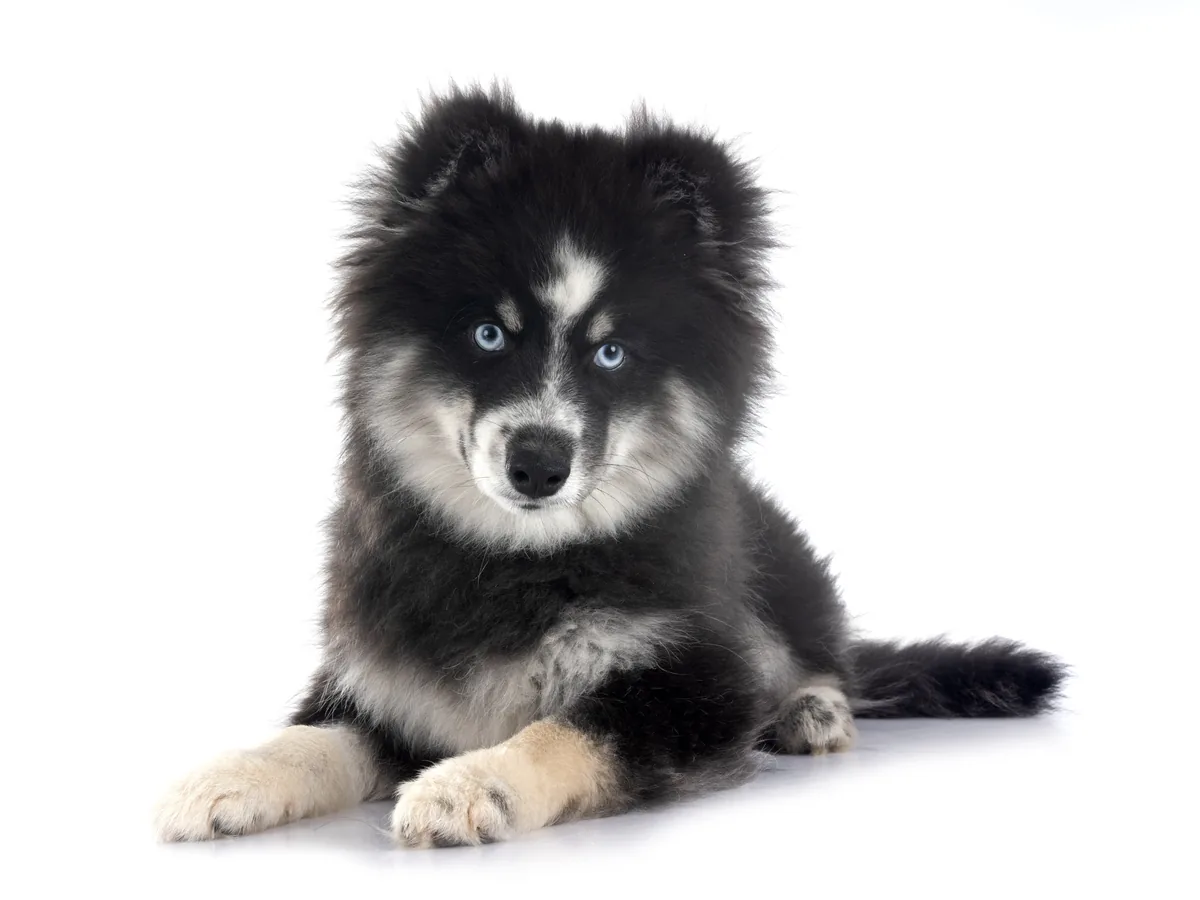
The Pomsky exists because someone thought crossing a Pomeranian with a Siberian Husky sounded like a good idea, and they weren't entirely wrong. What you get is a small-to-medium dog with striking looks — often inheriting the Husky's colouring and markings in a more compact package — combined with a personality that is simultaneously entertaining and challenging. They're not a dog to take on lightly.
The Husky half shows up in ways people don't always anticipate. Pomskies tend to be vocal, opinionated, and in possession of a strong independent streak that makes them less naturally biddable than their size might suggest. They're not difficult because they're dim — they're often quite clever — but they'll decide whether to comply based on a cost-benefit analysis that doesn't always favour you.
Energy is real and needs genuine daily outlets. They're not content to sit quietly. They want activity, stimulation, and interaction. In an apartment setting they can manage provided they're getting proper exercise, but they don't do well being ignored or under-stimulated.
The coat is a shedding situation. Both parent breeds shed considerably, and the Pomsky inherits this enthusiastically. Weekly brushing is the minimum; during seasonal blowouts you'll need to brush more frequently and accept the hair as a constant feature of your living situation.
They're decent with older children but can be bossy with younger ones — a trait inherited from both terrier-adjacent parents. Socialisation from early age helps with other animals and strangers; without it they can become reactive.
The payoff for an experienced owner who understands what they're getting is a dog with real personality, striking looks, and genuine loyalty to their family. But if you're expecting a manageable, trainable small dog, you might be surprised by how much Husky shows up in something that small.