
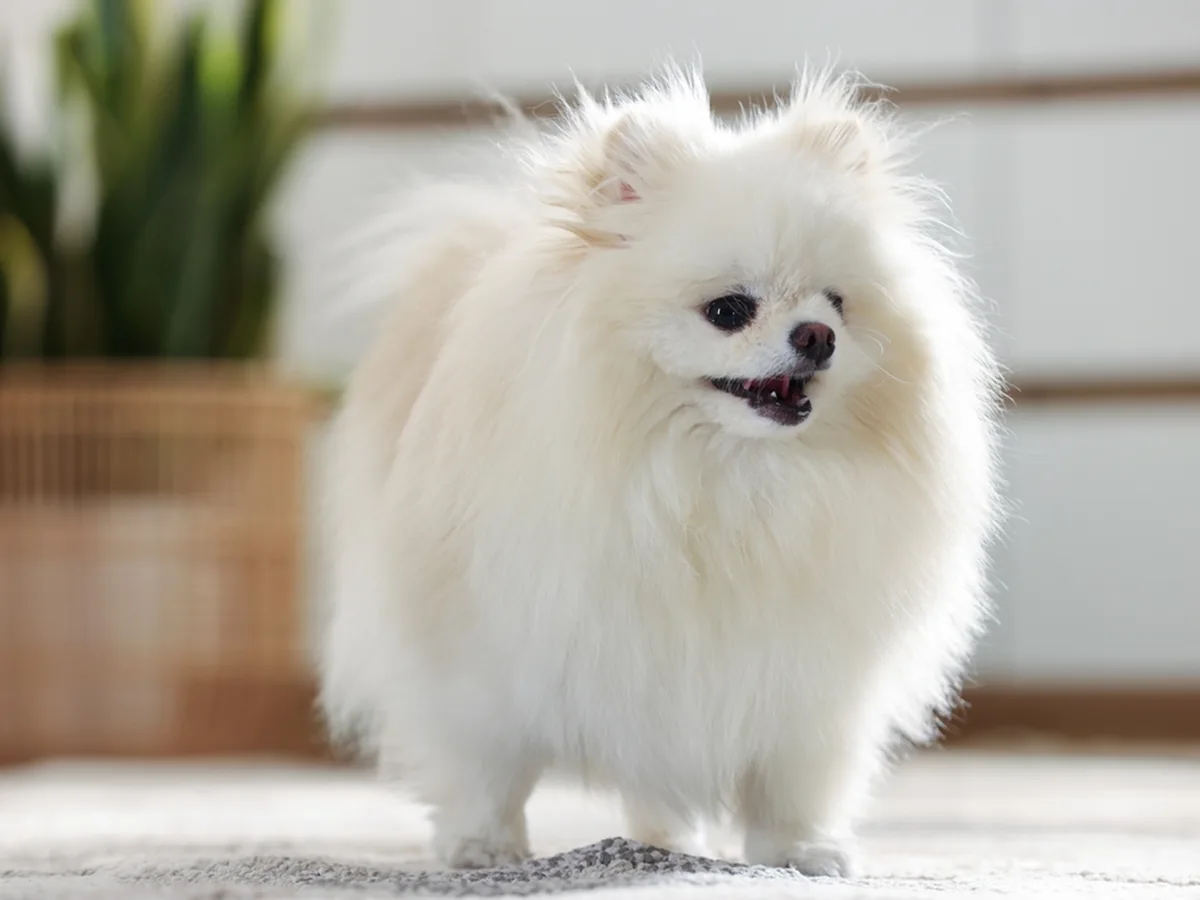
The Pomeranian started life as a much larger Spitz working dog from the Arctic and Iceland, then got progressively shrunk by selective breeding, most famously under Queen Victoria, into the 1–3 kg version we see now. The size changed. The attitude didn’t. This is a dog that still behaves like it’s pulling a sled across snow, just now from the couch.
They’re bold, curious, and permanently switched on. The barking score of 5 isn’t an exaggeration, it’s a job description. Everything gets announced. Training can turn the volume down, but the instinct to comment on the world is baked in.
They bond hard to their person, sometimes to the exclusion of everyone else. With children, they’re better with older, calmer kids. They’re not built for being grabbed, and they won’t quietly tolerate it.
They suit apartment living easily in terms of size, but they still need engagement. Leave them under-stimulated and they’ll become loud, bossy, and convinced they run the place. Small dog syndrome isn’t theoretical here, it’s standard if you let it slide.
The coat is the other commitment. Thick, double, and constantly shedding, with seasonal blowouts that make it clear who’s in charge. Regular brushing isn’t optional unless you’re happy with matting and a very expensive grooming session.
They’ve also always attracted big names. Mozart had one called Pimperl and apparently wrote a piece for it. Two Pomeranians even survived the Titanic. None of this has made them more humble.
For someone who wants a sharp, vocal, devoted little dog and doesn’t mind the grooming or the running commentary, the Pomeranian delivers a very large personality in a very small frame.