
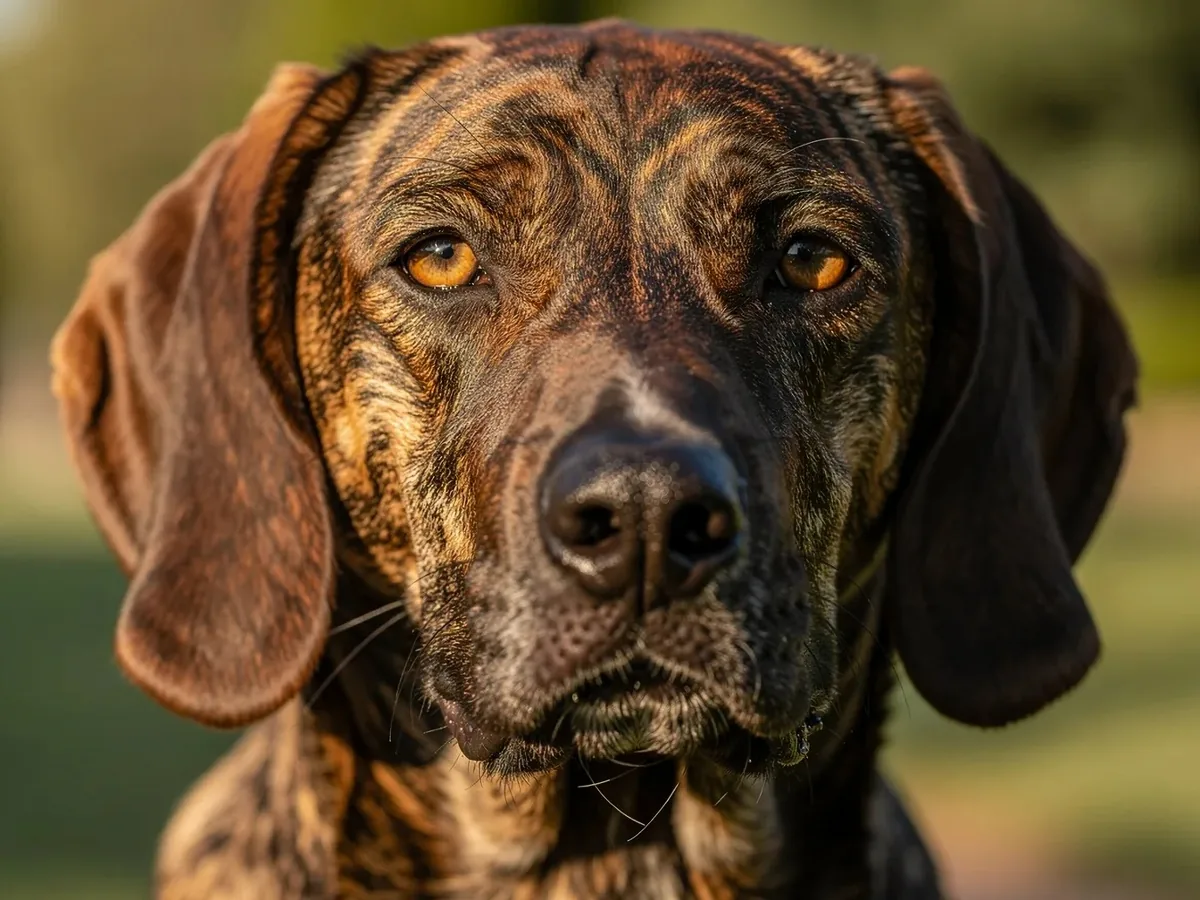
The Plott Hound is a distinctly American breed with German roots, developed in North Carolina from Hanover Hounds brought over by Johannes Plott in the 18th century. Bred to track and bay big game like bear, boar, and mountain lion across rough Appalachian terrain, this is a dog designed for endurance, toughness, and a job that doesn’t end at sunset. It’s no surprise it was named the official state dog of North Carolina in 1989.
They’re active, athletic, and built for real work. This isn’t a “good long walk” dog. A Plott needs sustained, outdoor exercise and the chance to move with purpose. Without it, they don’t just get bored, they get loud. Restlessness tends to come out through their voice, and it carries.
The personality is loyal and people-oriented, friendly in a straightforward, working-dog way. They bond well with family and are generally good with children, though more energetic than gentle.
Training is where the hound reality kicks in. They’re intelligent, but their nose outranks you. If there’s a scent worth following, your commands drop down the priority list.
The voice is part of the design. Plott Hounds don’t just bark, they “bawl” — a deep, loud, almost musical bay that was meant to carry across mountains. It’s impressive in the bush. Less so in a suburban street. You can manage it, but you won’t eliminate it.
They’re generally fine with other dogs, but smaller animals need to be considered carefully. The prey drive is not theoretical.
Physically, the breed’s trademark is the brindle coat — streaked patterns of black, brown, and tan that give a painted look, though solid colours do exist.
For active owners with space, tolerance for noise, and an understanding of what a working hound actually is, the Plott Hound is a tough, loyal, and highly capable companion. Just don’t expect quiet.