
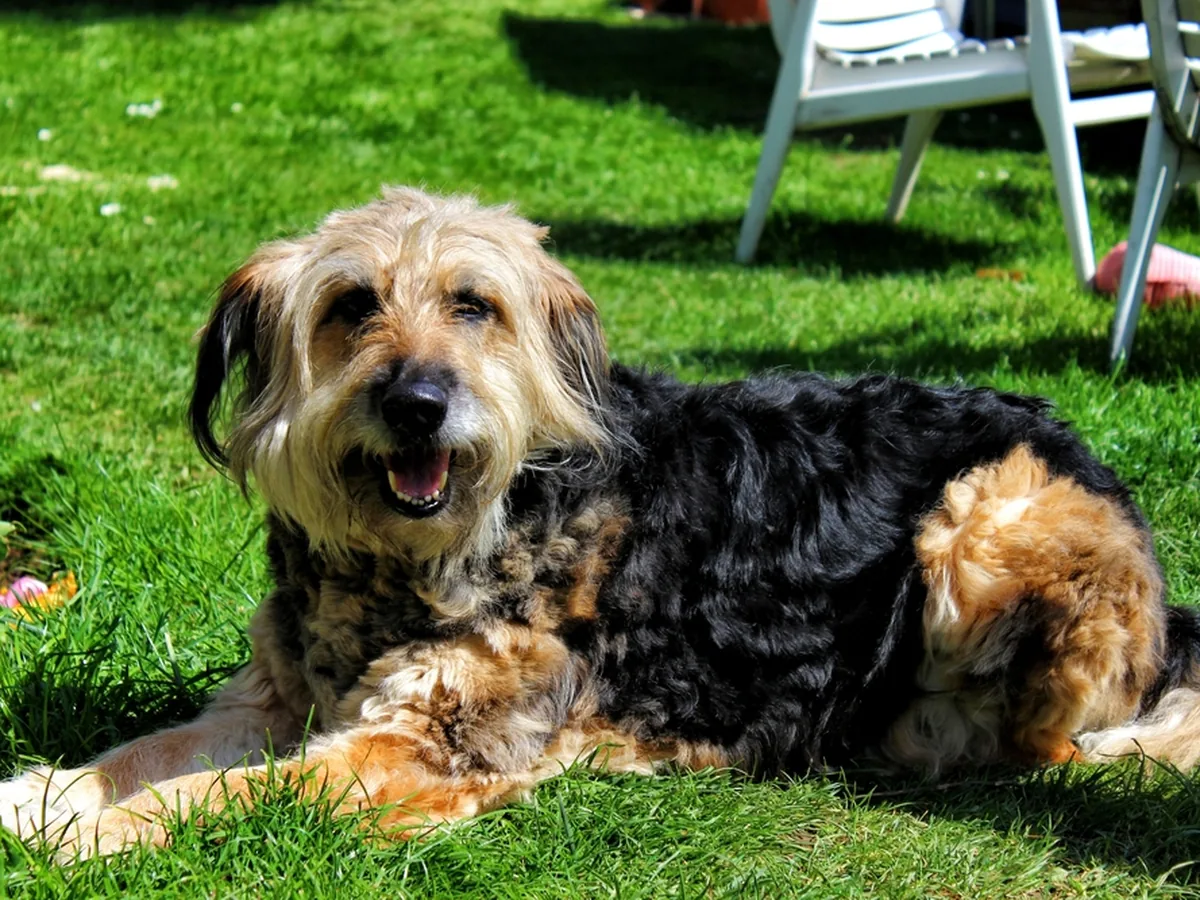
The Otterhound is a large, shaggy, and thoroughly unusual scent hound that was specifically developed to hunt otters in British rivers — a pursuit that has been illegal since 1978, which goes some way toward explaining why the breed is now critically rare. There are fewer Otterhounds in existence than Giant Pandas, which is a fact their enthusiasts mention frequently and not entirely without a point. They are a genuinely endangered breed kept alive by a small community of dedicated breeders.
What you get is a dog that is affectionate, boisterous, and possessed of a nose so powerful it seems almost unreasonable. Otterhounds are built to track quarry through water and across dense undergrowth, and they bring this olfactory dedication to everyday domestic life. If there's a scent worth investigating, they will investigate it, and your thoughts on the matter are of limited relevance.
They are large — 36 to 52 kilograms and up to 69 centimetres — and they are not delicate. An Otterhound greeting you enthusiastically is an experience. They are warm and friendly with people and generally good with other dogs, partly because they were traditionally kept in packs. They can be clumsy indoors, particularly as puppies, and their size combined with their physical confidence means early training is genuinely important.
The rough, double coat and webbed feet are hallmarks of a dog bred for water work. The coat is fairly low-maintenance compared to its shagginess — it doesn't mat easily and only needs brushing a couple of times a week — but it does pick up debris from outdoors with remarkable efficiency. They also drool moderately and have a beard that retains moisture after drinking.
Otterhounds are not for everyone. They are stubborn, they need significant exercise, and they will howl. Magnificently. If those traits sound manageable, you have a warm, devoted, and genuinely uncommon companion.