
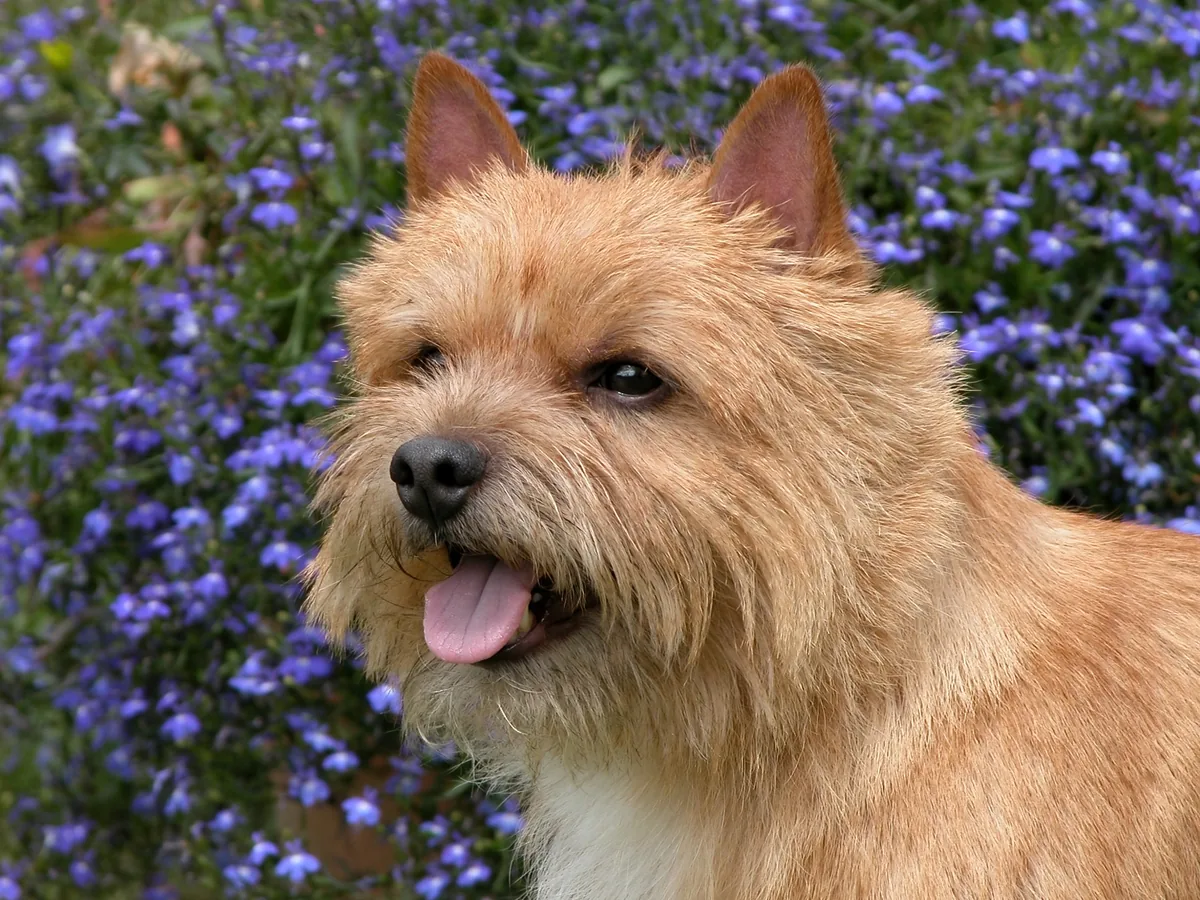
The Norwich Terrier is the smallest of the working terriers, and it carries itself with the complete confidence of a dog that hasn’t been told. At around 5 kilograms and barely 25 centimetres tall, it’s physically compact but temperamentally enormous — curious, tenacious, and inclined to approach life at speed. This is not a decorative small dog. It was bred in East Anglia to bolt rats and foxes, and that working instinct is still very much intact. By the late 1800s they were popular with Cambridge University students as dorm-room ratters.
They’re cheerful, sociable dogs that generally get along well with people and other dogs, and they bring a bright, engaging energy to a household. They’re also vocal, determined, and capable of intense focus when something interests them. If a Norwich Terrier decides there’s something worth investigating under a fence, the fence becomes more of a suggestion than a barrier. (If you’re wondering, the close relative, the Norfolk Terrier, looks similar but carries folded ears; Norwich have upright, pointed ones.)
They adapt well to urban living, provided their energy is properly managed. They don’t need acreage, but they do need engagement. Daily walks, some off-lead time in a secure area, and mental stimulation will keep them settled. Left to entertain themselves, they’ll default to digging, exploring, and redecorating the yard.
The harsh, wiry coat sheds less than many breeds but isn’t maintenance-free. Proper care involves hand-stripping a couple of times a year to maintain the correct texture. Clipping is easier, but it softens the coat over time. A weekly brush keeps things under control between sessions.
They’re intelligent and generally enjoy working with people, which makes training more productive than with some terriers. That said, they still come with opinions. Attention spans are short when bored, and recall is often conditional on whether something more interesting is happening elsewhere