
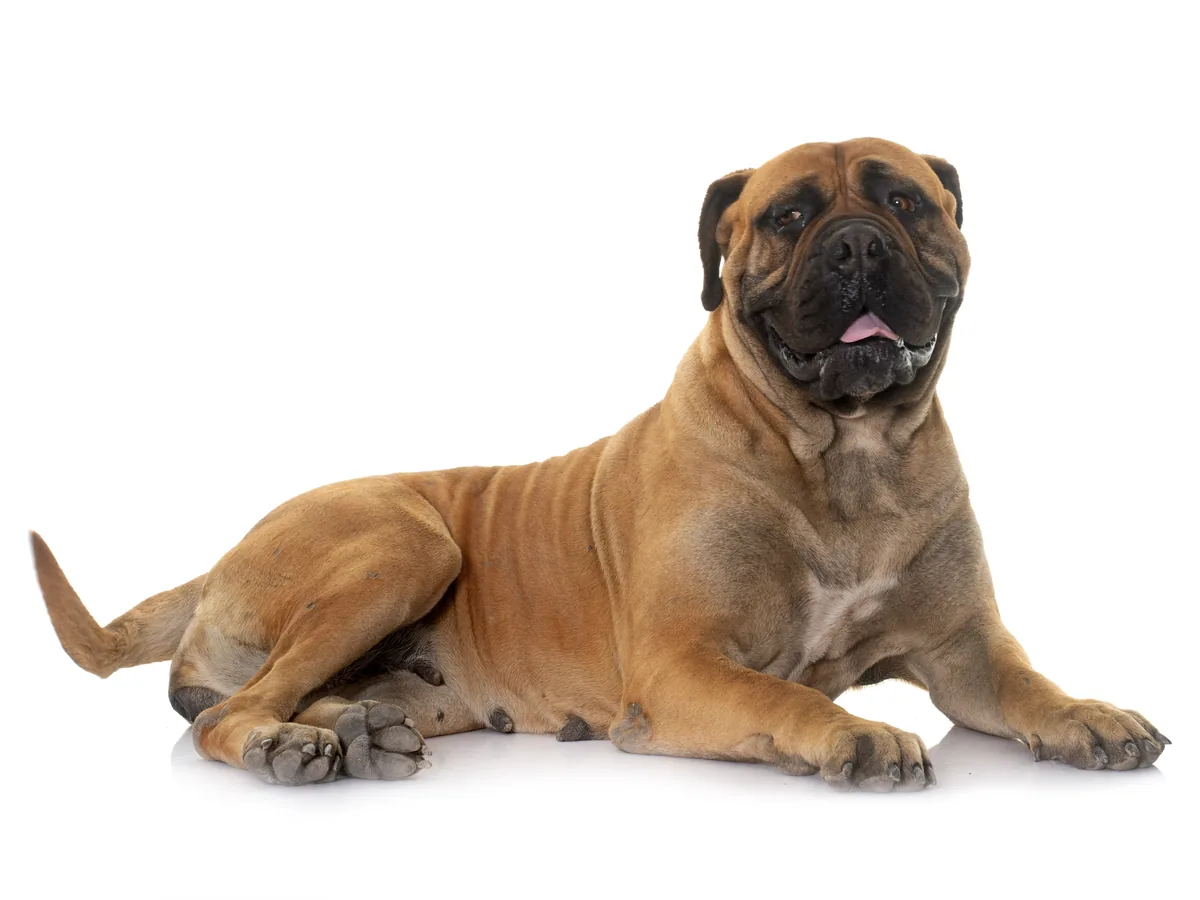
The Mastiff doesn’t walk into a room so much as arrive. This is one of the oldest dog types on earth, built on a template that hasn’t needed much revision since ancient civilisations used them for war, guarding, and generally intimidating anything with a pulse. The modern English Mastiff still carries that history in its bones, just without the appetite for conflict.
At 54–113 kg, they are less “pet” and more “presence”. Big head, heavy frame, slow movements, and an expression that suggests they’ve seen a lot and aren’t rushing into anything ever again. Underneath that is a genuinely soft temperament. They’re patient, affectionate, and quietly devoted to their people. With kids, they’re typically excellent. The only risk is when something that size turns around in a lounge room, smaller humans need to be aware of the blast radius.
Exercise-wise, they’re not chasing marathons. A solid daily walk does the job. Push them too hard, especially in heat, and they’ll remind you they’re built more like a tank than a sports car. Apartment living doesn’t really make sense. Not because they’re wild, but because they’re enormous.
Training is steady rather than sharp. They’re intelligent, but they think things through. You won’t get snappy obedience; you’ll get considered compliance. Early socialisation matters more here than with most breeds, because a poorly managed Mastiff isn’t just inconvenient, it’s a serious liability.
The trade-off is lifespan. Like most giant breeds, they don’t stick around as long as you’d like, typically 6–10 years. That’s part of the deal and worth going in with your eyes open.
And then there’s the history. Mastiff-type dogs go back as far as 2500 BCE, which means this isn’t a modern invention, it’s a legacy animal. There’s even a story that one made the trip on the Mayflower, which says something about how long humans have insisted on bringing very large dogs into confined spaces.
And despite all that gravitas, they’ve got a habit of acting like oversized puppies well into their short adulthood. For the right owner, space, patience, and a sense of humour required, the Mastiff is about as good as it gets. A giant dog that doesn’t need to prove it.