
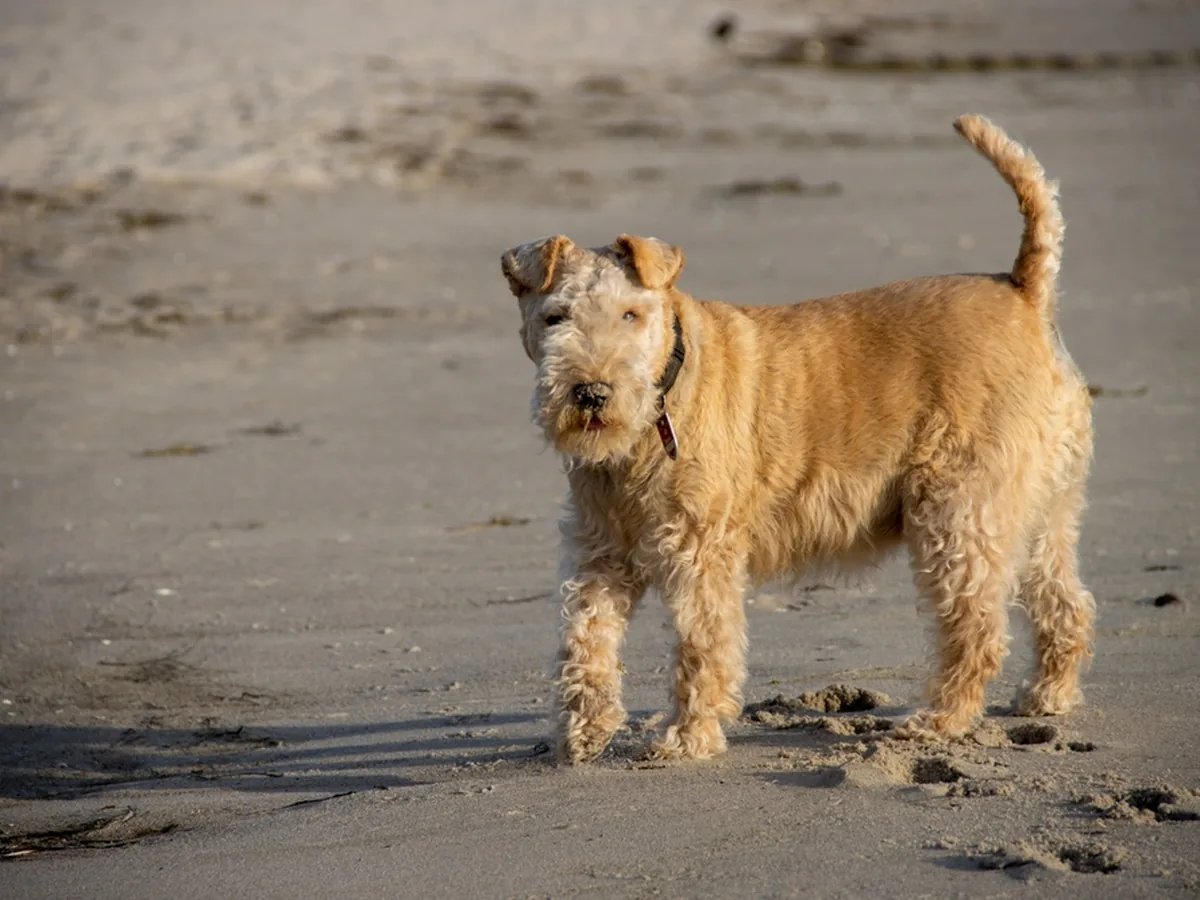
The Lakeland Terrier comes from the Lake District of England, bred to work in steep, rocky country where foxes and badgers went to ground and someone had to follow them. They’re small, but have never accepted that as a limitation. At 7–8 kg they’re compact, wiry, and carry a level of confidence that seems completely disconnected from their size.
They’re spirited company. Curious, bold, and genuinely entertaining to live with — there’s always something going on. They approach the world without much caution and carry that attitude into play, training, and interactions with dogs much larger than themselves.
Physically, they’re often mistaken for small Airedales or Welsh Terriers. They have a rectangular head, folded V-shaped ears, and a wiry double coat that comes in a range of colours including black, blue, red, liver, and wheaten.
The terrier independence is fully intact. They understand what you want and will decide whether it’s worth doing. Training works best with positive reinforcement, short sessions, and consistency. Repetition loses them quickly — boredom is the enemy.
They’re vocal. That barking instinct comes straight from their working roots. In a home, it shows up as alert barking at movement, noise, and anything outside that seems worth commenting on. It can be managed, but not switched off.
With children, they’re energetic and game rather than gentle, which suits older kids who can match their pace. They’re less suited to very young children who don’t yet read a dog well. With other animals, especially smaller ones, the prey drive is real and needs to be taken seriously.
For an active owner who enjoys personality and doesn’t need a quiet, compliant dog, the Lakeland Terrier is a compact, confident companion with more spirit than its size suggests.