
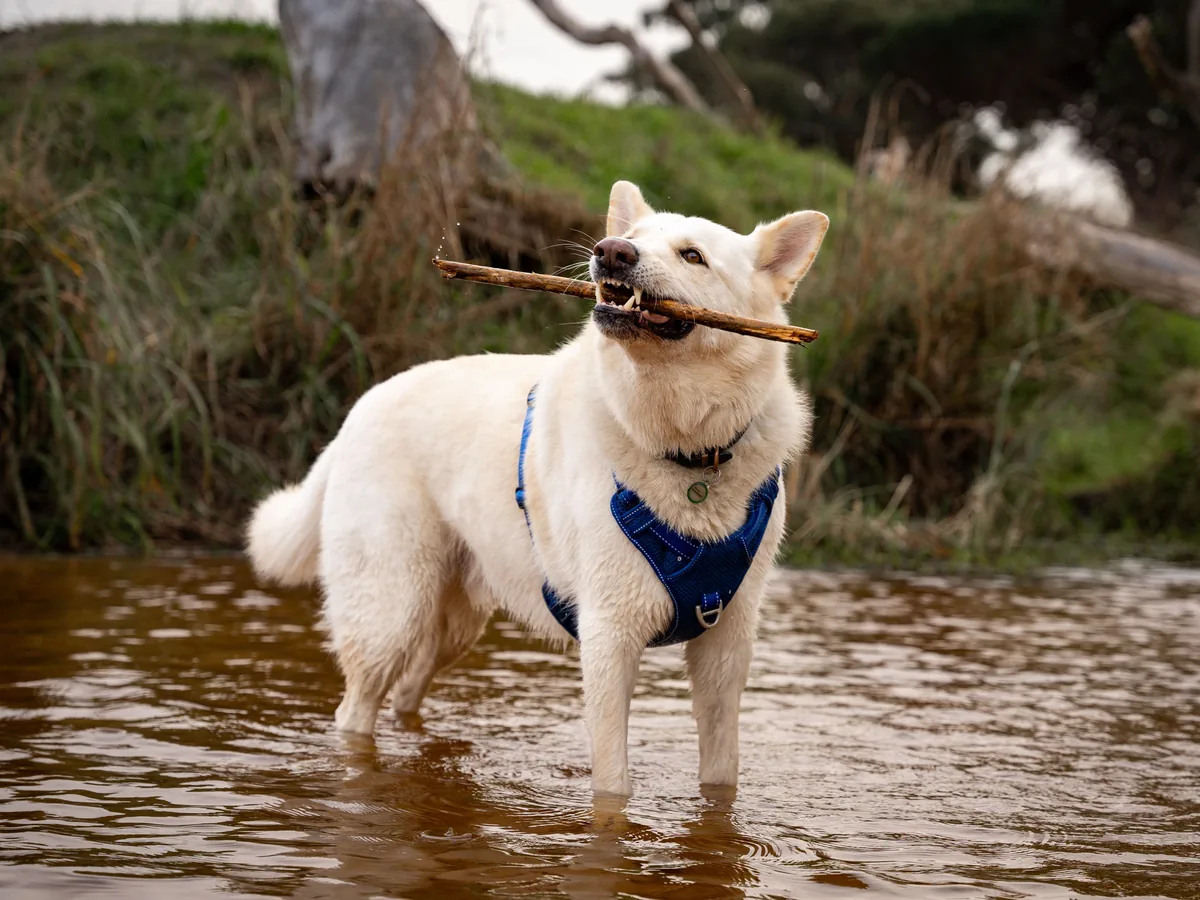
The Korean Jindo is South Korea’s national dog and officially recognised as a National Treasure, which tells you something straight away. This is not a casual, easygoing couch-potato pet. It’s a serious, intelligent hunting breed developed on Jindo Island to work things out for itself, and it still does.
Loyalty is a core operating system. Jindos don’t spread the love around, they pick their person. Once that bond is formed, it’s deep and stubbornly persistent. The stories of Jindos travelling hundreds of kilometres to get back to a former owner aren’t just nice folklore, they line up with how the breed actually behaves. It’s impressive, but it also means rehoming one is often difficult.
They’re unusually clean dogs. Many owners joke they’re more like cats, constantly grooming themselves and keeping their space tidy. There’s very little doggy smell, and house training tends to be straightforward because they don’t enjoy living in their own mess.
With strangers, think polite suspicion rather than enthusiasm. A Jindo will clock you, assess you, and decide you’re unnecessary. Early socialisation matters here, otherwise that natural reserve can drift into reactivity.
They were bred to hunt, and they haven’t forgotten. The prey drive is real. Small pets are a gamble at best, and no amount of wishful thinking changes that.
They’re also quite capable of making a fool of your fencing. Jindos are athletic, clever, and independent enough to treat boundaries as suggestions. If there’s a weakness, they’ll find it. No doubt there are a lot of Jindos named Houdini.
Training is where people get caught out. They’re intelligent, but they’re not interested in applause. A Jindo doesn’t ask “what do you want me to do?”, it asks “why would I do that?”.
On the upside, they’re generally quiet. Not the sort of dog that barks for the sake of it, more the type that notices everything and says nothing unless it matters.
For the right owner, someone who understands independent breeds and doesn’t need constant validation from their dog, the Jindo is something special. For everyone else, it can be a very handsome headache.