
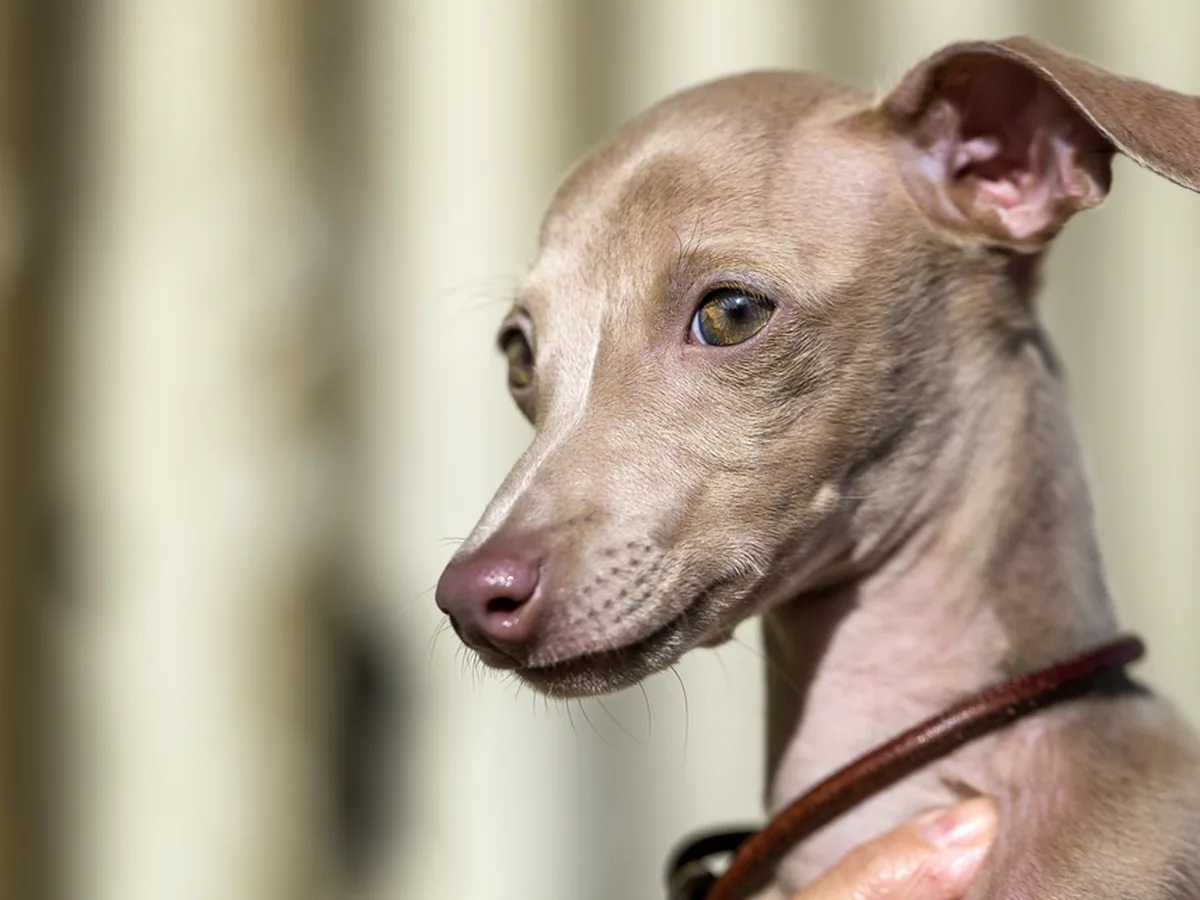
The Italian Greyhound is 3–5 kg of ancient sighthound history. Seen in Greek and Roman art and later favoured by royalty like Catherine the Great and Frederick the Great, it’s not a modern mini version of anything. In fact, it predates and helped shape breeds like the Whippet. The look is pure function: long legs, deep chest, arched back. The elegance isn’t styling, it’s engineering.
They’re intensely people-focused. Proper velcro dogs. If there’s a lap, they’re in it. If there’s a bed, they’ve claimed it. They bond hard and follow their person everywhere, which makes separation highly distressful for them.
Indoors, they’re calm and economical. They’ll locate the warmest spot in the house and stay there, ideally attached to you. Thin coat, low body fat, and a fast metabolism mean they feel the cold. Warmth isn’t optional, it’s part of ownership.
Outside, the switch flips. They can hit around 40 km/h, and the sighthound instinct is immediate. If something moves, they chase. Off-lead only in secure areas. This isn’t poor training, it’s hardwired behaviour.
Physically, they’re delicate. Those long “pencil” legs are prone to fractures, especially when young, so hard surfaces and rough play need managing. With children, they’re gentle but better suited to older, calmer households.
Grooming is easy. Short, glossy coat, minimal shedding, low fuss. Personality is not low fuss. They’re clever, charming, and occasionally manipulative, often described as little jesters who know exactly what they’re doing.
For the right owner, present, patient, and happy with a dog that prefers closeness over independence, the Italian Greyhound is elegant, affectionate, and just theatrical enough to keep things interesting.