
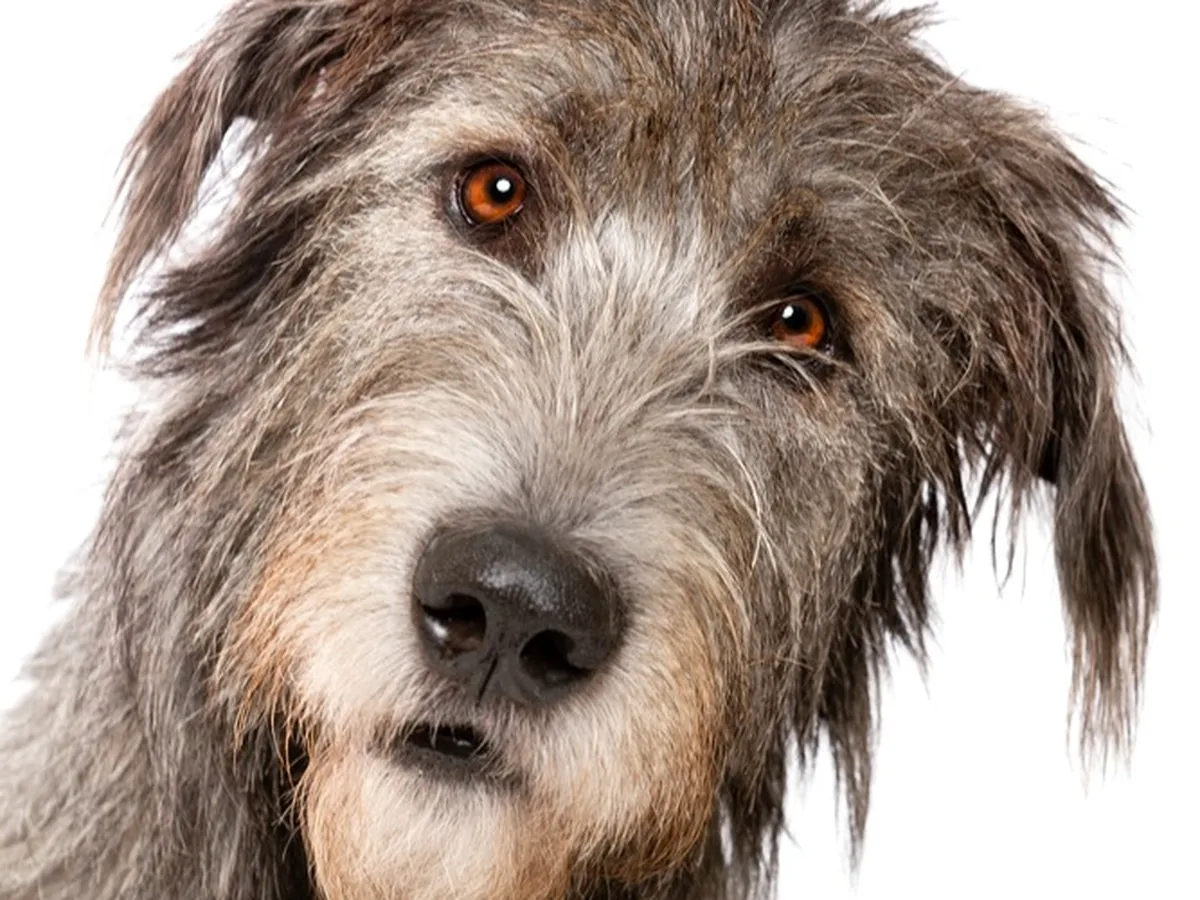
The Irish Wolfhound is the tallest dog breed in the world. On hind legs they can reach close to seven feet, which sounds like a myth until one stands up next to you. They were bred in Ireland to hunt wolves and elk and, historically, to pull men from horseback in battle. Records go back to 391 A.D., and for a time they were so prized they were sent as gifts to Roman nobility. Size was the weapon. What’s unexpected is the temperament.
They’re the original “gentle giant.” Calm, patient, and quietly affectionate, with none of the edge people expect from something that large. They don’t bark much, they don’t rush, and they tend to move through the world as if they’ve already decided there’s no need to hurry.
At a minimum of around 32–34 inches at the shoulder and well over 50 kg, they’re enormous but not heavy in movement. Everything about them is built for reach and stride. Despite that hunting history, adults are low to moderate energy. They need regular exercise, but not at the level their backstory suggests. Indoors, they’re typically relaxed and still.
They bond closely with their people and are generally good with children, provided everyone understands the physics involved. Affection comes in large doses. If a Wolfhound leans on you, that’s not a suggestion.
They’re independent by design. Unlike pack hounds, they were bred to hunt alone, which means training is cooperative rather than automatic. They’ll do the work, but they’ll think about it first.
There’s also a bit of fragility in the history. The breed came close to disappearing in the 19th century and was rebuilt through careful crossbreeding with similar types like Deerhounds and Great Danes. What exists now is a successful revival, but it comes with a reality check.
Lifespan is short. Six to eight years is typical, which is the honest cost of a dog built on this scale. It’s the one part of the breed that doesn’t soften with experience.
For the right owner, someone with space, realistic expectations, and an appreciation for a calm, imposing presence, the Irish Wolfhound is unlike anything else. Just don’t expect subtlety. In size, history, or impact, this is a lot of dog.