
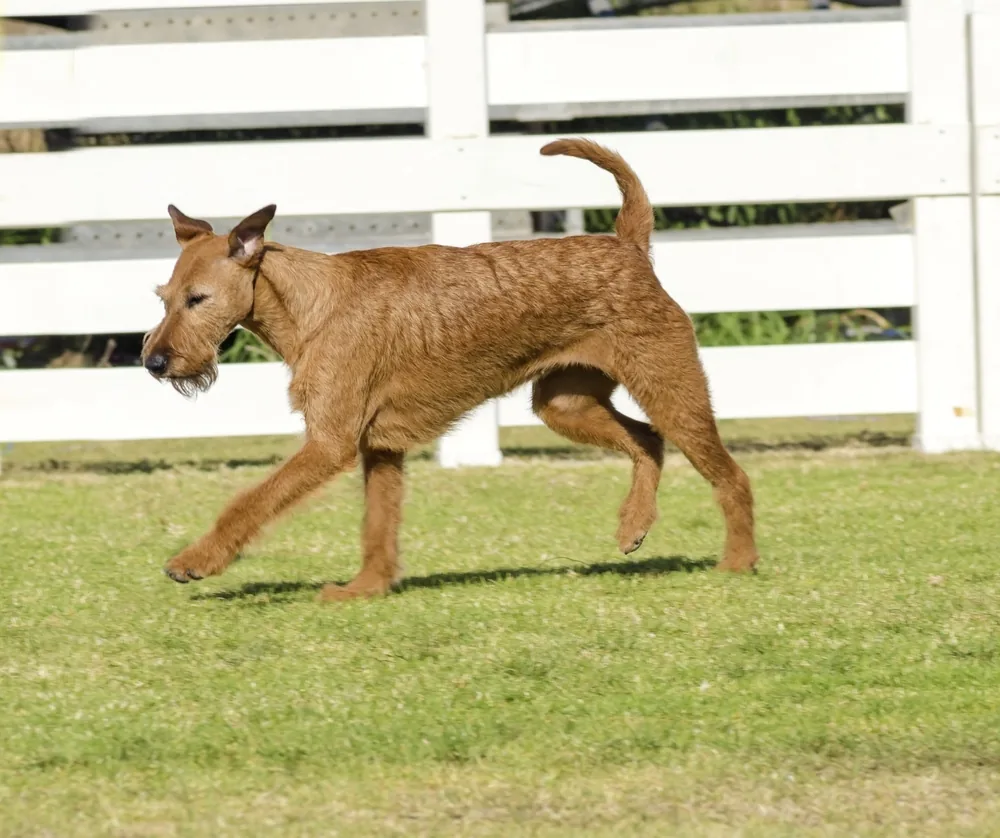
Ireland produced terriers with genuine fire, and the Irish Terrier is the oldest and, depending on who you ask, the most complete expression of that tradition. Red-coated, medium-sized, and constitutionally incapable of backing down from anything, they were bred to work — vermin control, water retrieval, even wartime messenger duty — and that working heritage is thoroughly intact in the modern dog.
The personality is distinctive. Irish Terriers are loyal to their family in a way that borders on protective, courageous to a degree that occasionally borders on reckless, and possessed of enough intelligence to be genuinely rewarding to train when they decide to participate. They're not aggressive without cause, but they're not the kind of dog that walks away from a confrontation. Early socialisation matters.
With children they're energetic and engaged rather than gentle, which works well for older kids who can match that energy. They're typically not recommended for households with other small animals; the terrier prey drive is real and doesn't require provocation to surface.
Training is a reasonable experience for an owner who understands what a terrier is. The Irish Terrier is smart, curious, and responds well to positive reinforcement — but they have opinions, and those opinions occasionally override instructions. Consistency and early investment pay off. They're not a compliant breed; they're a cooperative one, which is a meaningful distinction.
The coat is wiry and relatively low-maintenance — a weekly brush and hand-stripping twice a year for owners who want to maintain the proper texture. Grooming is far less demanding than the coat's appearance might suggest.
For active owners who appreciate a spirited, loyal dog with real personality and genuine courage, the Irish Terrier delivers a relationship that's more partnership than compliance. Just be honest about the prey drive and the stubbornness before you commit.