
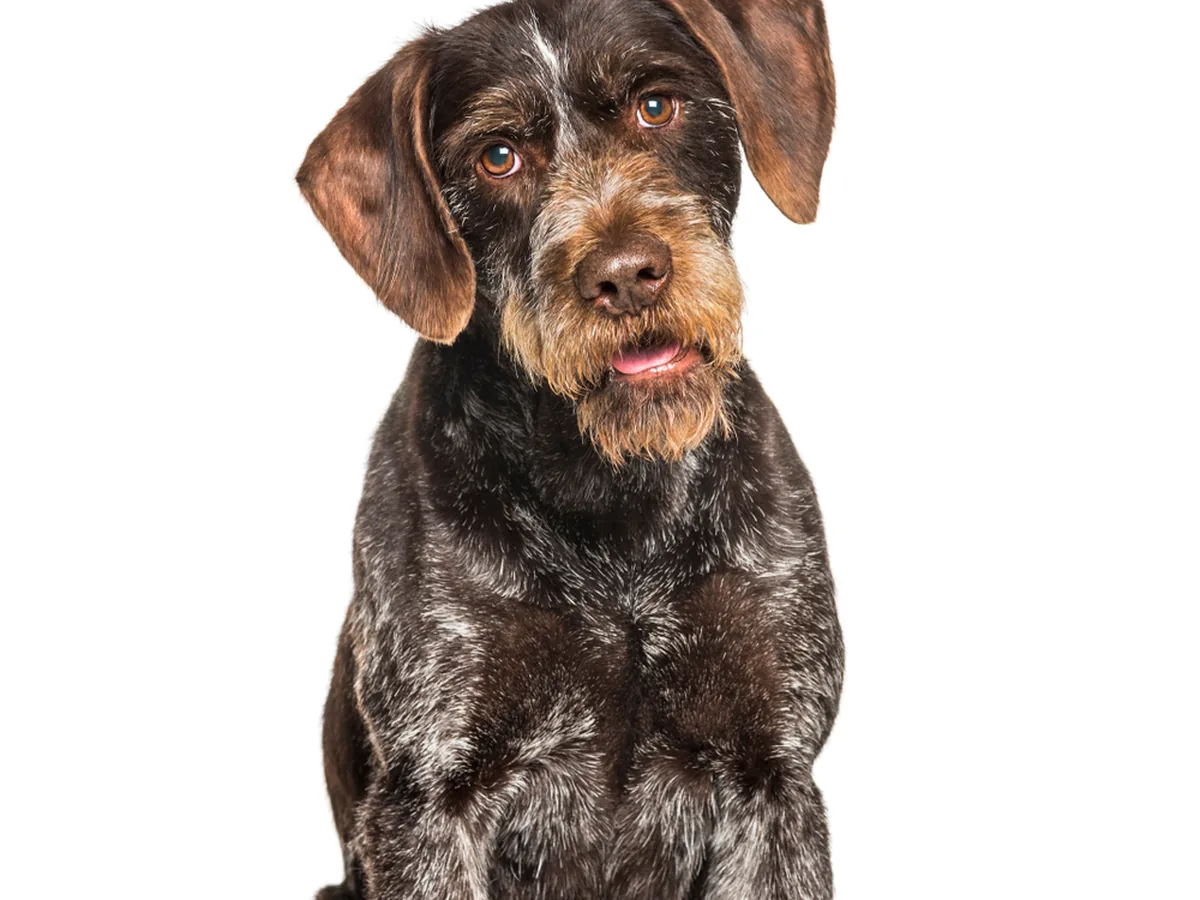
The German Wirehaired Pointer is a hunting dog in the fullest sense — bred to work all day across varied terrain, to point, retrieve on land and from water, and to keep going when other dogs would stop. They're 20–32 kg of athletic, weatherproof purpose, with a rough wiry coat that looks like they've been assembled from spare parts and a drive to work that doesn't switch off when they come inside.
They're not a companion dog that happens to like exercise. They're a working dog that, in the right situation, can also be a companion. That distinction matters enormously when considering ownership. A German Wirehaired Pointer that doesn't have a genuine outlet for its energy and instincts — hunting, field work, or a serious sporting commitment — becomes a large, frustrated dog living in a house that increasingly looks like it's been searched.
With family they can be devoted and affectionate, but they're independent thinkers with a certain reserve around strangers that comes from their original function. They're not warm to everyone the way a Labrador is. They bond deeply with their person and are cooler with everyone else.
Training is a genuine pleasure for the right handler. These are intelligent, capable dogs that respond well to clear, consistent work and enjoy having a job to do. They're not difficult to train so much as under-stimulating to train when sessions don't tap into their working instincts. Field training, tracking, and sport work get the best out of them.
Around children they're tolerant rather than warm, which manages better with older kids than small ones. With other dogs they're typically fine; small animals are a different story given the hunting background.
For an active owner with space, ideally access to outdoor terrain, and a genuine interest in working with a capable sporting dog, the German Wirehaired Pointer is outstanding. For almost anyone else, it's a challenging and often frustrating match. Brilliant dog, but you need to be switched on.