
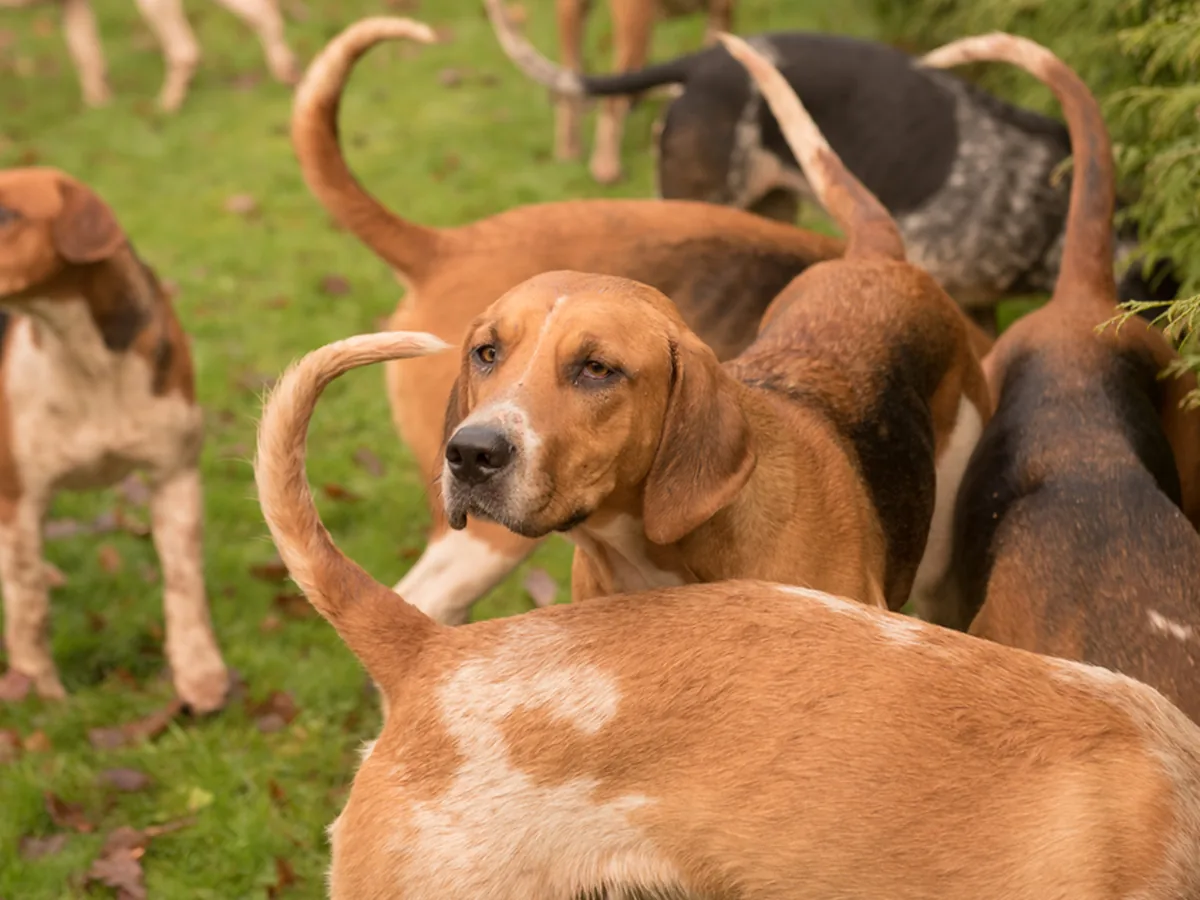
Built like a canine marathon runner, the English Foxhound was developed for one purpose and one purpose only: following a scent across miles of countryside without slowing down. These lean, powerful hounds spent centuries running with mounted hunts in England, keeping pace with horses while tracking foxes through fields, forests and hedgerows. Stamina is not just a trait for this breed, it’s the entire design brief.
The English Foxhound is part of one of the oldest organised dog breeding traditions in the world. British hunting kennels carefully recorded bloodlines for hundreds of years, producing a dog with remarkable endurance, strong scenting ability and a deep, musical bay that could carry across open land. That voice was important because hunters relied on it to follow the progress of the pack from a distance. It was designed to travel across open countryside for miles.
There’s a story often told in hunting circles that says more about this breed than any stat sheet ever could. In traditional English hunts, the horses would be rotated during a long day. The riders needed breaks. The Foxhounds didn’t. They just kept going, nose down, voice up, covering ground hour after hour like it was nothing. That’s the dog you’re dealing with.
This is where people get it wrong. A quick walk around the block is not exercise for a Foxhound, it’s a warm-up. Realistically, you’re looking at long daily runs, structured activity, or a lifestyle where the dog is genuinely included in outdoor movement.
Despite the intense working background, Foxhounds are generally gentle, good-natured dogs. They were bred to live and work in large packs, so they tend to get along well with other dogs and are usually friendly with people. What they are not, however, is a sedentary house pet.
Their nose also runs the show. Foxhounds are scent hounds through and through, which means once they pick up an interesting smell their attention can disappear into the distance along with it. That independence can make training a little challenging, but it is simply part of the breed’s hunting heritage. Give them nose-work, and they'll be happy.
For the right owner, the English Foxhound is a loyal and impressive companion. Energetic, sociable and built for adventure, they bring enthusiasm, endurance and a friendly spirit to homes that can give them the activity and space they were bred to enjoy.