
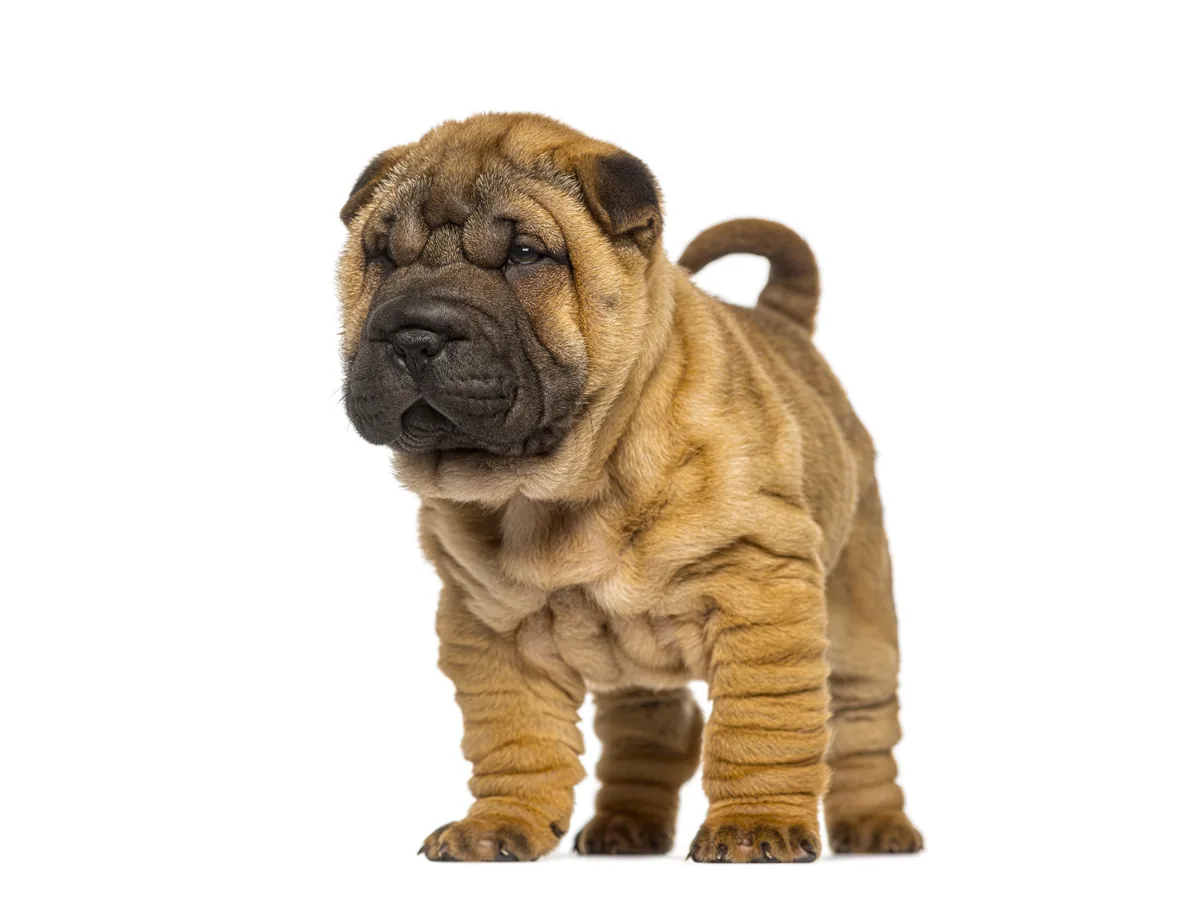
Looking like a small dog wearing a bigger dog’s skin, the Chinese Shar-Pei is instantly recognisable thanks to its deep wrinkles, heavy folds and that unmistakable hippopotamus-shaped head. Even as puppies, they seem to come with more skin than they strictly need.
The breed developed in southern China centuries ago, where these tough, versatile dogs worked as farm guardians, hunters and livestock protectors. They were valued for their strength, alertness and independence, qualities that made them reliable all-purpose working dogs.
Those famous wrinkles weren’t originally about charm. The loose skin allowed a Shar-Pei to twist and keep fighting if grabbed by another animal, while the tiny ears and rough, sandpaper-like coat made it harder for opponents to get a grip. Even the name reflects this texture. “Shar-Pei” roughly translates to “sand skin.”
Their dark blue-black tongue is another unusual feature they share with only one other breed, the Chow Chow. Combined with the deeply set eyes and wrinkled brow, it gives them a thoughtful, slightly serious expression that often looks like quiet judgement.
Today, Shar-Peis are calmer companions than their history might suggest. They’re devoted to their families and naturally protective of their home, but they tend to approach strangers with quiet caution rather than instant friendship. It’s less hostility and more measured assessment.
They’re not a breed that thrives in chaos. Independence is part of the package, and without clear boundaries they can become stubborn and difficult to manage. They suit owners who are calm, consistent and comfortable with a dog that doesn’t feel the need to impress everyone.
For the right owner, the Chinese Shar-Pei is a distinctive and deeply loyal companion. Dignified, watchful and full of character, they offer a mix of history, presence and quiet devotion that’s hard to match.