
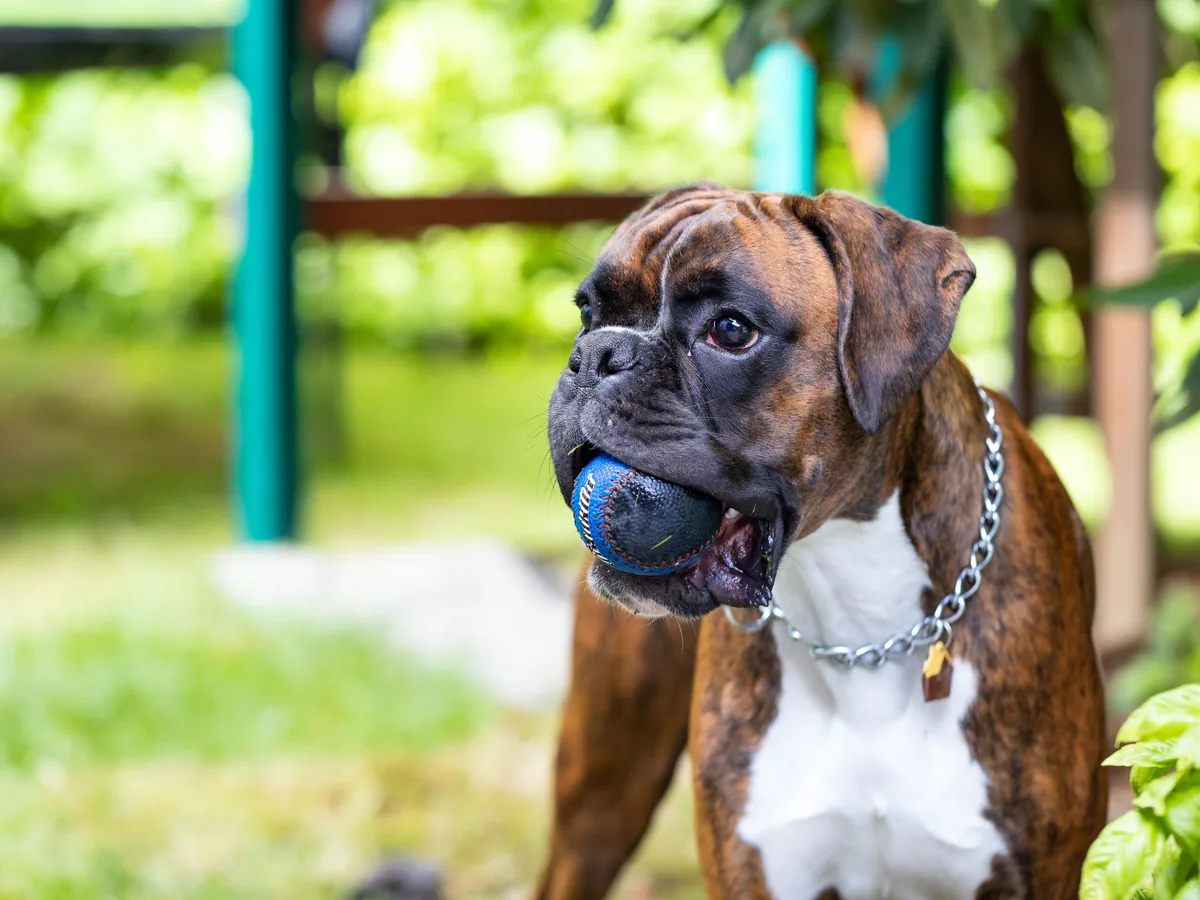
The eternal teenager of the dog world, Boxers bounce through life like caffeinated kangaroos with permanent grins. These muscular goofballs were originally bred in Germany to hunt large game and later guard property, but somewhere along the way they clearly decided comedy was a more rewarding career. With their square jaws, expressive brows and bodies built like four-legged athletes, they look like the class clown who also happens to be a the football team's captain.
Everything about a Boxer feels enthusiastic. They greet people like long-lost friends, charge into games with total commitment and approach daily life with the sort of optimism normally found in motivational memes. That famous “Boxer wiggle,” where the entire back half of the dog seems to operate independently from the front, is often the first clue you’re dealing with a breed that experiences joy at full volume.
Maturity, however, arrives slowly. Very slowly. Boxer owners should expect puppy behaviour well into the third year, occasionally longer if the dog feels there are still important jumping, bouncing and general mischief duties to perform. They remain playful, curious and slightly ridiculous long after other breeds have settled into dignified adulthood.
Underneath the clowning is a very loyal, protective dog. Boxers bond strongly with their families and are naturally watchful around the home. The funny part is that many of them greet suspicious strangers with enthusiastic licking before remembering they were meant to look intimidating.
Energy levels are high and need a proper outlet. Long walks, games, training sessions and anything that involves movement will keep them happy. Without enough stimulation a Boxer will invent its own activities, which often involve rearranging furniture, redistributing cushions or performing impromptu parkour around the house.
For active easy-going families with a sense of humour, Boxers are beautiful, loving dogs that make brilliant companions.