
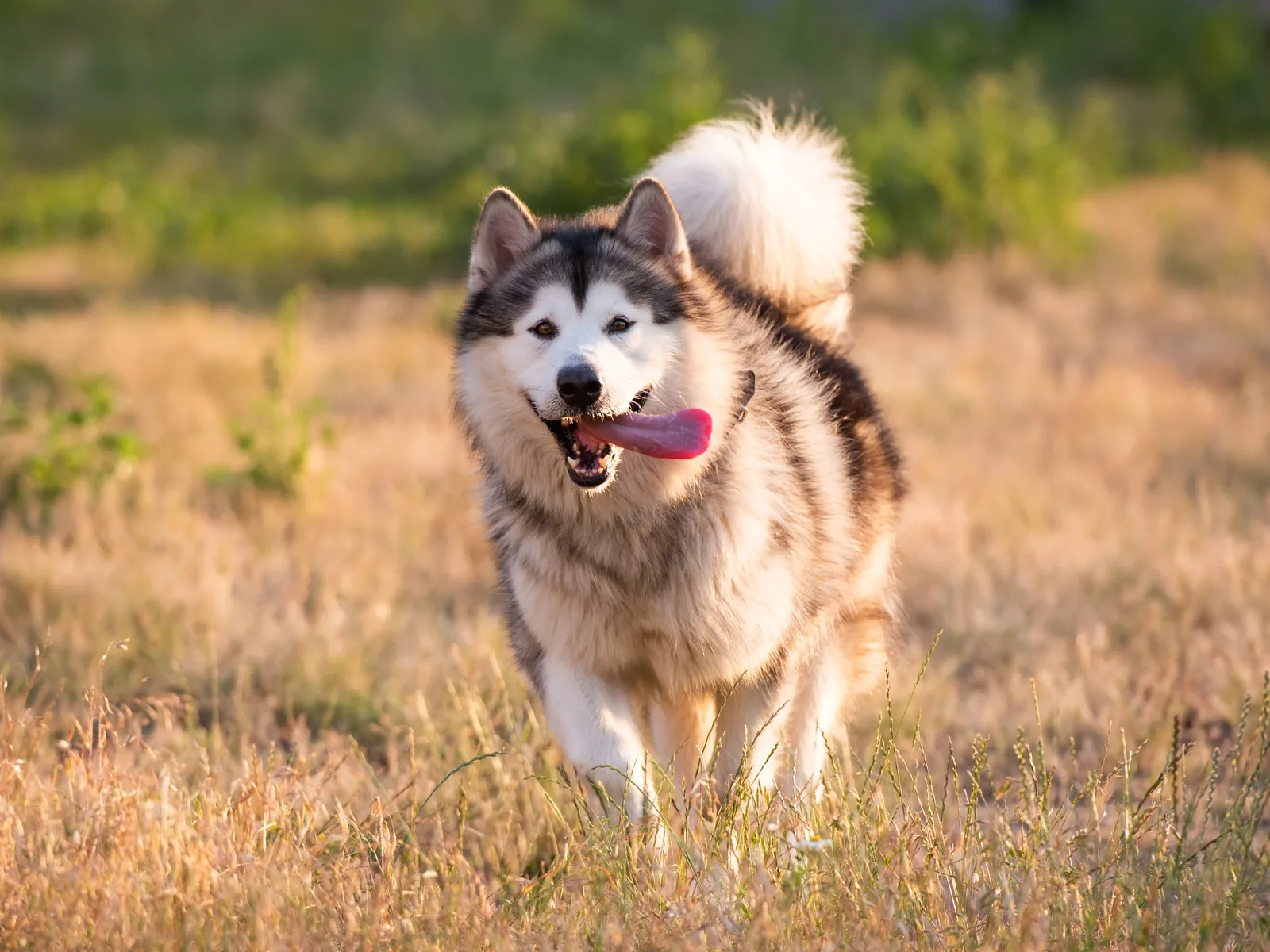
Alaskan Malamute

Large
●●●●○ Energy
●●●●○ Family fit

Friendly, strong and independent. An affectionate, powerful sled dog that loves people but makes up its own mind.

Size Large
Weight 34-39 kg
Height 58-64 cm
Life Span 10-14 yrs
Origin United States (Alaska)

Daily Care at a Glance

Exercise

A Malamute needs at least an hour or two of exercise a day: long walks, hikes, and pulling activities such as backpacking or dog sports. Keep it on lead or in secure areas, as recall is often unreliable. In Australia, exercise only in the cool of early morning or evening, and skip hard exercise on hot days entirely.

Grooming

The dense double coat needs brushing a few times a week and daily during the heavy seasonal moult, when the undercoat comes out in clumps. Don't shave it: the coat protects against sun and heat as well as cold. Trim nails and check paws regularly, and expect hair on everything.

Training

Malamutes are intelligent but independent, so training takes patience and consistency. Short, varied, reward-based sessions work best; repetition bores them. Start socialisation and lead training early, while the dog is still small enough to manage, and work on calm behaviour around other dogs.

The Alaskan Malamute Story

The Alaskan Malamute is one of the oldest Arctic sled dogs, developed by the Mahlemiut people of north-western Alaska to haul heavy loads over long distances. Where the Siberian Husky was built for speed, the Malamute was built for strength and stamina: bigger, heavier-boned and more powerful, with a thick, coarse double coat and a plumed tail carried over the back.

Malamutes are friendly, affectionate and usually good-natured with people, including visitors, so they make poor guard dogs. They are also independent and strong-willed. They were bred to make decisions on the trail, and they still like to weigh up whether a command is worth following. Many have a strong prey drive and can be intolerant of other dogs of the same sex, so early socialisation matters and small pets need care. They are known more for howling and "talking" than for barking.

This is a big, powerful dog with a heavy coat, so the Australian climate is the main caution. Malamutes cope poorly with heat and need shade, cool areas and exercise early or late on warm days. They shed heavily, dig, and can escape poorly fenced yards. They suit experienced, active owners with space, secure fencing and time for daily exercise and training. Commonly listed health issues include hip dysplasia, eye problems and hypothyroidism, so ask breeders about health testing.

Breed Characteristics

Energy Level
4/5
Child-Friendly
4/5
Grooming Needs
4/5
Trainability
2/5
Barking Level
3/5
Shedding Level
5/5
Drooling Potential
1/5