
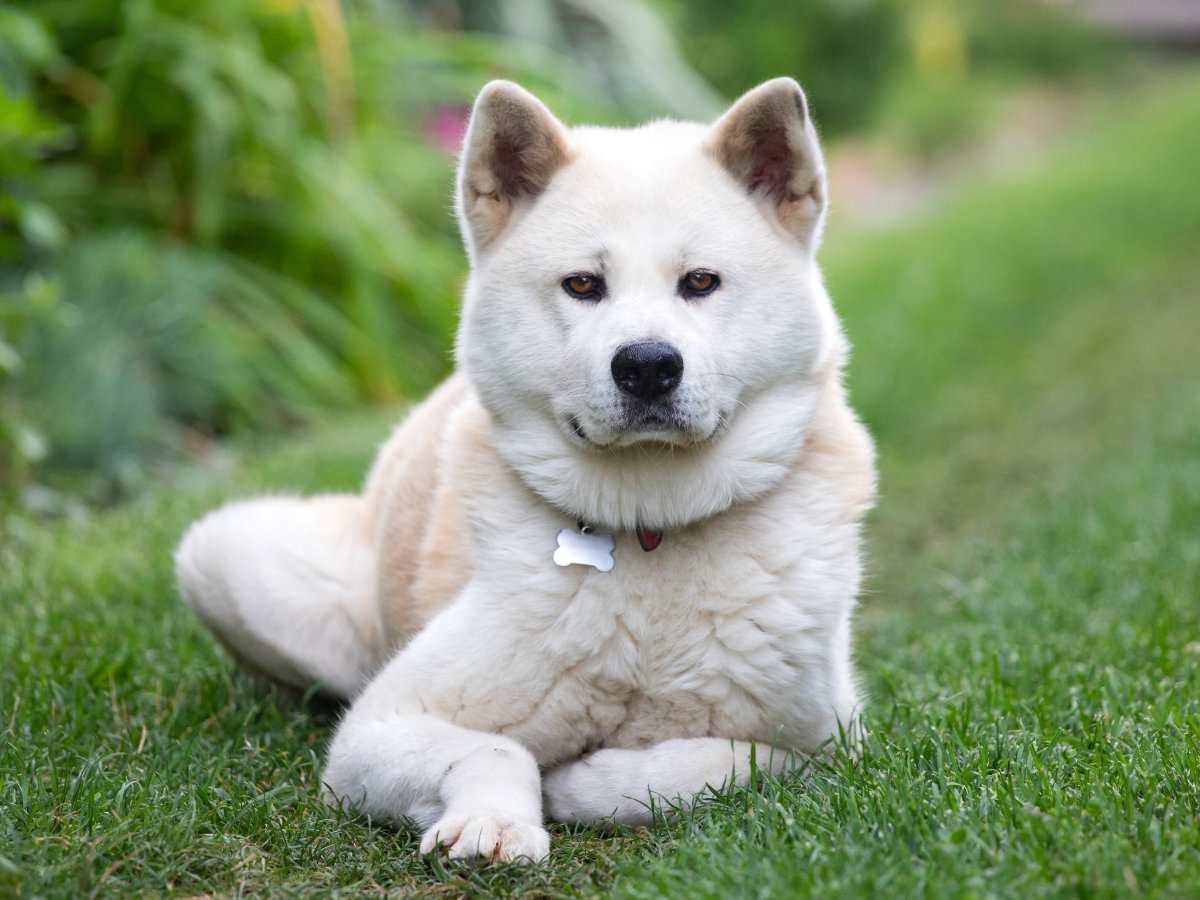
The Akita Inu looks like a big huggable, teddy bear. Thick coat, curled tail, calm expression. Very huggable. And very misleading. This is not a golden retriever in cosplay. This is a loyal, stoic Japanese bodyguard wearing a cold-weather armour.
Bred in the mountains of Japan to hunt wild boar and bears, Akitas were never designed to ask permission or seek approval. They were built to assess situations, make decisions, and act accordingly. That heritage explains their vibe perfectly. Akitas don’t rush. They don’t fuss. They watch. When you call them, they don’t come running. They pause, consider whether it’s worth it, then maybe move. This is not disobedience. This is deliberation. And it's a feature, not a flaw.
Akitas bond hard with their people. Once you’re in, you’re in for life. Helen Keller famously called hers “an angel in fur,” which is accurate if you understand that angels can be terrifyingly and absolutely not here to entertain strangers. Akitas are devoted, protective, and deeply loyal, but they are not social butterflies. Visitors may be tolerated, not adored. Other dogs may be judged harshly. Akitas prefer a small circle and see no reason to expand it.
At home, they’re surprisingly low-drama. Clean, quiet, and almost cat-like in their habits, Akitas tend to move through the house like dignified ghosts. They don’t bark unless there’s a reason. They don’t cling. They simply appear nearby, monitoring the situation. With proper exercise and structure, they can even handle apartment life better than many high-energy breeds, provided you don’t confuse “calm” with “lazy.”
Akitas are intelligent but independent, which means training requires confidence, consistency, and zero ego. This breed does not respond to shouting, nagging, or micromanagement. If you try to dominate an Akita, you’ll lose. If you earn their respect, you’ll have a companion who takes their role seriously and loves you with a quiet intensity that feels unshakable.
This is not a dog for everyone. Akitas are for experienced owners with calm leadership, thick skin, and a sense of humour. They won’t smother you with affection or perform for strangers. What they offer instead is loyalty, presence, and the comforting feeling that if something went wrong, this dog would absolutely have your back. If you want a cheerful socialite, keep scrolling. If you want a silent, fluffy samurai who treats your household like sacred ground, the Akita Inu might be your dog.