
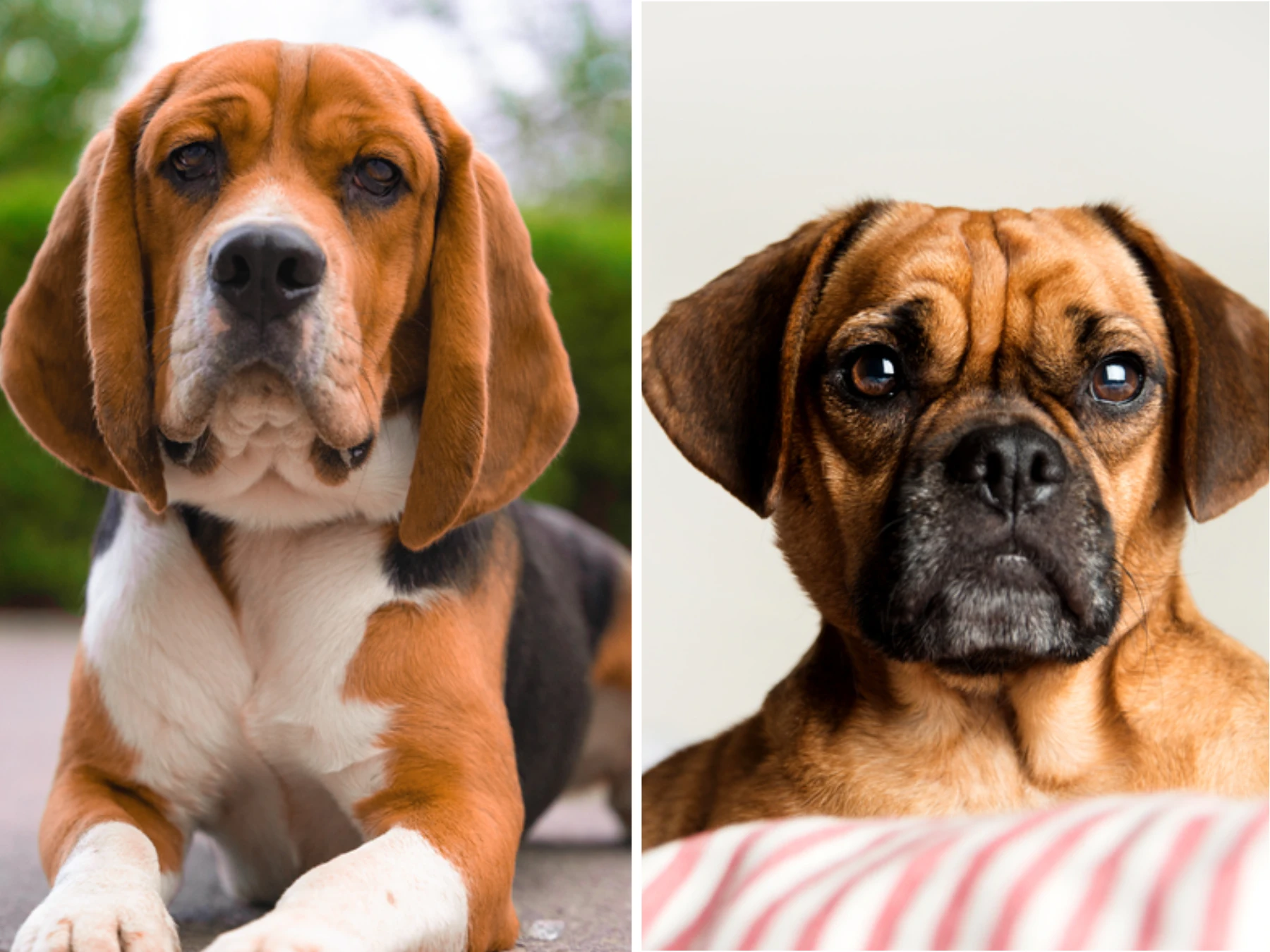
The Puggle is a Beagle crossed with a Pug, first developed in the United States with a simple brief: keep the Beagle's friendly temperament while softening some of its intensity. Whether it achieves that depends on which parent any given litter takes after. And that is the central truth of this comparison.
The Beagle is a known quantity. What you see is, with high probability, what you get. The Puggle is a roll of the dice — charming when it lands well, complicated when it does not.
The Quick Answer

If you want a predictable, proven breed with a long history: Beagle.
If you want an apartment-friendlier option and are comfortable with some genetic variability: Puggle.
How They Compare
| Trait | Puggle | Beagle |
|---|---|---|
| Energy level | 3 / 5 | 4 / 5 |
| Good with kids | 4 / 5 | 5 / 5 |
| Training ease | 2 / 5 | 2 / 5 |
| Grooming needs | 2 / 5 | 2 / 5 |
| Barking | 4 / 5 | 4 / 5 |
| Shedding | 4 / 5 | 3 / 5 |
| Apartment friendly | 4 / 5 | 2 / 5 |
| Good with other pets | 4 / 5 | 4 / 5 |
The Real Differences
Apartment Suitability
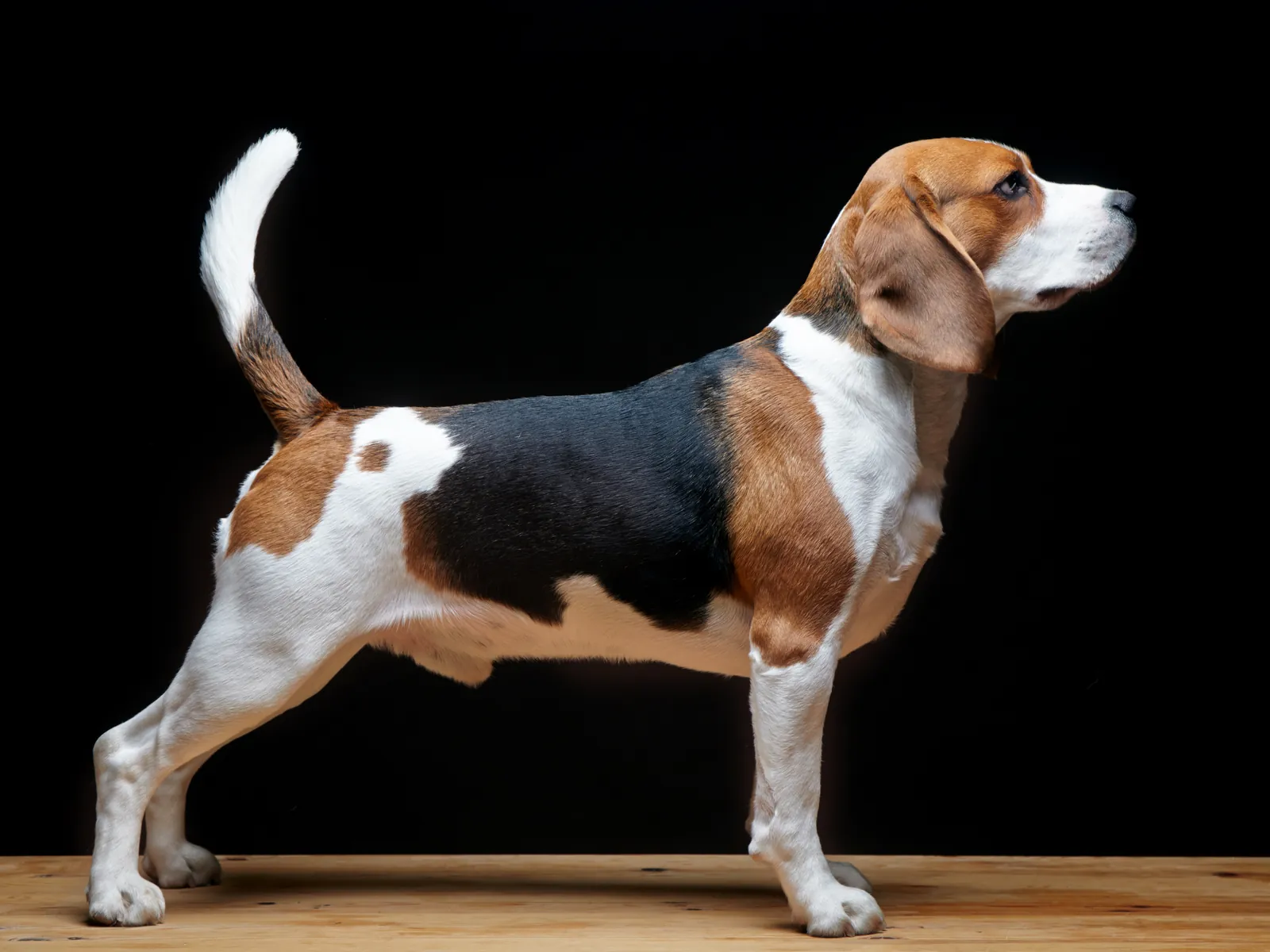
This is the most surprising number in the comparison. The Beagle scores 2/5 for apartment friendliness — low. The Puggle scores 4/5 — genuinely high for a medium dog. The Beagle was bred to run across fields following a scent for hours, and an under-stimulated Beagle in a confined space will tell you about it. Loudly. The Pug parent's calmer, more sedentary nature moderates this in many Puggles, producing a dog with less pent-up frustration in smaller spaces.
That said, this is a population average. A Puggle that takes strongly after the Beagle parent can be just as restless. You cannot guarantee which parent a particular litter favours.
Energy
The Beagle scores 4/5 on energy; the Puggle 3/5. The Pug influence tends to lower the engine slightly. Beagles need meaningful daily exercise — walks long enough to tire an active nose. Puggles generally manage on a somewhat more modest routine, though they still need proper daily activity and mental stimulation to stay out of trouble.
Training
Both score 2/5 for training ease — among the harder end of the scale. This is not because either breed is unintelligent. The Beagle is plenty smart; it simply has priorities that outrank your requests, and a nose that considers itself above management. The Puggle inherits this stubbornness from both parents. Training both requires patience, consistency, and reward-based methods. Expect results to come more slowly than with a retriever or herding breed.
Barking and Noise
Both score 4/5 for barking — significant, and not the breed for thin apartment walls. The Beagle bays rather than barks — a rich, carrying hound voice that was bred to announce discoveries across open fields. The Puggle can do either, depending on which parent dominates vocally. Neither is a quiet dog, and this needs active management from puppyhood.
Shedding
The Puggle actually sheds more — 4/5 versus the Beagle's 3/5. Both parent breeds shed and the combination does not help. If a low-shedding coat is a priority, neither of these is the answer.
The Honest Note on Puggle Health
This matters and is worth saying clearly. Pugs are a brachycephalic breed — they have a compressed skull structure that causes breathing difficulties, overheating, dental crowding, and eye problems. Crossing with a Beagle extends the snout somewhat and can reduce the severity of these issues, but it does not eliminate them. Some Puggles breathe entirely normally; others inherit significant breathing difficulties from the Pug side.
Before getting a Puggle, ask to see both parents. If the Pug parent has obvious breathing issues — loud breathing at rest, persistent snoring while awake — that risk passes to the litter. A reputable breeder will be transparent about this. The Beagle, as a purebred with centuries of selective breeding, carries a more predictable health profile.
Who Each Breed Suits
Choose a Beagle if:
- You want a proven, predictable breed with no brachycephalic risk
- You have a yard and can provide meaningful daily outdoor exercise
- You want slightly lower shedding
- You have young children — 5/5 vs 4/5 for child compatibility
- You are drawn to a purebred with a long, well-documented history
Choose a Puggle if:
- You live in an apartment and want a Beagle-natured dog with better spatial suitability
- You want slightly lower energy and a more manageable daily exercise requirement
- You are comfortable with some unpredictability in which parent traits dominate
- You have researched the breeder and can confirm the Pug parent is free of significant breathing issues
Not sure which fits your lifestyle? Our breed matching quiz factors in your living situation, activity level, and experience to surface the most compatible options.
Frequently Asked Questions
Is a Puggle just a smaller, cuter Beagle?
Not exactly. The Pug influence changes the temperament profile meaningfully — reducing energy, improving apartment suitability, and adding a more sedentary companion quality. It also introduces brachycephalic health risk. A Puggle is not a Beagle with a wrinkly face; it is a genuinely different dog whose traits can lean either way depending on the litter.
Are Puggles easier to train than Beagles?
Both score 2/5 for training ease — equal, and both genuinely challenging. Neither breed is naturally inclined to prioritise your requests over its own instincts. Food rewards and patience are essential for both.
Do Puggles have breathing problems?
Some do and some do not. The Beagle cross extends the Pug's compressed snout, which often reduces but does not eliminate breathing difficulties. The safest approach is to meet the Pug parent before committing to a litter. Responsible breeders will show you both parents and are transparent about health.
Which is better for an apartment — a Puggle or a Beagle?
The Puggle scores substantially higher — 4/5 versus the Beagle's 2/5. The Beagle's working-dog energy and voice make confined living more challenging. That said, both breeds bark significantly, which needs active management regardless of living situation.